In the late 1800s, the Yankee Girl mine was one of the most profitable mines in the history of silver mining in the United States. At its height, Yankee Girl produced 10 tons of ore on a daily basis.
Last month, I took a great trip out to Colorado to shoot fall colors in the Rockies with some friends. One of my favorite locations to visit (we went back several times because the area had so much to offer) was the Yankee Girl Silver Mine, south of the town of Ouray. Nestled in the San Juan Mountains, Yankee Girl was operational until the early 1900s. In the late 1800s, the mine was one of the most profitable mines in the history of silver mining in the United States. At its height, Yankee Girl produced 10 tons of ore on a daily basis, some of which was carted out by 75 mules every day.
Silver ore was carted out by 75 mules every day. Here the old mine is front lit with dramatic dark skies beyond.
A dirt road winds up into the mining area from the highway, which is comprised of several sites, all of which are in various stages of decay. While these abandoned buildings are interesting enough to explore and photograph, being surrounded by intense fall color foliage added an extra layer of interest to the photos.
There remain many small details of interest scattered about this area.
When covering an area photographically, it is important to look at a subject from many angles and to incorporate elements that help the viewer understand what the scene was like. Here I used old weathered boards to lead the viewer’s eye up into the frame, showcasing the main building. I’m sure if I spent an afternoon roaming the hill on which the mine buildings were perches, I could find many more such elements (old rusted pipes, mined rocks, etc) to incorporate into interesting compositions.
One of the smaller mine structures of the Yankee Girl Silver Mine sits perched over a valley of colorful fall aspen, Ouray, Colorado
Here is one of the smaller buildings in the mining complex. While not as attractive as the main building, it was perched on the edge of a hill with a magnificent color display on the opposite slope. I stitched multiple frames together to create a large resolution panorama.
Stay tuned for more posts based on photos from this trip.
I was fortunate enough to have an image selected for the cover of the upcoming issue of Bay Nature magazine. I shot this turkey vulture in soft diffused morning light out at Pescadero State Beach. Once I saw him, I dropped to my knees in the sand and slowly started making my way toward him, every few feet stopping to get a safety shot. Finally I was close enough to frame him in a portrait, and was able to get several head poses. It turned out that he was in no hurry to leave, so after I got the shots I wanted, I crept away from him so as not to disturb him.
While not the prettiest bird, when caught in the right light, you can bring out their feather detail as seen here. In bright sunlight, their dark feathers are usually rendered to an inky black, so it was nice to see some of the lightness of the feathers come through in this kind of light.
If you live in the San Francisco Bay Area, grab a copy. It is a great magazine and will introduce you to new places around the bay.
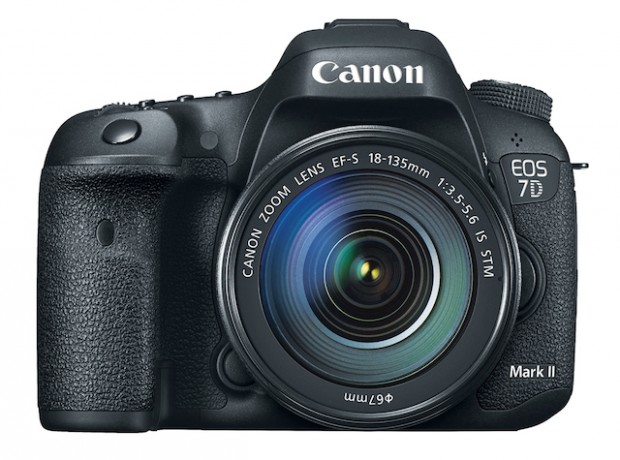
This week Canon finally released their long awaited successor to the very popular (5 year old) 7D. The 7D is one of my main workhorse camera bodies, used primarily for bird and wildlife photography.
Here is a rundown of why I have already pre-ordered the Mk II. These are the features that are most important to me based on the type of photography I will do with this camera.
Most Important Features
APS-C sized (cropped) sensor.
The smaller size of the sensor on this camera is what sets Canon apart from many competitors, who seem to be pushing the high-end pro-sumer market to full frame cameras. Canon still sees a space in the lineup for APS-C sensors, and so do I. I will primarily use this camera for action (wildlife and bird photography), so having the extra "reach" will be a big benefit to me.
This factor prevented me from considering the 1DX for wildlife work when it came out. Although that is a fantastic camera, I couldn’t justify losing the 1.6X “zoom” factor that a cropped sensor gives me. The 7D Mk II has a much higher pixel density than the 1DX (20 MP on 7D MkII vs 18 MP on the 1DX), which will allow me to capture more detail. In fact, if you compare the pixel density of the same area of sensor between both cameras, the 1DX only has just over 11 MP compared to 7D Mk II's 20 MP.
f/8 auto focus capability.
This has been under-reported on, but is a huge feature for my use. Allowing auto-focus to work down to f/8 means I can pair my 800mm f/5.6 lens with a 1.4X tele-extender, which gives be an effective maximum aperture of f/8. This combo also gives me the 35mm equivalent of a whopping 1792mm, a distance I’ve never been able to use auto-focus with before.
Having this kind of distance flexibility to work with can get me closer to the action without spooking or antagonizing my target species.
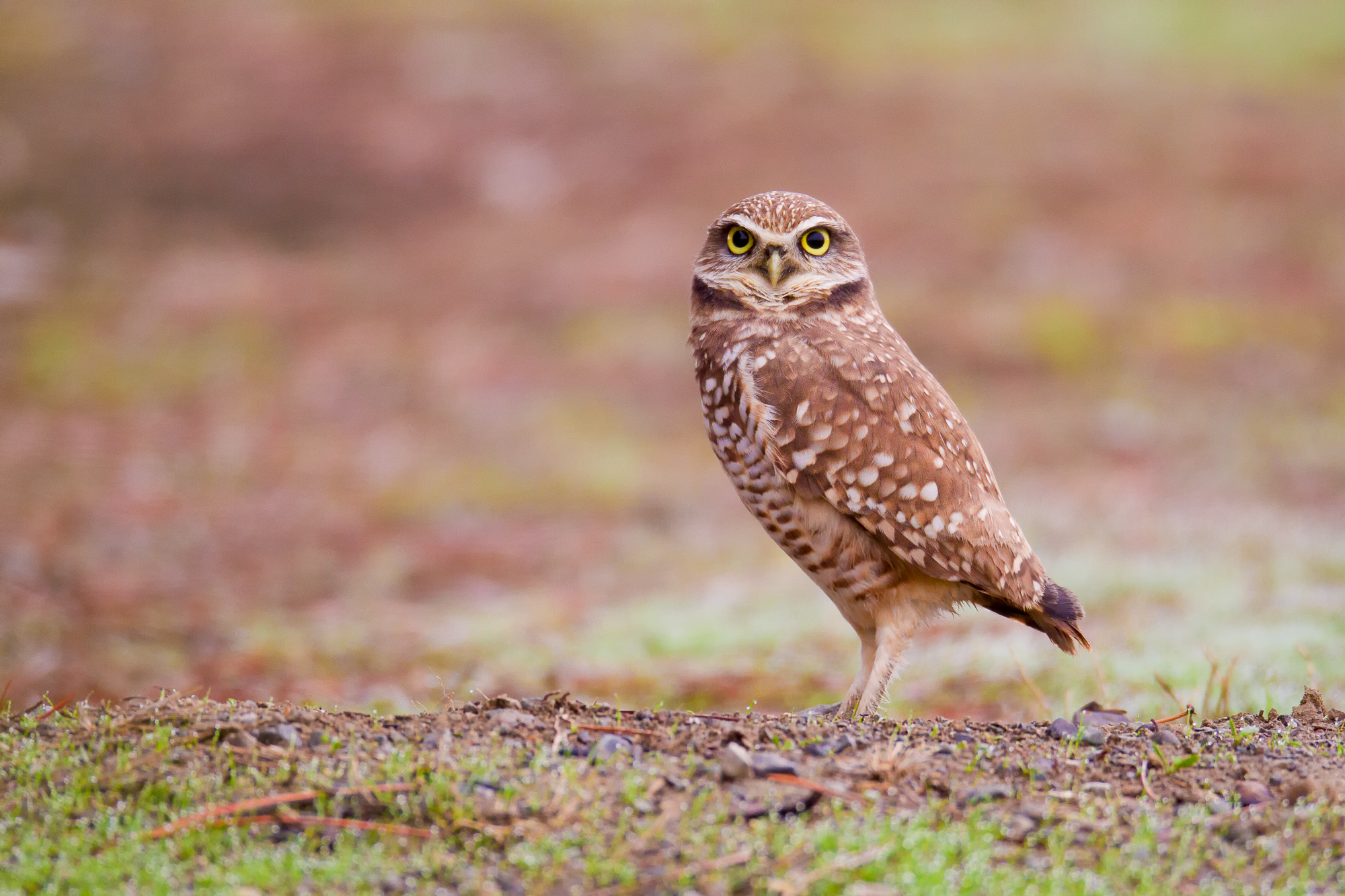
A burrowing owl stands on a small berm overlooking its burrow
Species like the endangered burrowing owl will become stressed if you get too close. If it is only watching you, then you are too close – it should be constantly swiveling its head looking skyward for predators.
Improved AF tracking (including low light) [65 all cross-type auto-focus]
There is nothing worse for a bird photographer than to patiently wait for your subject to take flight, only to watch the bird fly away as your camera is hunting for focus. Having the best of class auto-focus will ensure my equipment will not be the one at fault. In the future, I'll only have myself to blame!
Having so many auto-focus points for the camera to choose from means that the auto-focus algorithms can track a subject throughout much of the frame. Cross points allow auto-focus on horizontal and vertical lines throughout the frame. This means faster, more accurate focus seeking and tracking.
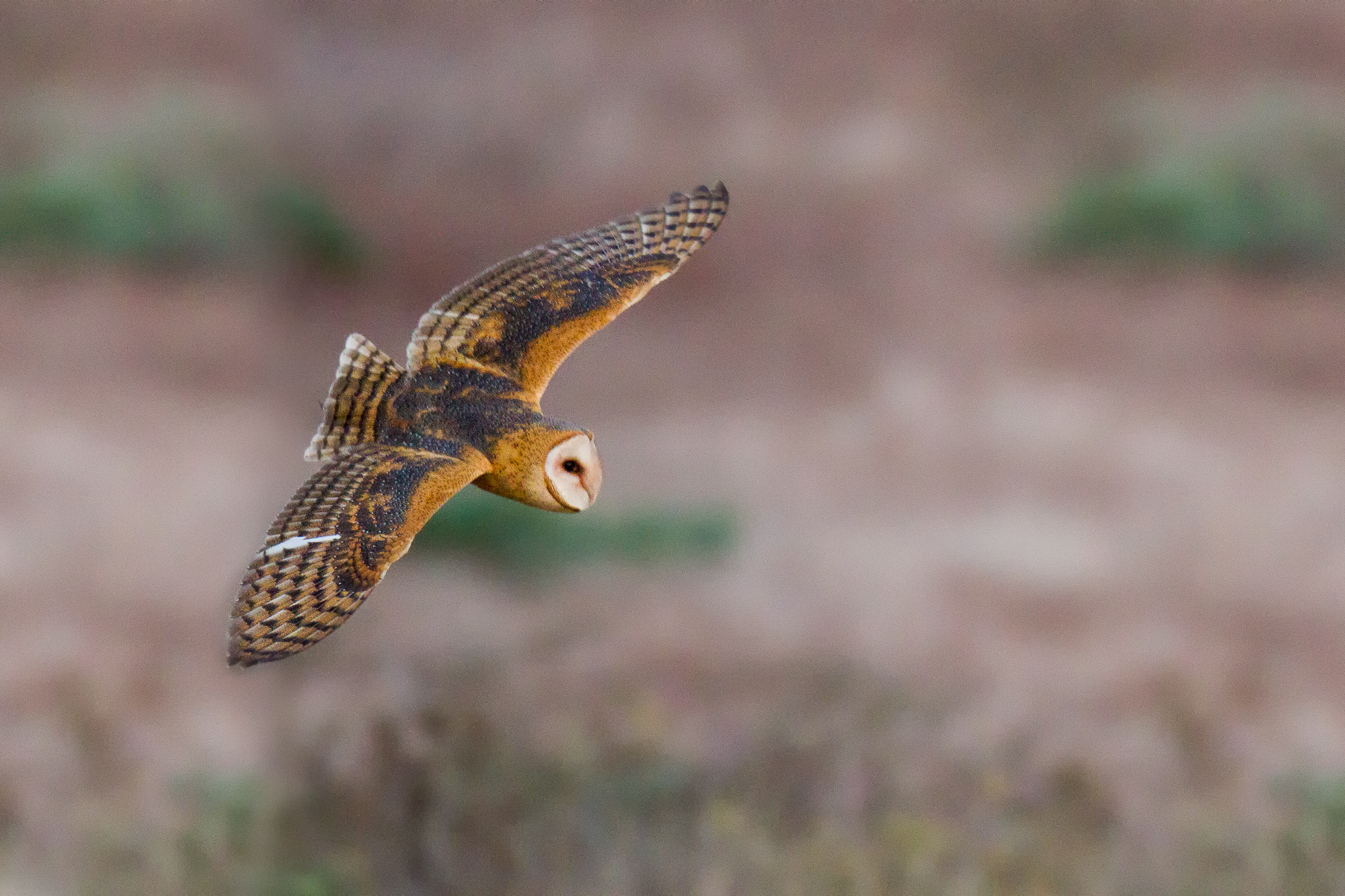
A barn owl flies low over a field, hunting for rodents just after sunset, Bodega Head, California.
The 7D Mk II’s improved low light auto-focus tracking should make keeping focus locked on birds such as owls who take to the sky at dusk more manageable.
"Intelligent Tracking and Recognition (iTR)"
iTR is a new feature introduced with the Canon 1DX and has now filtered to the pro-sumor line. This employs a new RGB metering sensor which can detect and track moving subjects based on color, size and shape. Theoretically, this should help keep focus on erratic motion, such as flying birds. I’m looking forward to putting this to real world tests.
Improved high ISO performance
The majority of wildlife come out during the ends of the days, either in early morning or late evening. Having a camera that can focus and capture images in this kind of light with relatively low noise will be a huge advantage. While this camera probably does not match the low noise of cameras with a lower pixel density, it will be a big improvement over my 5 year old 7D.
Auto ISO parameters
Canon finally got this feature right, with many manual controls around how the metering will select the proper ISO for a given shooting condition. I can now set a maximum ISO to use (which I'll set to the highest ISO I deem to have acceptable noise), as well as the minimum ISO. With this feature, I can also set the minimum shutter speed the camera will use before increasing the ISO in low light scenarios. Currently I manually set my ISO up or down as the situation calls for it, but I will certainly be using a limited auto-ISO range so that I don’t miss any critical moments.
Nice to have features
10 fps shutter speed
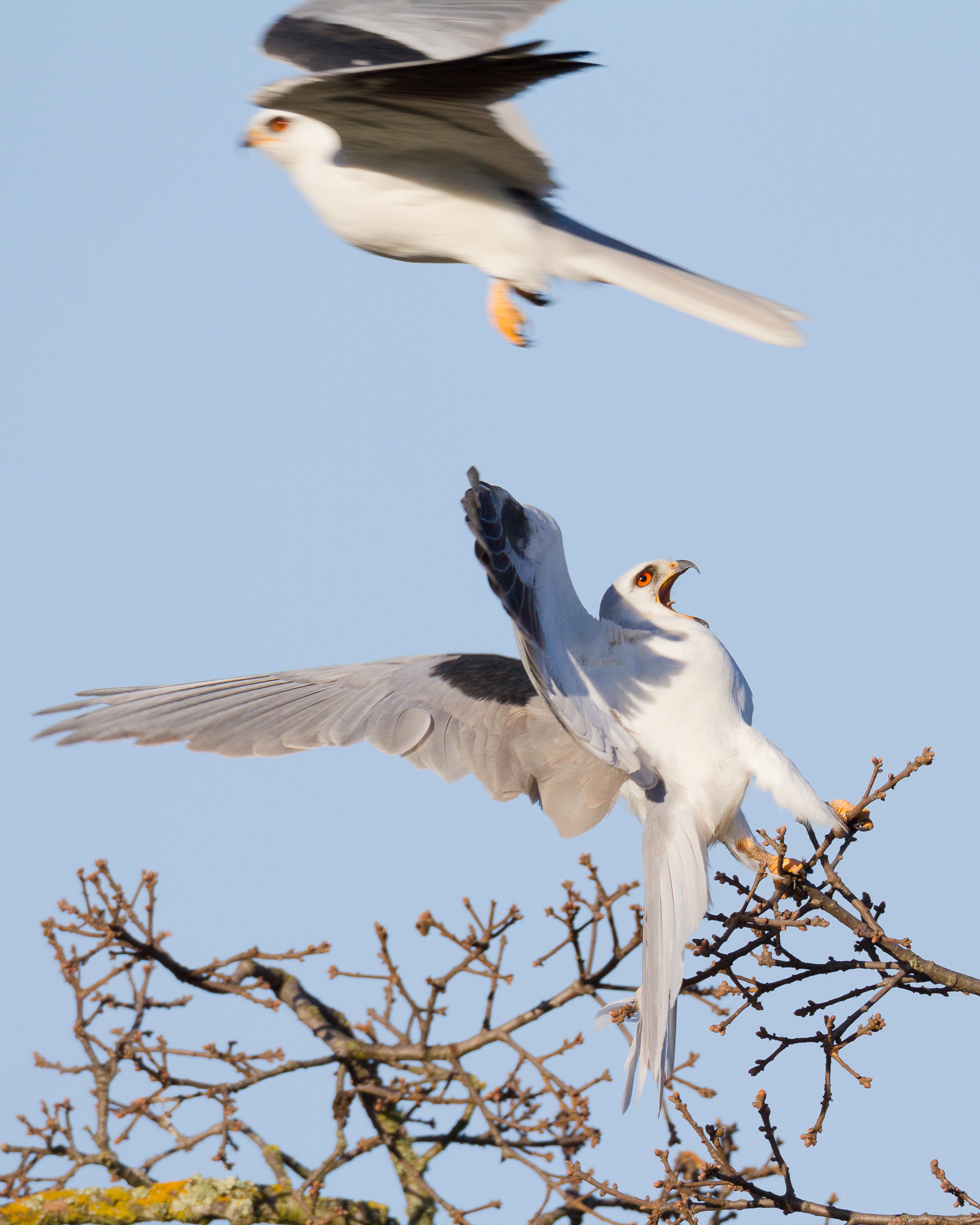
I already have 8fps with the 7D, but hey, 10 is more than 8, right. All the better to help capture critical action like this:
A male white-tail kite flies past a female, which reacts to his close proximity
Nikon cameras have had this for years, so its nice to see Canon catch up.
Buffer depth (31 RAW vs 25 RAW in 7D)
This is a huge buffer! Having the ability to take 31 consecutive photos at 10 fps is pretty incredible. I’m not a big fan of spray and pray photography, but when you need to blast off a few, knowing that your camera won’t suddenly go quiet on you brings great peace of mind.
I recently finished processing a series of photos I took of a flock of evening grosbeaks that invaded a neighborhood in Sunnyvale, CA, a little south of my home. For several days, the birds were repeating a pattern of flying into the area in the morning, and perching on a row of chinese pistache trees, so I decided to head down and see if I could locate the flock.
I arrived in the neighborhood just after dawn when I figured the birds would be busy eating. I began to walk up and down the streets, occasionally stopping to listen for the distinct crunching sound of the birds eating the fruit off of the trees. All the while I was under the watchful eyes of the residents, who probably don’t often see someone walking past their house with an 800mm lens mounted to a large tripod.
An evening grosbeak perches on a branch of a chinese pistache tree and eats a small seed, Sunnyvale CA.
Finally, I was on the verge of giving up and decided to make my way back to my car. On my way back, I passed under one of the many chinese pistache trees and heard the soft crunch crunch crunch. Looking up I could just see one or two of the grosbeaks in the upper most branches. Thrilled, I set up my gear on the sunny side of the tree (so that the birds would be front lit), and waited until some of them ventured to lower fruit.
An evening grosbeak reaches for food on the branches on a Chinese pistache tree, Sunnyvale, CA.
In all I hung out for about 20 minutes before the birds lifted off and flew elsewhere. It is always a treat to get such opportunities to photograph seasonal migrants.