Prepare For Landing

An american avocet spreads its wings to come in for a landing

Most of the bird images I take tend to be portrait-type images. The reason for this is situational – like it or not, birds do a lot of standing around. While these static shots are great for exploring the finer details of a bird’s plumage, they show little of a bird’s behavior. That’s why whenever possible, I try to capture birds in action. Whether it be flying, foraging or fishing, photographs of birds in action can tell a more complete story about that species, as well as show off details that may otherwise be hidden.

Feet extended, a brown pelican skies across the surface of the water as it lands

One of my favorite action shots is the landing. When a bird comes in for a landing, the body tends to be more upright, which allows the underside of the wings to be angled toward the lens. The bird needs to stop both its downward and forward momentum, causing the wings to fan out at their maximum surface area, as shown in the first photo above.

Because the bird’s body is more upright, the landing is almost an action version of a portrait shot. Anthropomorphizing the body position, the bird is almost saying, “Okay, I’m here and ready for my photo op.”

A brown pelican flaps its wings as it lifts off the surface of the water

Conversely, the take-off shot is not usually as photogenic. The body is more parallel to the ground, and on the downstroke, the wings tend to flatten out and their detail is hidden from the camera. Also, the bird is definitely headed somewhere else, which lacks the same connection a viewer might feel with a bird portrait.
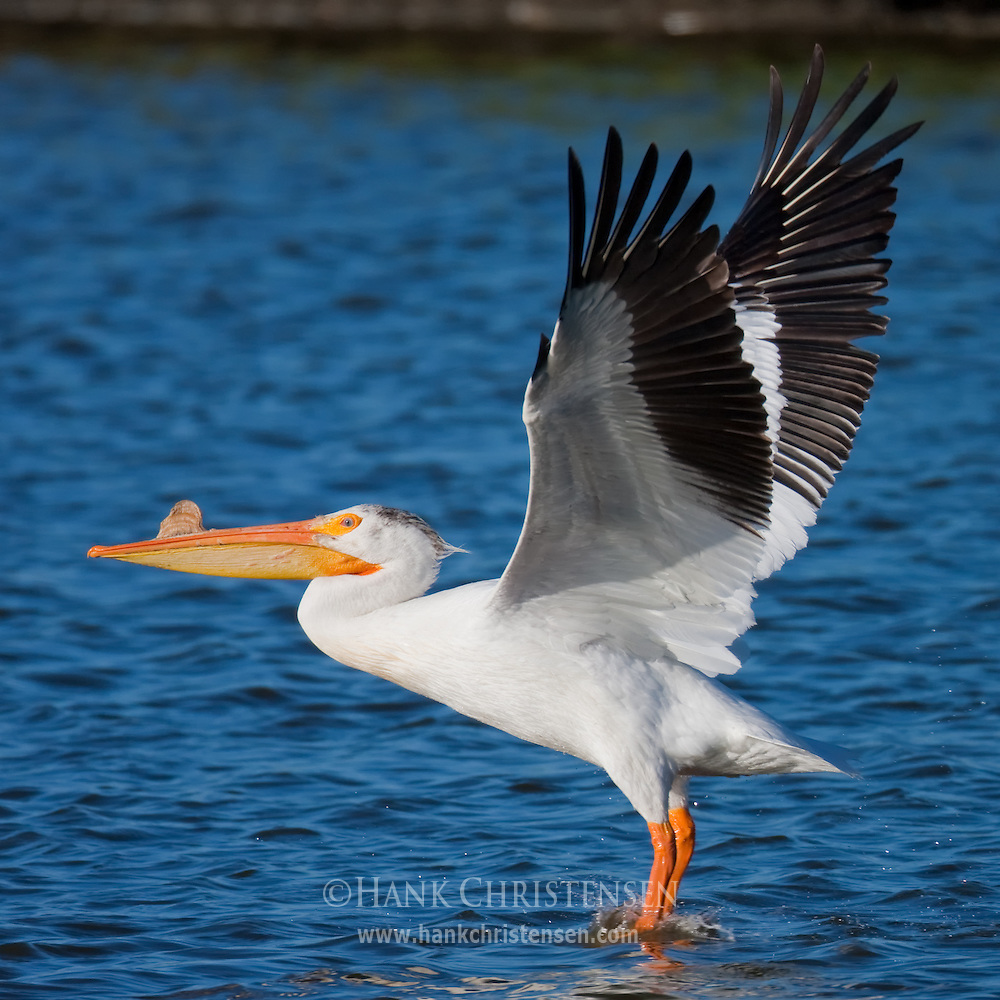
A white pelican spreads its wings as it takes off from the water

Sometimes, however, I get lucky with a take-off photo and capture the wings in the full upstroke position, showing wing detail and freezing a pose that happens very quickly. Although I am happy with outcomes like this, I still prefer the landing poses in photographs.

At the end of the day, there are so many bird behaviors to capture, finding those perfect moments is an endless quest. Multiply that by almost 9,700 bird species, and rest assured that the life of a bird photographer never gets dull.

Seeking Originality In Yosemite Valley

A California black oak stands in a field of wild flowers. In the background an immense granite wall rises from Yosemite Valley.

This summer I spent some time with some old friends backpacking in the Yosemite high country. I love the high country any time of year, but especially in the summer, it offers a cooler respite to the throngs of visitors choking the roads of Yosemite Valley. However, one of my friends had not been to the park since he was a young child, and since we had a little time on our first day, we wanted to drive down in to the valley. I was game, but photographically, I was not expecting much. The valley was hot, had bad lighting midday, and several controlled burns were blowing smoke up the Merced, coating everything in a brown haze.

As we drove down into the valley, seeing all the tourists got me to thinking about originality and photographic vision. Here were millions of people getting out of their cars and taking essentially the same photo as the person they were standing shoulder-to-shoulder with. I started to formulate a challenge in my mind – search for a photograph that captures some of the essence of Yosemite Valley, but keep it fresh and unexpected. I didn’t know if I could come away with something I was proud of, having been through the same area with my camera so many times before.

Luckily the natural world is ever changing and constantly brings new surprises at every bend. The first thing I noticed were all of the wildflowers blooming in the fields on the valley floor. The yellowing grass of late summer was punctuated by brighter yellow blooms, spattered throughout the fields with chaotic perfection. Suddenly three elements came together, and I knew I had the shot I was looking for. A California black oak stood apart from its neighbors, surrounded by intense wild flowers. Behind the tree rose an immense sheer wall of granite, juxtaposing the flowers with cool blues and grays. Here was the essential Yosemite Valley, captured in a way I had never done before.

I couldn’t help but have a smile on my face as I strolled back to the car – a great start to a great trip.

Snowy Egret In Breeding Plumage

A snowy egret grows long bushy feathers and has a bright red skin around the base of the beak in breeding season

Looking back through my archives, I came across these photos of a snowy egret in full breeding plumage. Because there are so many of these birds around my home, I often overlook them (everything ends up looking like a crow after awhile). But these photos stood out as they were taken at the height of breeding season, and this bird in particular had magnificent breeding colors.

A snowy egret grows long bushy feathers and has a bright red skin around the base of the beak in breeding season

As snowy egrets enter breeding season, their feathers become long and shaggy. When the they display, they can create a great fan of feathers with which to show off. In addition, a hormone in the body changes the pigment of their skin around the eye to a bright red.

Seeing these photos reminded me that birds are a living and breathing part of the natural world around us. Like much of nature, they change colors and shapes as the seasons change, and are constantly adapting to their environment.

Parenthood

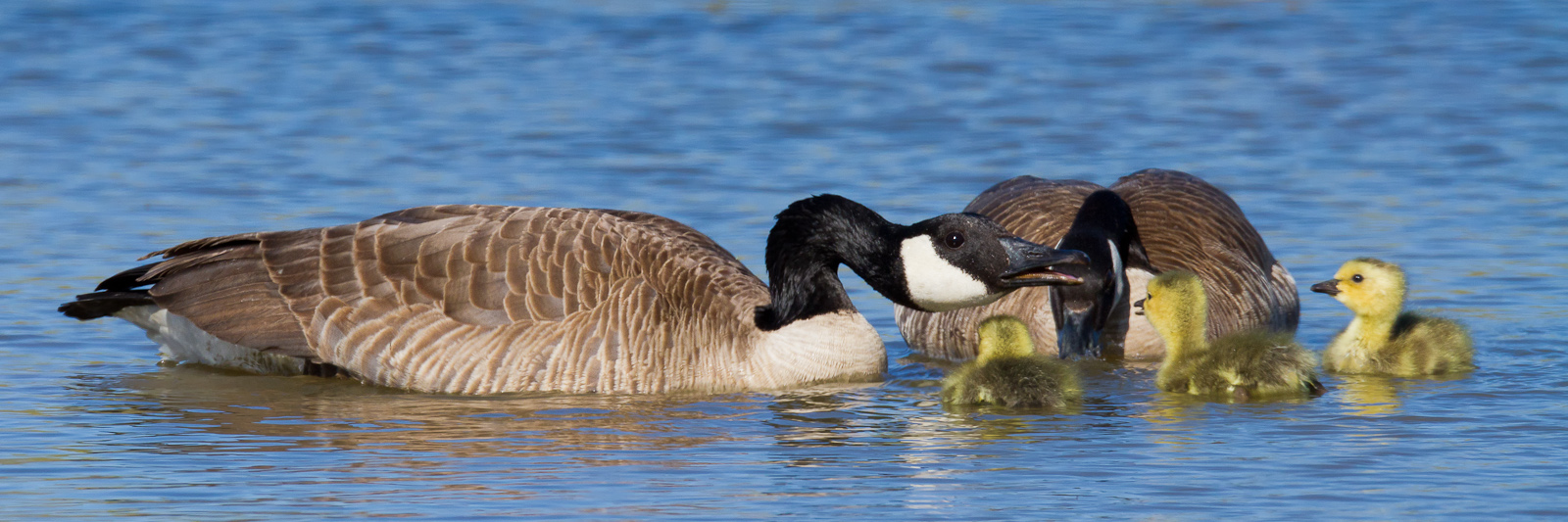
A canada goose delivers a lesson to its young chicks

One of my favorite wildlife subjects to photograph is a parent with their new young. Watching how different species teach their children about the dangerous world in which they live is a joy.

Two canada goose chicks forage at the edge of a small pond

Seeing siblings interact is also a lot of fun. They play together, squabble, and compete for food. All of these help activities teach them important survival skills.

Two canada goose siblings swim together in a pond

Photographing these family interactions is challenging. You have to be close enough to catch the action, while still maintaining enough distance to let their natural behavior unfold. If you get too close to a family group, the parents will corral their chicks as if from a dangerous predator.

A gosling stands in shallow water eating

Canada geese is one of the easiest species to see these types of family behaviors in local wildlife. In the bay area they are a year-round species so there are lots of chicks running around in the spring.

A canada goose escorts its chicks to a small pond for a swimming lesson

They are much larger than ducks, which allows the parents to teach their young in open areas, rather than keep them hidden in the pickle weed like ducks.

A canada goose keeps a careful eye on its young

Sometimes I get so wrapped up in watching these chicks that I forget to take photos, and end up using my lens as a scope. They always bring a smile to my face.