An american goldfinch clings to the narrow branch of a cherry tree. Canon 800mm f/5.6L IS lens with the EOS-7D. ISO 400. Evaluative metering -2/3 EV: 1/2000 sec. at f/8.
This week’s photo involved nothing more than setting up my camera and walking out my front door. The cherry tree in my front yard is a welcome perch for birds flying in to survey the feeding station. However, they usually only stay still for a brief few seconds before moving to the bird feeders. Here, patience and a quick trigger finger save the day.
When I’m photographing birds in the front yard with my long lens, I always use an extension tube to decrease the minimum focus distance of the lens. Otherwise, even standing all the way across the yard, I’m too close and can’t get a focus lock on anything in the yard. This closer distance allows small birds to fill the frame, but makes photographing large birds impossible, unless I’m just going for a head shot or head and shoulders portrait (and how many mourning dove portraits do you really need?)
A burrowing owl stands on rocky ground, looking at the camera. Canon 800mm f/5.6L IS lens with the EOS-7D. ISO 400. Evaluative metering +1/3: 1/160 sec. at f/8.
This week’s photo features a popular favorite – the burrowing owl. This species exists throughout the Bay Area (if you know where to look), but every year their habitat is either destroyed or urbanized. Instead of living in a natural grassland habitat, they are now more often found on golf courses or other large landscaped areas (such as corporate campuses). Fortunately burrowing owl advocates tend to be passionate and active, which may yet give this species a fighting chance.
The burrowing owl is one of the more photographed species of owl in the Bay Area, mostly due to the fact that they are non-nocturnal, and burrow away from trees in more open areas. That is not to say they are easy to find, however. I’ve located an owl in its burrow with my long lens before, then looked up and was unable to locate it with my naked eye. Their camouflage is so good sometimes, that people almost step on them before they see them.
A burrowing owl portrait is captured against a white sky background. Canon 800mm f/5.6L IS lens with the EOS-7D. ISO 400. Evaluative metering +1/3: 1/320 sec. at f/8, fill flash.
I found this owl in the Alviso area of San Jose. There were high overcast skies, which can be very good for bird photography. The shadows are softened so you can shoot all day. In the lower image I used a fill flash to introduce a catch-light to the bird’s eye. Neither images are cropped – a testament to the power of the 800mm lens.
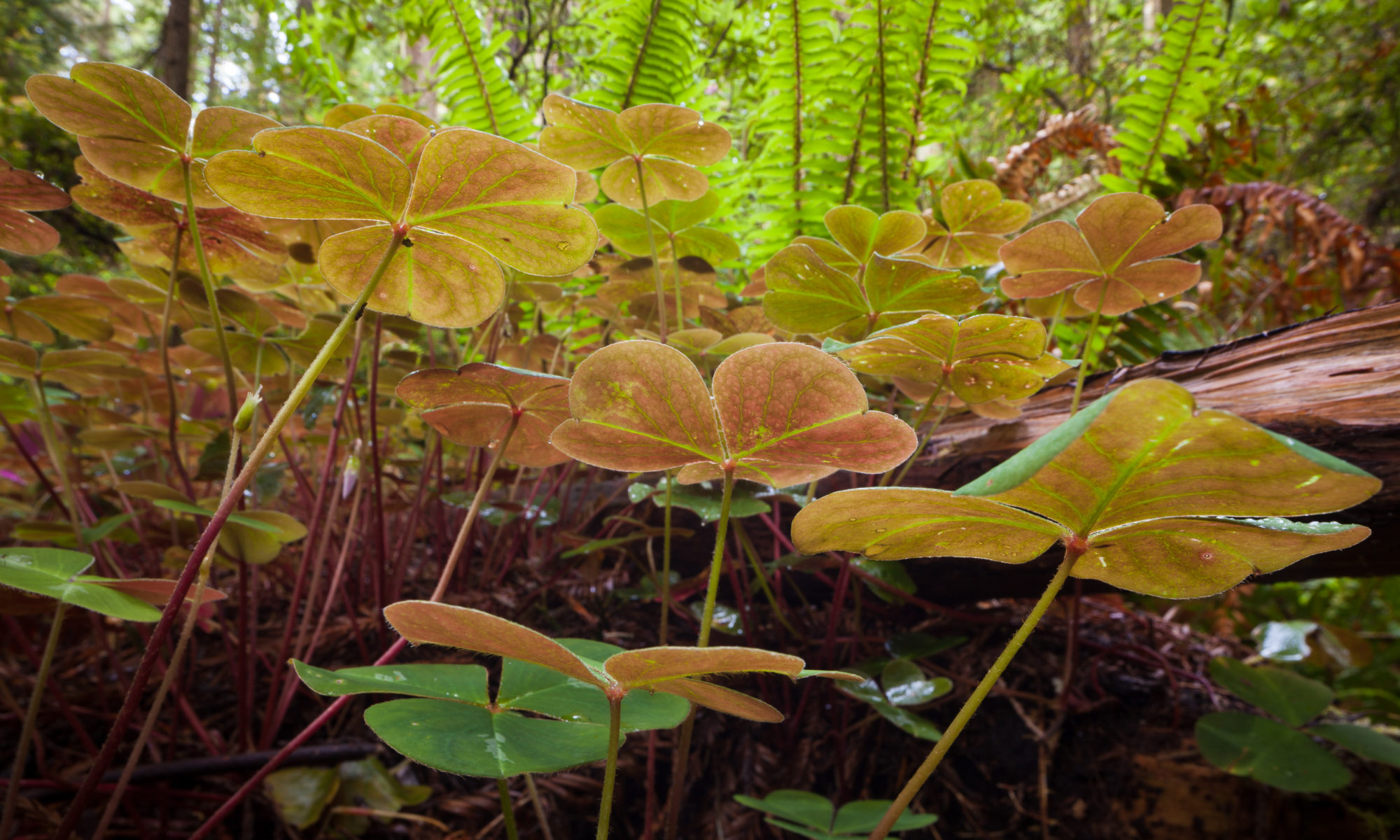
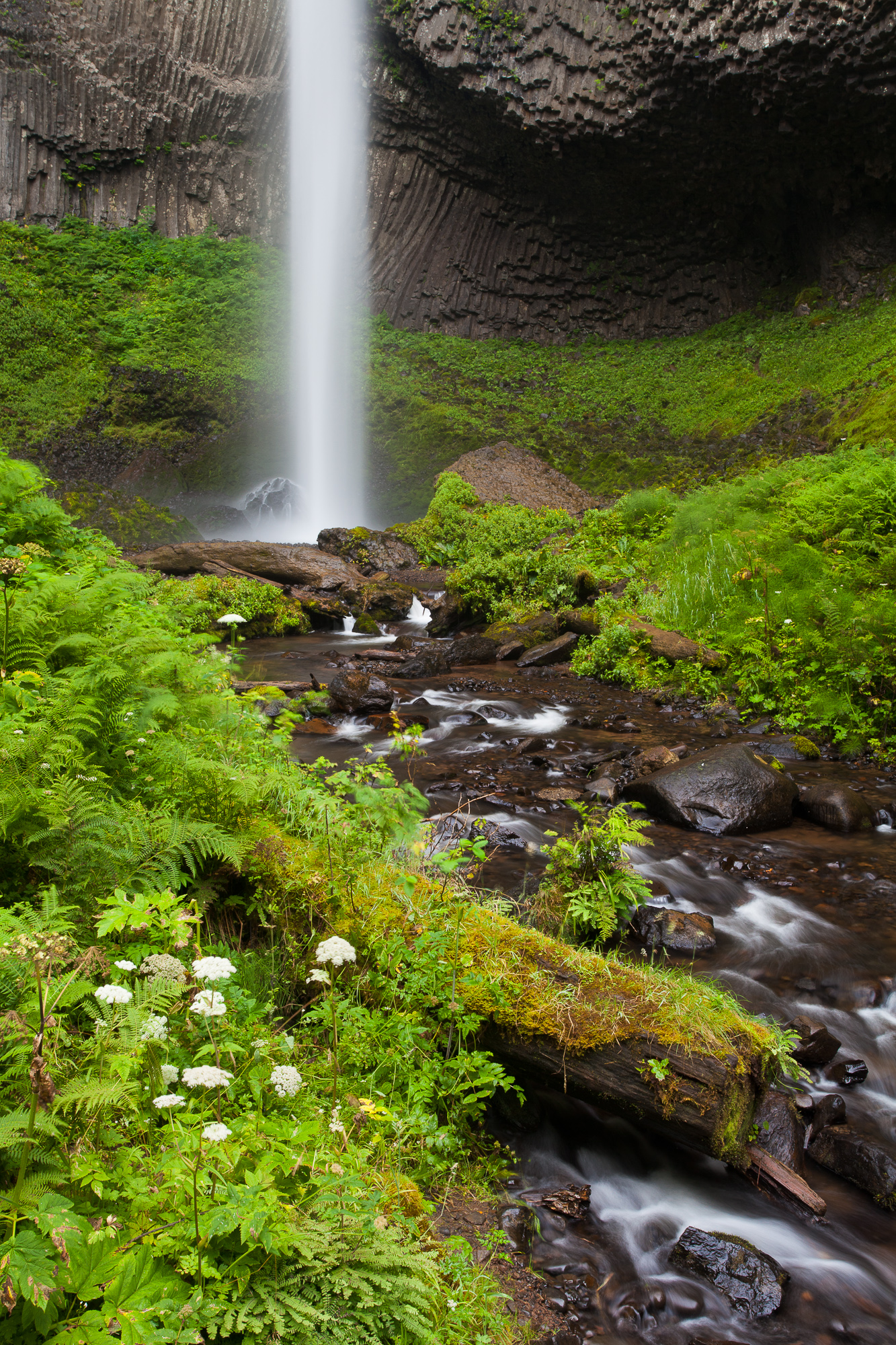
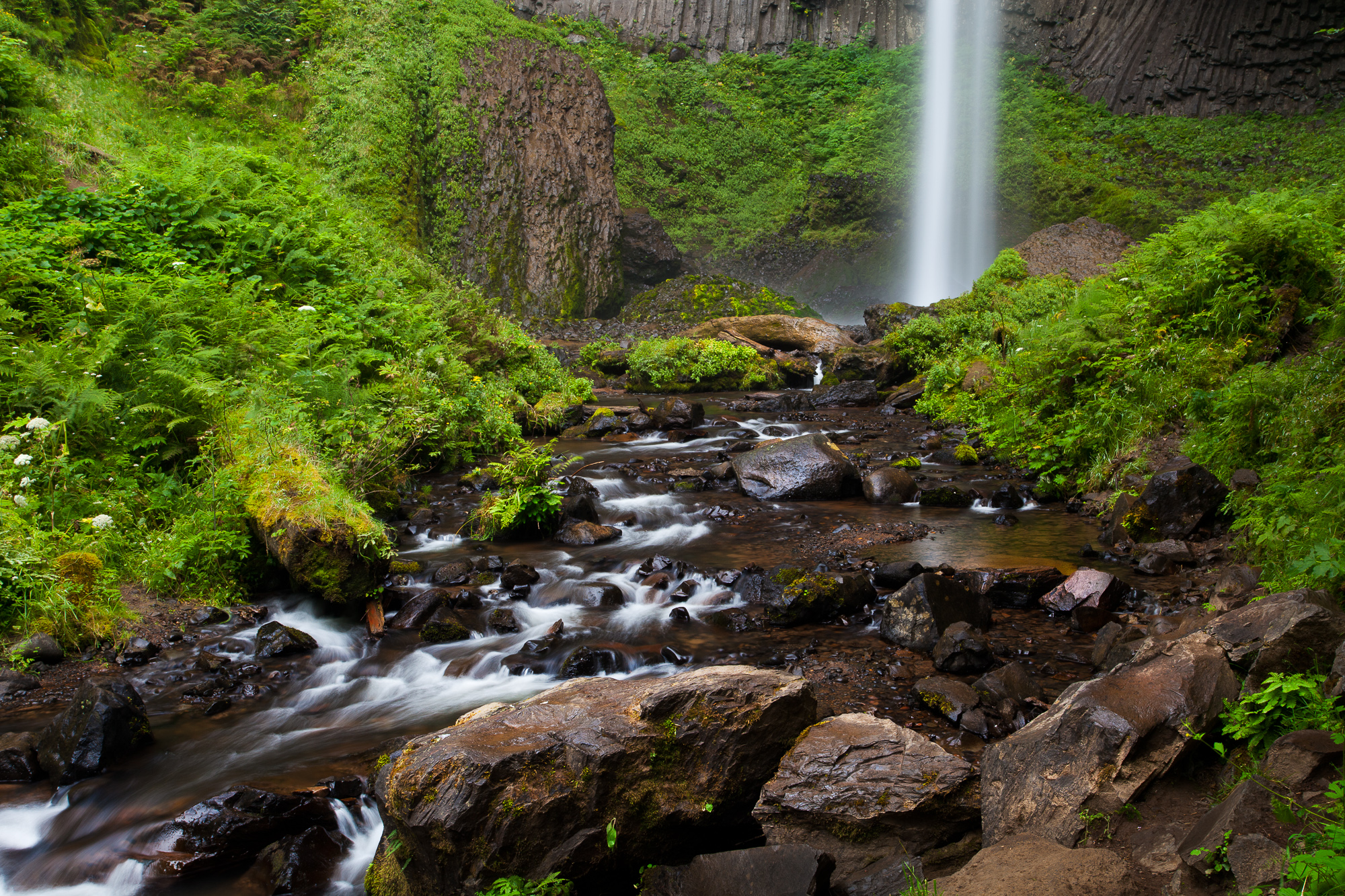
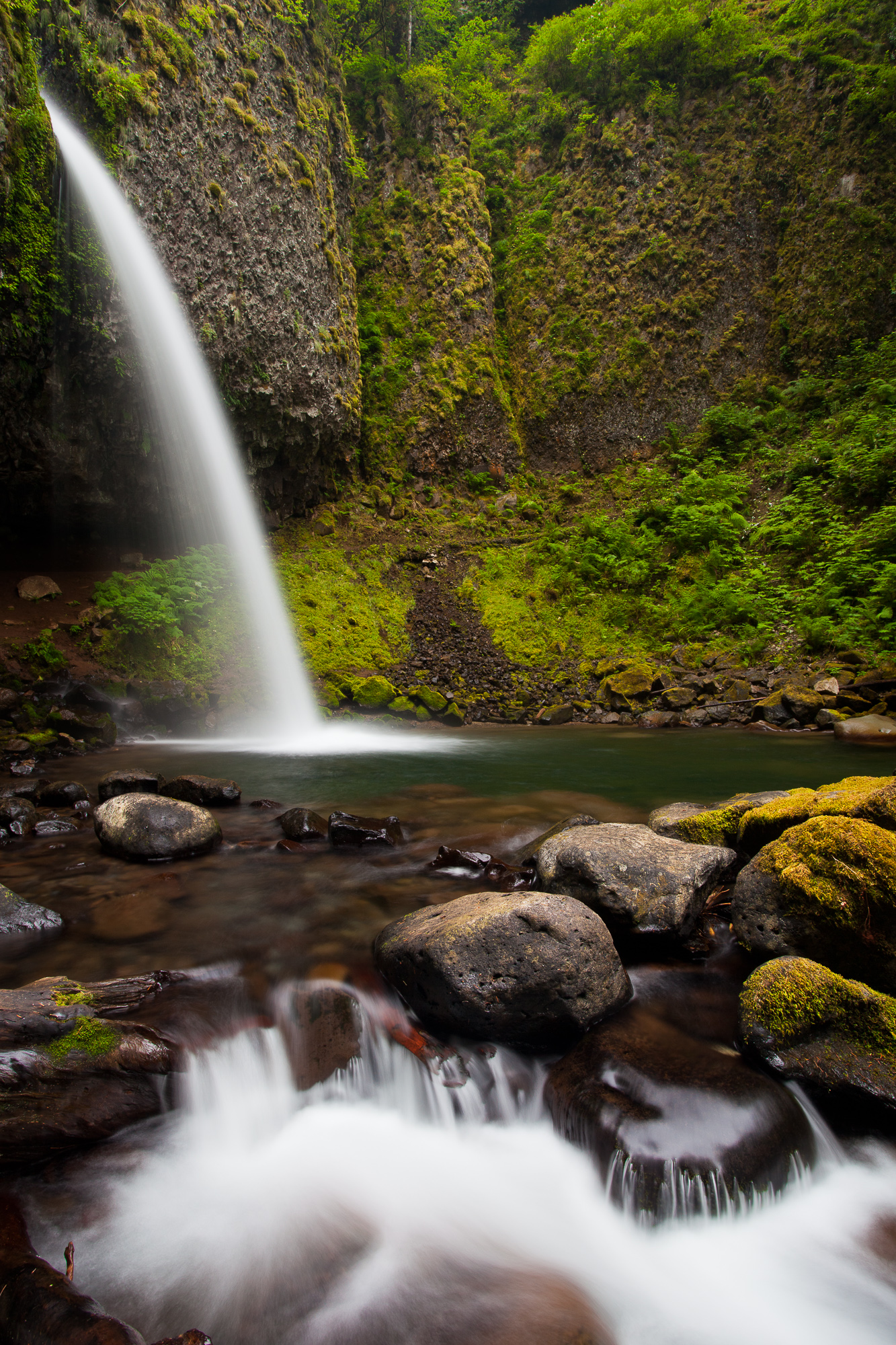
Earlier this summer I spent a couple of mornings in the Columbia River Gorge, photographing just a few of the many waterfalls that line its cliffs. Luckily, I was blessed with Oregon’s trademark high overcast skies, which gave me the perfect diffused light with which to do forest photography. By cutting out all the scattered light beams filtering through the canopy, I was able to get even light across the entire scene, and reduce the dynamic range to something my camera could handle.
Latourell Falls drops straight down from an overhanging basalt cliff, Columbia River Gorge, Oregon
The two preceding images are of Latourell Falls, which seems to have endless foreground opportunities. While most of the falls in the Gorge cascade down rock faces, this waterfall plunges off an overhanging basalt cliff, allowing the water to fall straight down. Since there are never any true straight lines in nature, having a strong vertical line to work into the composition can be a lot of fun.
Ponytail Falls shoots outward from a cleft in a rock cliff, and cascades over large stones below, Columbia River Gorge, Oregon
Ponytail Falls sits upriver from Horsetail Falls, a much larger waterfall closer to the road. While Ponytail may be inferior to its companion in size, it makes up for it in beauty. This fall shoots out from a notch in the cliff, creating a pleasing arc of water. A hiking trail wraps around the base of the cliff behind the waterfall, giving hikers the added bonus of seeing the fall from a different perspective.
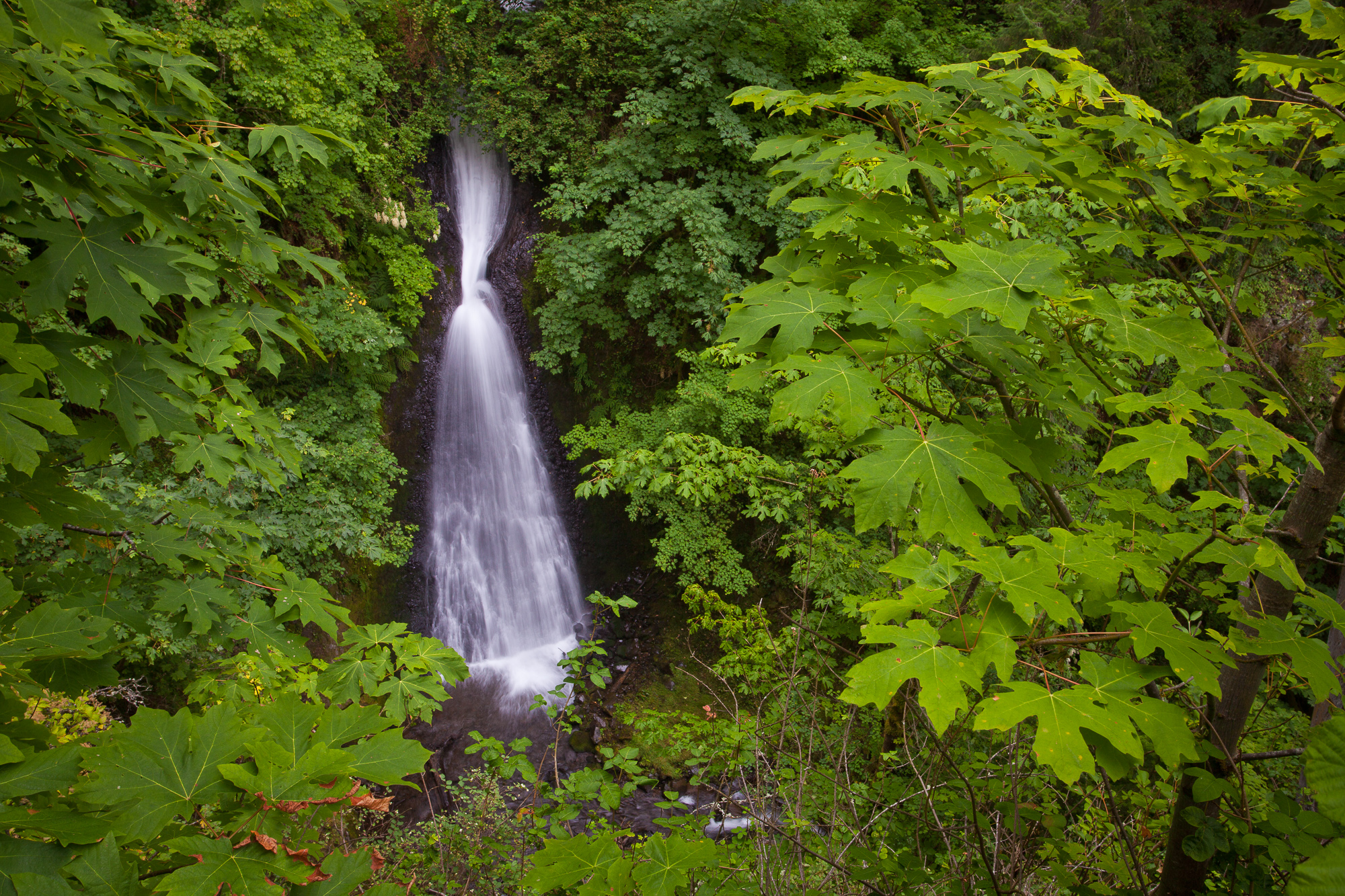
Shepperds Dell Falls empties into a narrow canyon overgrown with greenery, Columbia River Gorge, Oregon
Shepperd’s Dell Falls is absolutely covered with green. This is a nice tidy little waterfall that starts well below the trailhead, allowing views from high above looking down. Of course, shooting so much foliage makes using a polarizer a must. This will cut all reflections on the leaves, and really make the green color pop. This is an effect that cannot be replicated well in post processing.
The river below Wahkeena Falls cascades past a fern, Columbia River Gorge, Oregon
Just below Wakheena Falls is a beautiful cascade that runs past lush ferns and wild flowers. It is not as well visited, as it is tucked away below the road, and most visitors are drawn immediately to the waterfall.
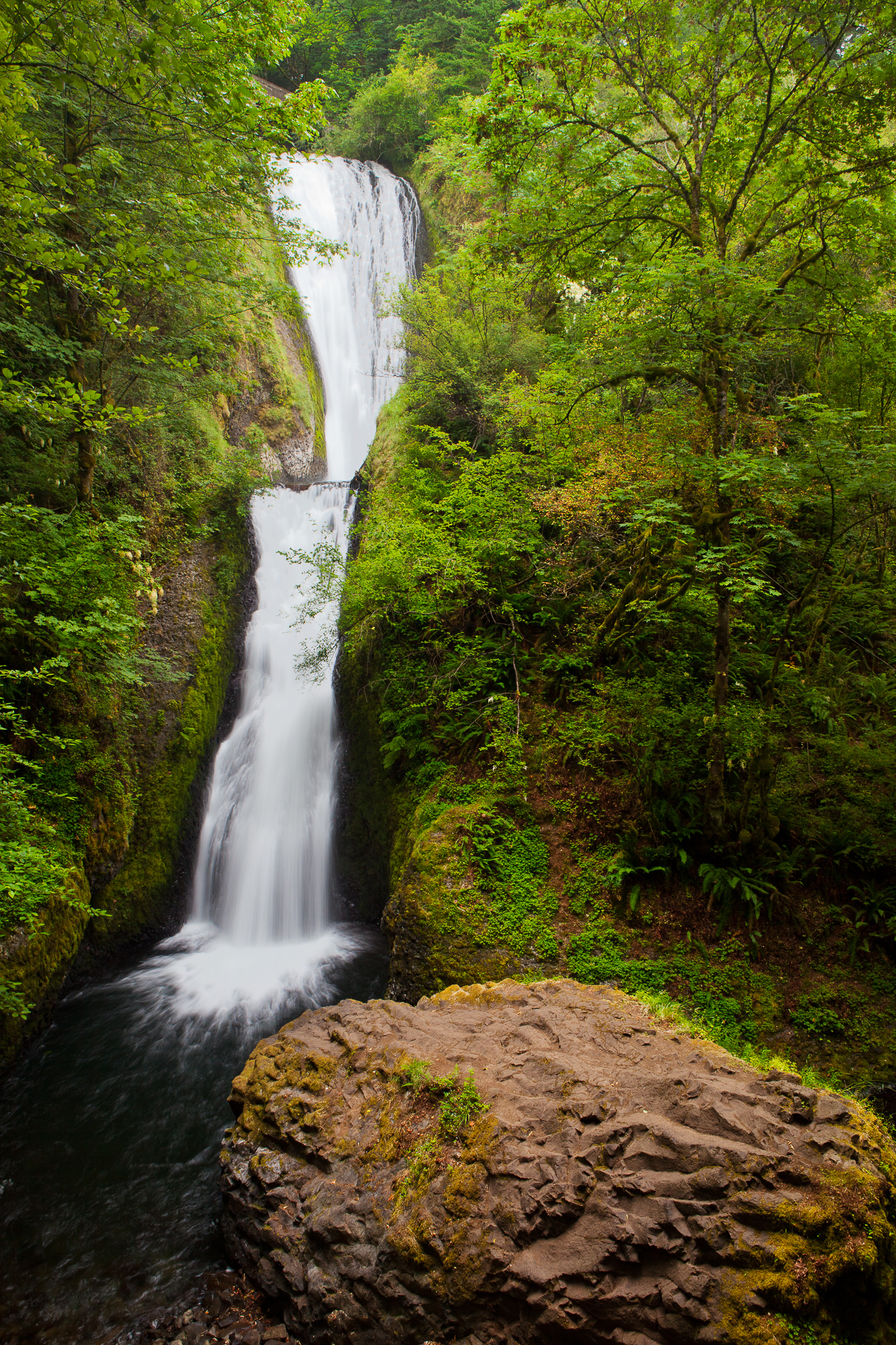
Bridal Veil Falls empties into a small pool surrounded by dense forest, Columbia River Gorge, Oregon
The last waterfall I covered in this trip was Bridal Veil Falls. This is one of the more popular waterfalls along this stretch of road. Equally as popular is the Bridal Veil post office, which receives boxes of wedding invitations from all over the world, so that the invitations can be postmarked by the town of “Bridal Veil” and mailed out to potential wedding guests.
I have to admit, I had a little trouble with the aesthetics of this waterfall. The shot above is a straight-forward interpretation, shot from an (ahem) observation platform. Okay, let’s be honest – it is a vacation snapshot! I wasn’t very happy with this rendering, as I felt it lacked conveying the almost ethereal quality of the grotto that this waterfall plunged into. I worked the scene and settled on the more distant perspective below.
Bridal Veil Falls opens up into a creek that flows through dense forest, Columbia River Gorge, Oregon
The best part of this photo excursion is that I only scratched the surface of the multitude of waterfalls along the Gorge. With so much water flowing into the Columbia River, and so many overcast days (smile), this area really can be a photographer’s paradise.
Gear I used to create the photos in this post:
[amazon_link asins=’B007FGYZFI,B0076BNK30,B00009R6WO,B00IAYFDIC’ template=’ProductCarousel’ store=’hankchristens-20′ marketplace=’US’ link_id=’1e2a6983-927e-11e7-b829-e91a331daddd’]
A california ground squirrel eats a freshly picked thistle leaf. Canon 800mm f/5.6L IS lens with the EOS-7D. ISO 400. Evaluative metering +2/3: 1/800 sec. at f/7.1.
Recently I was out photographing birds, but perhaps a little too early in the day for the typical evening activities. Most were slumbering in the late afternoon heat. However, the California ground squirrels were out in force, foraging and grooming, and generally looking cute.
After watching this one give himself a vigorous dirt bath, he hung around the area for a quick snack. He slowly moved from one thistle patch to another, plucking leaves and daintily gnawing at the edges of each leaf until it was gone. A quick look to each side and he was on to the next plant.
As he did this, I couldn’t help but notice how dextrous his tiny hands were in the way he plucked and handled each leaf, slowly turning it in a circle as he bit at the edges. Although they are so numerous it is easy to take them for granted (or think of them as pests!), they certainly are entertaining to watch.