Red Foxglove grows alone in a clearing in the forest, Corbett, Oregon
This week I’m posting a wildflower shot. I don’t often get out to specifically shoot wildflowers, but seeing pristine foxglove like this, standing out against a green forest backdrop makes it hard to pass by.
I was up visiting my parents who live near the Columbia River Gorge outside of Portland, Oregon. I decided to photograph portions of their forest, which is mostly Douglas fir, and can get pretty dense in places.
Because the forest was thick, it was dark, and a tripod was required. For this shot, I used a polarized filter to cut any sheen from the vegetation. This really allowed the greens to pop. I also wanted to isolate the flowers, so I used a wide aperture (f/2.8) and the telephoto end of my 24-70mm zoom lens. In general, the longer the lens, the shallower the depth of field, so if I’d shot the flower at 24mm, even at f/2.8 the background foliage would have been much more in focus. With 70mm, all the busyness of the forest disappeared into a sea of green.
Below is another shot from the same trip, though of a different foxglove in a different part of the forest.
Ever get tired of all the ads that tell you that to take better photos, all you need is this new camera or that new lens? If so, this article is for you. Almost everyone has a camera of some kind these days – point and shoot, SLR, cell phone. The tips below will work with any kind of camera out there, and will improve the photos that come out of them without requiring the purchase of a single new item.
A typical snapshot - overall, pretty bad
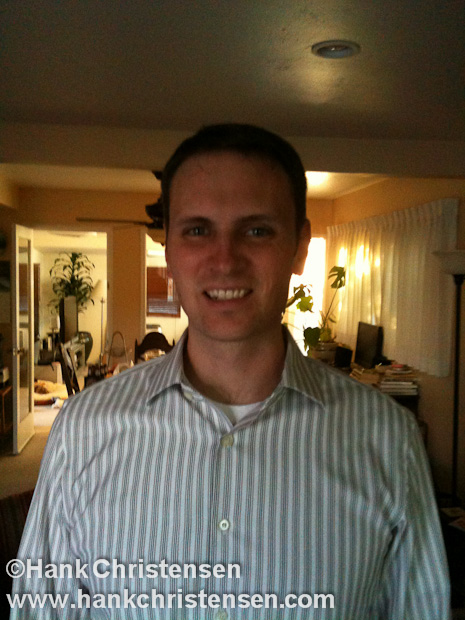
A better shot, using some of the tips below
I took the photos of my brother above with my iphone. This camera has no flash, a crappy lens, and no controls of any kind other than taking the photo. Using some of the techniques discussed in this article, I was able to add interest and improve the quality of the photo.
1. Stabilize, stabilize, stabilize!
This is perhaps the most important tip here – do anything you can to keep the camera still while taking photos. This usually means using a tripod (and I’d definitely recommend that whenever possible – it’ll change the way you do photography!) But if you don’t have the funds (or the patience) to use one, there are many other ways to keep the camera stable. Get an old grocery bag and fill it with dry beans. Place this make-shift beanbag on anything you can find – rocks, tree stumps, table tops. This will give you a malleable surface from which to position your camera. If that isn’t available, lean up against a tree or wall and hold the camera tight against your face, bracing your elbows against your torso. Hold your breath and shoot.
2. Shed some light on the subject
The darker the subject, the longer the shutter speed required to get the proper exposure. Getting some natural light on your subject will improve the photograph dramatically. Indoor photography (even in the middle of the day), usually has less light than desired. Open some windows to bring in natural light from outdoors, or if possible, bring your subject next to a window. Strong directional light against a dark background can have dramatic effects.
Shooting outdoors with a harsh mid-day overhead sun? Try shooting your subjects in the shade to even out the light. Get a large piece of cardboard and some aluminum foil and build a homemade reflector. With a reflector you can bounce that harsh noon sunlight onto your shaded subject, giving you plenty of light to work with.
3. Find a new angle
Shooting your subject from a lower or higher vantage point can differentiate your shots from the rest of the pack. Think creatively about new ways to capture a subject you’ve seen over and over again.
By moving above my nephew with him looking up at me, I added interest to the photo
I took the photo of my nephew above for his family’s Christmas card. I found a fence to climb, and had him stand below me on some bright green moss. This new angle added interest to what would otherwise have been a mundane straight-forward portrait with a background of trees.
4. Don’t center your subject
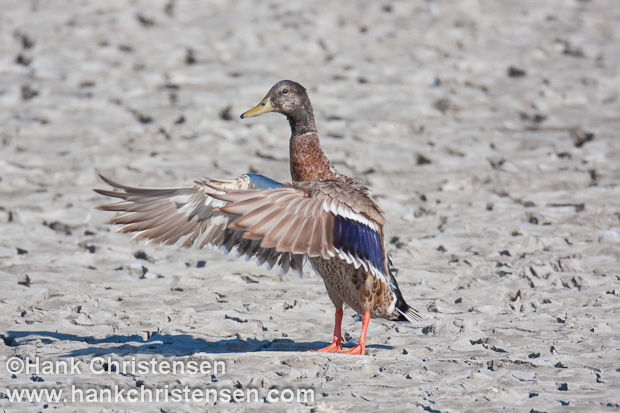
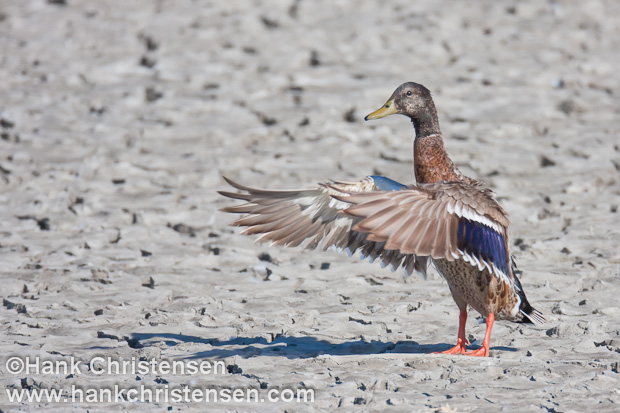
Anyone who’s been around photography a while will immediately recognize the rule of thirds. But it’s important, so I’ll repeat it here. Using two imaginary vertical lines, divide your photo area into three equal sections. Now do the same horizontally. There should be four places in your photo area where the imaginary lines intersect. The rule of thirds says that the main subject of the photo should appear in one of these four spots. Unless your photo is specifically illustrating some form of symmetry, avoid placing your main subject in the middle of the frame.
The example below demonstrates applying the rule of thirds. Which photo looks better?
Here the mallard is centered in the frame
By moving the subject to the right, in keeping with the rule of thirds, the photo looks better
5. Edit ruthlessly
This tip doesn’t technically concern the “taking” of photos, but rather what to do with them afterward. Everyone takes crap photos. The pros just take fewer of them, and know enough to get rid of them when they do. Next time you’re reviewing photos from your last vacation or outing, don’t be afraid to delete the misses. In my early years of photography, I was as guilty of this as anybody. I kept EVERYTHING. And yes, with today’s storage, you can technically keep everything that ever comes out of your camera forever. But really ask yourself, do you ever want to actually go back and look at all the bad shots you took?
A friend of mine (I won’t name any names) once took a two week trip to Europe. When he came back, he asked if I wanted to see his vacation photos. “Sure,” I said, “how many do you have?”
“Oh, about 5,000.”
“What?!” We waded through shot after shot of the same subjects, taken as he tried to get the photo he wanted. Needless to say, we never got through them all. And the unfortunate part was that I missed all the gems that I’m sure were in there. So, throw away the crap, or at the very least, pick your winners and copy them to a separate location. When asking your audience to view your photos, having an edited collection will change their response from “Oh, do we have to?” to “Yes, please!” And I’ll bet you never look at your garbage folder again.
As the saying goes, all rules are meant to be broken. Such is true with each tip above. For each tip, there are situations in which they may not be the best choice for one reason or another. But by in large, keeping these in mind when I pick up my camera helps me focus beyond all the bells and whistles of the camera. It pays to occasionally get back to basics and remember the simple things we can do next time we’re out trying to capture that perfect shot.
The sun peaks over the crater's rim, casting Crater Lake in the warm glow of sunrise, Crater Lake National Park, Oregon
On a recent trip to Crater Lake, I lucked out with a morning that wasn’t completely overcast. After shooting sunset the night before, I found myself back at the rim of the crater at 5:15 the next morning, trying to stay warm in sub-freezing temperatures. As soon as the sun’s glow started appearing over the far rim, I knew it would all be worth it.
Although I took many photos that morning, I think the one above is my favorite. The star burst effect on the sun is caused by using a small aperture (f/16 in this case). Below are a few more from that morning.
Light from the rising sun turns a blue sky orange and silhouettes the distant rim, Crater Lake National Park, OregonThe light of sunrise casts the overlook and the surrounding rim of Crater Lake in a warm glow, Crater Lake National Park, Oregon
A forest of pine covers the floor of Yosemite Valley, Yosemite National Park
It all started out well enough. My friend Steve and I headed out of town last Thursday night for what looked like a wonderfully scenic three-day backpacking trip. We were going to start in Sierra National Forest, loop into southern Yosemite, and then into Ansel Adams Wilderness. The drive went well, the 30 miles of dirt road were easier than we were expecting, and we found a nice spot to disperse camp at the trail head.
Then, sitting around the campfire before bed, my stomach started feeling pretty bad. I thought maybe it was the altitude, as we were camped above 8000 feet. I went to bed expecting to acclimatize over night and feel better in the morning. Wrong – I felt worse. I’ll spare you the details, but it soon became apparent that I couldn’t hold anything down, including water. My head was pounding with dehydration. Definitely no way to start a rigorous 15+ mile day!
From Glacier Point, the visitor is granted views of Yosemite Valley, Half Dome, and the Yosemite high country.
After much deliberation, we decided to skip the trip and pack it in. Thankfully, Steve is one of those easy-going guys who can be very flexible when plans need to change. We were both disappointed, but agreed to tackle the trip another time. Since we were close to Yosemite, we decided to pop into the park for some quick vistas before heading back to the Bay Area.
Trees grow out of rounded granite overlooking Nevada Falls from Glacier Point, Yosemite National Park
So, okay, the photographs I took weren’t “lousy”, but not really what I was expecting from a trip into the backcountry. I much prefer photographing areas with few or no people – preferably that are hard to get to. As it was, we were stuck with what is the hustle and bustle of a Yosemite vista point in mid-summer. In general, I tend to stay away from these spots for two reasons. First, they are frequently crowded to the point that it breaks my ability to connect with the nature that surrounds me. Getting out into the Sierra only to see people pushing and shoving to get a view (Glacier Point, anyone?) is not my idea of solitude! Second, from a photographic standpoint, I don’t like taking photos that have literally been taken millions of times before.
Although this landscape has been captured by cameras millions of times, it is still beautiful to behold
Needless to say, I was in a bad mood heading back last Friday. However, after getting home and processing the photos I took, I was reminded why all those people were there. Everyone can get to these spots, and they are among the most beautiful in the world. I remember the first time I saw Yosemite and how awe-struck I was. I would never want to deny anyone else that same experience, no matter how grumpy I get from a missed backpacking trip. After all, there is a reason they call these scenic vista points.