
Lessons From Jack

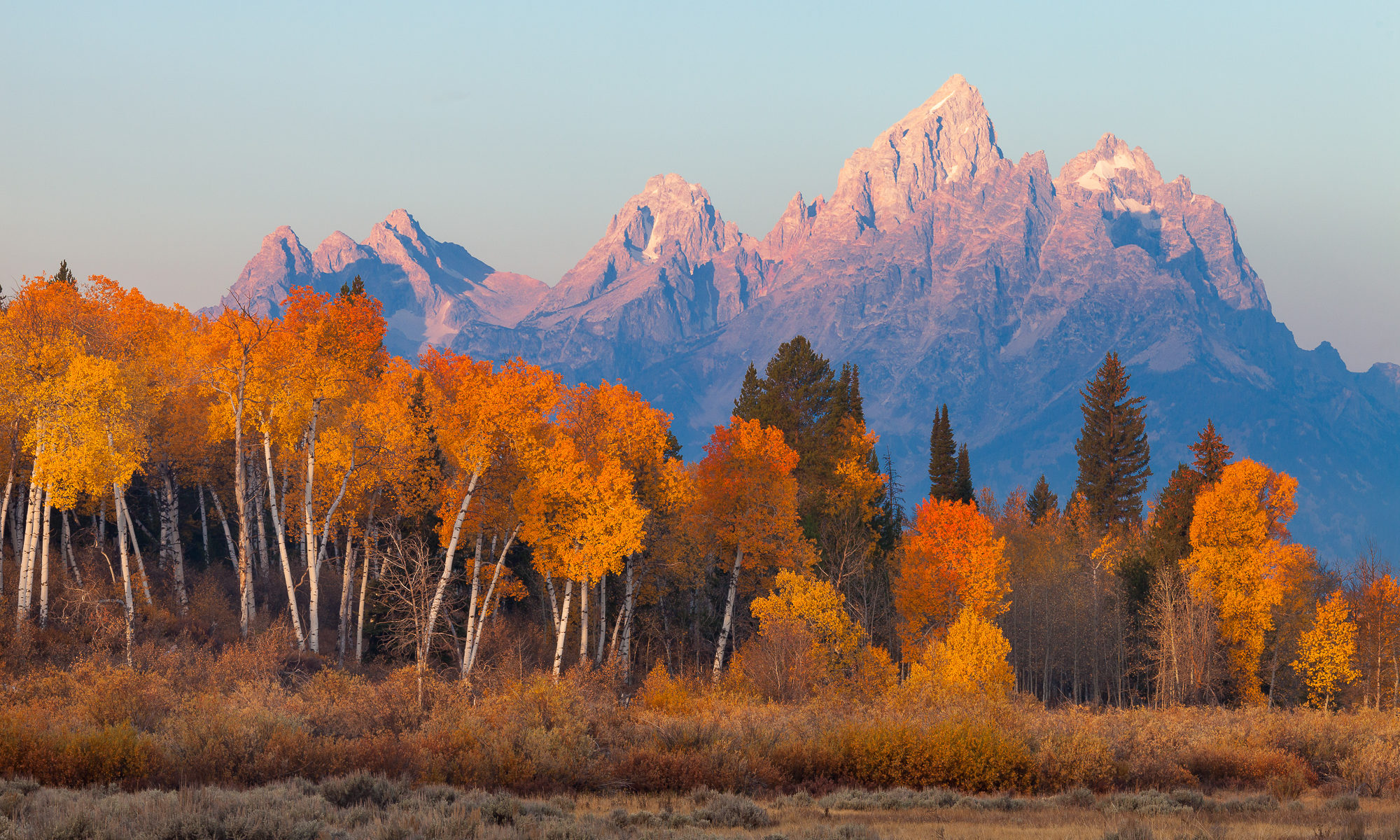
The sun just lights the top of the Tetons as it rises behind a grove of aspen in their fall colors, Grand Teton National Park
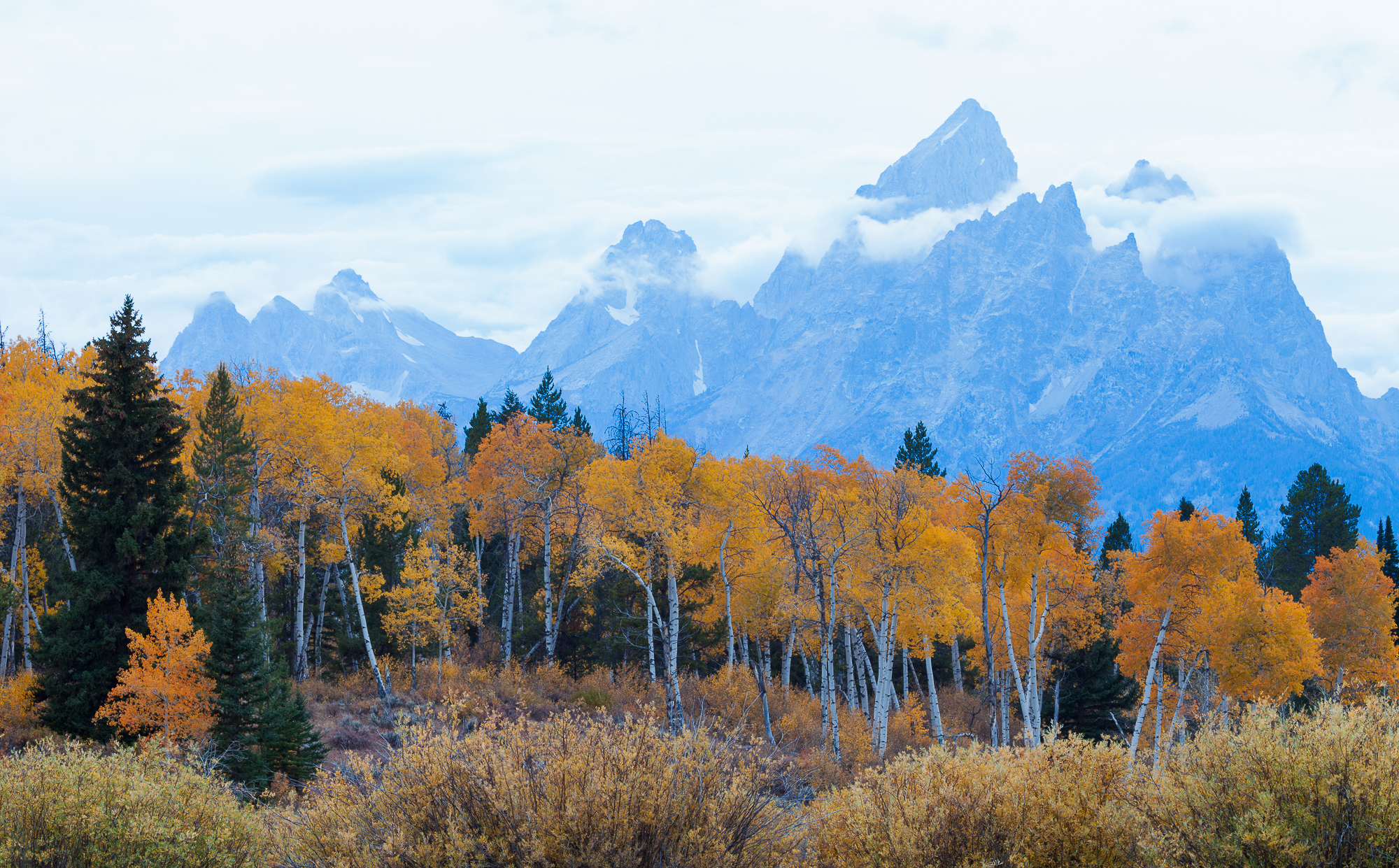
The Tetons rise behind a stand of fall aspen, Grand Teton National Park

When we pulled up to the stand of aspen that Jack had scouted earlier, I could tell he was hopefully optimistic about the coming sunset. I was participating in a 5 day photo workshop with landscape legend Jack Dykinga, and this was our first field excursion of the workshop. We were in Grand Teton National Park and the weather had been less than optimal, with thick smoke sitting on the floor of the valley, extirpating any hope of a clear view of the mountains. However, earlier in the day, there had been a shift in the wind, and the weather forecast called for a storm moving through in the next couple of days.

“You know, we might just get a killer sunset,” Jack said to the eager group. The location certainly was beautiful. A colorful grove of fall aspen stood before us with the grandeur of the Tetons rising behind. But the clouds were building in the west and there was still a haze in the sky above the mountains. I just didn’t see it. Uninspired, I set about working with tight shots of the trees.

As it got later, I decided to move up the road a bit and get into a position that removed my foreground, composing just the trees and mountain. Just in case we have a sunset, I thought. A few minutes later, Jack appeared to my left and a little ways behind me. Apparently he had found his spot and was getting ready for the sunset he was anticipating. I could tell he was getting more excited as it got later. I still didn’t see anything special in the light, so I asked him what he thought was going to happen.

“We have just a trace of smoke in the sky, with clouds building above, that when the sun sets behind that notch,” he pointed to the right of the mountains, “we might just get God beams blasting up from behind.” Not sharing his optimism, I adjusted my composition anyway, including the notch he pointed to. Just in case. Eventually, the sun set behind the notch, just as he predicted, but no great light. “Just wait,” he called out to the group. “And be ready!” Moments later it all came together.
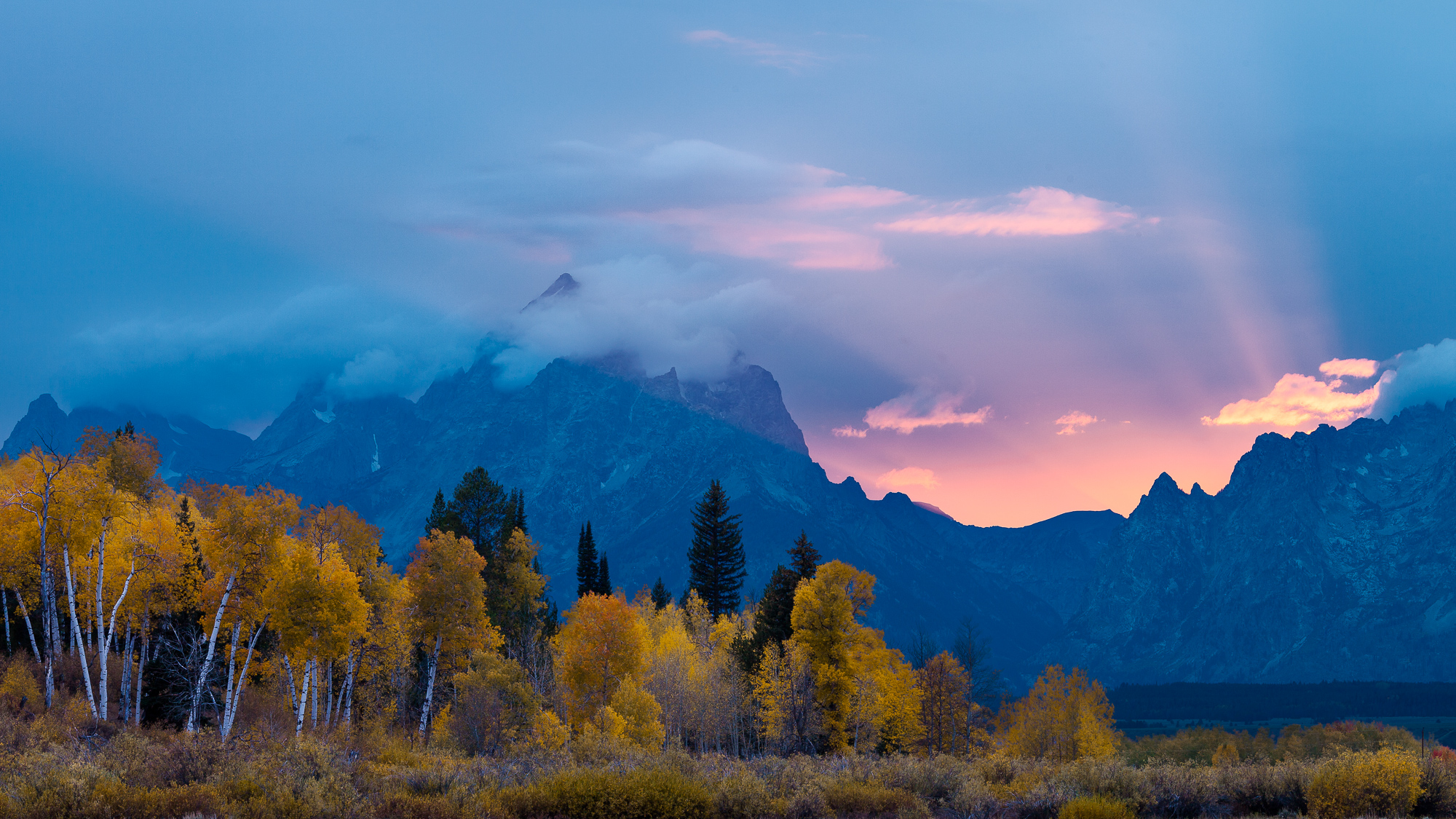
Dramatic light bursts from behind the Tetons at sunset.  Thick smoke and haze from nearby forest fires create God beams as the sun drops behind the horizon, Grand Teton National Park
Dramatic light bursts from behind the Tetons at sunset. Thick smoke and haze from nearby forest fires create God beams as the sun drops behind the horizon, Grand Teton National Park

As he captured his images, Jack whooped into the air with joy. And he let out more than one of his trademark “Woof!” shouts. As amazed as I was about Jack’s ability to predict exactly what the light was going to do, I realized that what was happening here was not pure luck or voodoo magic. Certainly this ability to anticipate the light came from his years of experience working with 4×5 cameras. Working with large format film requires a far slower pace than what is possible with the run-and-gun potential of 35mm format. One of the requirements of this slow pace is the ability to anticipate and then patiently wait for the light to happen in front of you. Since he was a successful large format photographer for so many years, logic dictates that he must also be an expert light forecaster. It is a skill I greatly admire and will strive to hone in the future.

A few days later, Jack was giving one of his amazing photographic lectures. When a student asked how he “lucked” across a particular cactus with a perfect bloom, Jack said that this image was taken on something like his tenth trip to this spot in as many days, waiting for the bloom to become optimal. And he had previously visited this site close to a hundred times. In other words, Jack knew these cacti very well. After all, the best photographers are experts on their subjects.

After the workshop, I got a chance to put this lesson to practice. My friend Jerry Dodrill (and the workshop’s co-leader), suggested that although we had been to the same stand of aspen several times already (our group had revisited the first night’s location later in the week), he felt the location still had more to offer. “I’d love to see both the mountains and those trees side lit in the early morning,” he told me. And although this would make three visits in four days to the same spot, we awoke long before dawn and made the journey out to this secluded forest service road. I had my doubts as we watched the clouds in the pre-dawn light, streaking to the east, but I trusted Jerry’s experience, and knew that this was an opportunity to try out Jack’s suggestion that we revisit locations well known to us.

As I set up my composition and waited for the light, I became aware that each time I came here, I did know the area a little better, giving me a better idea of how to approach the subject. In fact, as I lined up my shot that morning, I felt I was in the best spot of all my previous attempts at this shot. Moving left and right, forward and backward, zooming in and out gave me infinite possibilities to compose this type of shot. It helped to understand the some of the subtleties of my subject and have a clear vision in my mind of exactly what I wanted to achieve.
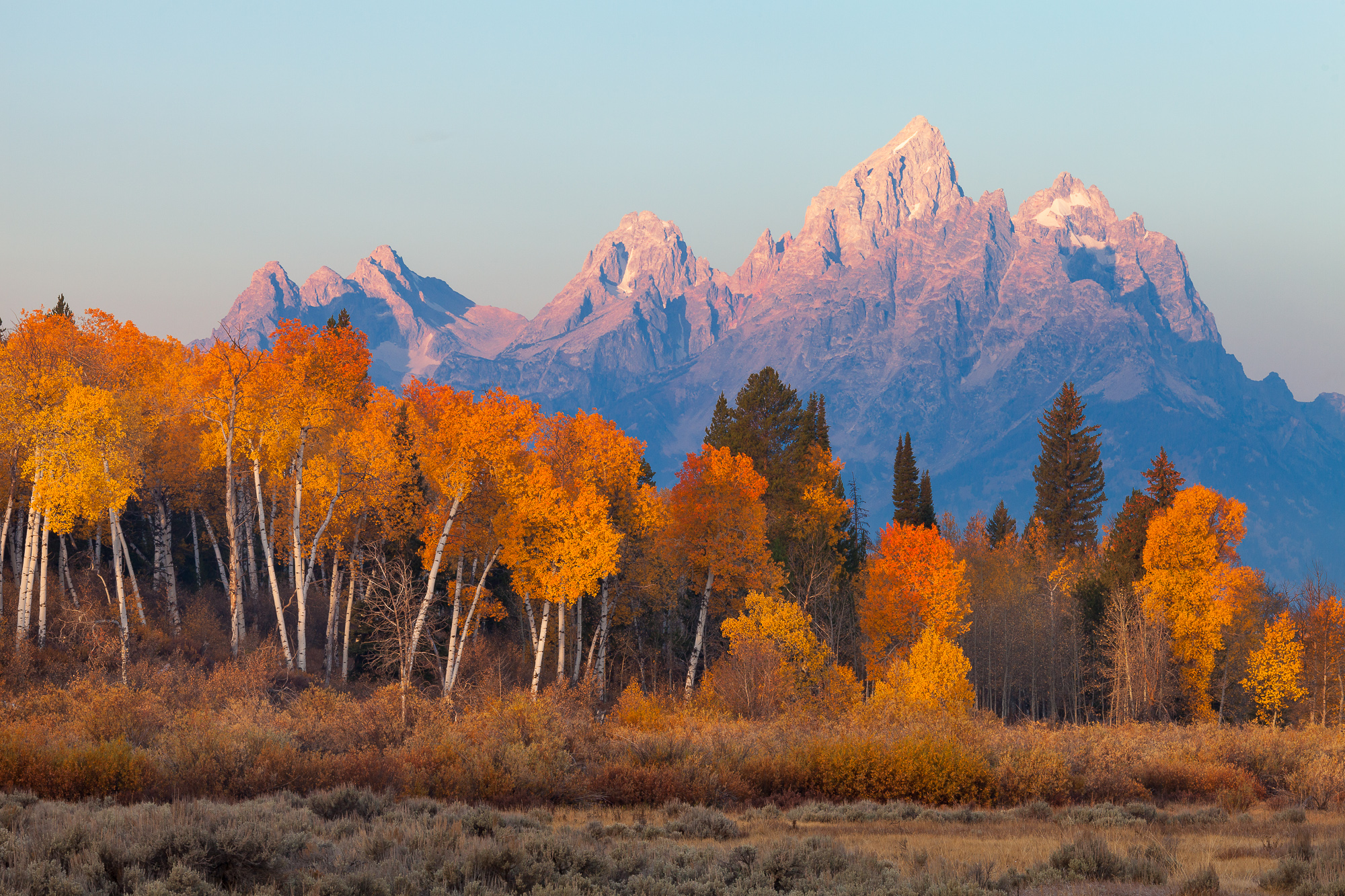
The sun just lights the top of the Tetons as it rises behind a grove of aspen in their fall colors, Grand Teton National Park

As the top of the mountain began its alpenglow transition to day, the scene in front of me was beautiful. But I heard Jack’s voice in my mind – “Wait for it!” All at once the morning sun brushed the aspen with luminous side light. I clicked the shutter, appreciative for these lessons from Jack.

Grand Tetons National Park – The Trees

A row of fir trees grow amongst a thick stand of aspen, all in their fall colors, Grand Teton National Park

As I said in an earlier post, the trees were the real stars of the show on my recent trip to Grand Teton National Park. Fall colors were bursting from every leaf, and the mixture of coniferous and deciduous gave the changing leaves a nice backdrop from which to pop.

Composing coherent tree photos is not easy. It is the epitome of finding patterns in chaos. In some cases I was able to juxtapose the shapes and colors of tall, white, narrow trunks with the round colorful leaf canopy as seen in the photo below. Given that I wanted to stack the trunks against one another to create a continuous pattern of lines, I shot this one from a distance with a telephoto lens.

A stand of trees in full fall color, Grand Teton National Park

There are other occasions where I want to be closer to the trees, and seek patterns just in the trunks. In the following photo I was inside an aspen forest, and really liked the character of the boulder that these trees were growing around. But the real thrust of this photo is again a linear pattern created by the trunks.

This photo took quite a while to compose, as I wanted to avoid conjoining trunks in order to maintain that clean linear pattern throughout the photo. As you can see in the background, the distant trunks were carefully placed in between the tree in the foreground, so as to avoid any overlapping.

Fall colors dot a grove of aspen, Grand Teton National Park

Weather played a part in my tree photographs, as it did with the grand landscapes as well. After a storm passed through, I had a nice rainbow to play with for over an hour. Moving up and down a riverbed, I found this stand of trees that I could compose the rainbow behind. I was careful to run the rainbow up into the right corner of the photo, to create a strong corner.

A rainbow forms in the midst of a moving storm, Grand Teton National Park

Of course there were those foggy mornings as well. When I took this photo, I was up above the Snake River, and watched for a while as the changing fog moved like a living thing among the trees and distant hills. Landscape features were hidden, revealed, and back again, as if controlled by a grand magician working his craft.

Bright fall colors show through the dense fog that shrouds the landscape, Grand Teton National Park

I’ll leave you with one of my favorites – Aspen Embrace. There were many things I loved about these two photogenic trees. Not only does the aspen look like it is hugging the lone fir, welcoming it into its grove, but texturally, I love the stark, solid fir needles against the ethereal aspen leaves. Here the composition was straight forward – I only cropped it to a more traditional 4×5 aspect ratio as I felt the subjects’ spacing worked better with that framing. (Careful observers will note that this fir tree also makes an appearance in the first photo above.)

A fiery aspen wraps its branches around a lonely fir, Grand Teton National Park

Even though the nearby forest fires cause some smoke issues on the first few days of my trip, the timing of the fall colors couldn’t have been better. I’d love to spend more time in this part of the country next fall – there were definitely a lot of great opportunities there.

Grand Tetons National Park – The Mountains

The Tetons glow red as they are front lit by the sun at dawn, Grand Teton National Park

For my second post from my recent trip to Grand Teton National Park, I’ll focus on what I had considered the main attraction before the trip – the mountains. What was not expected however was being greeted by thick smoke from several nearby forest fires. On my first day in the park, the mountains were obscured by a dull gray haze that was so thick, you could barely make out the outline of the peaks.

Storm clouds drift high above the Tetons, Grand Teton National Park

Luckily however, some wet weather and (better yet) wind came through the valley, and helped clear things up a bit. In fact, I was excited to see the wet weather move in not just to help in clearing out the smoke, but because storms (and the clouds they bring) really help create drama. One of the worst things a landscape photographer can see in the forecast is clear blue skies.

I managed to visit all of the famous views of the Tetons while I was there. Though I usually shy away from such places, any self-respecting photographer should have these shots in his portfolio. After all, there is a reason they have become famous views!

The Tetons are reflected in the Snake River at Schwabacher's Landing, Grand Teton National Park
The Tetons are reflected in the Snake River at Schwabacher’s Landing, Grand Teton National Park

Even with the wind and weather moving through, we had several very foggy mornings. It was nice to see the smoke dissipating (fog generally looks “cleaner” than smoke), but at times the thick fog obscured both the view and the sun rising behind us. However, as the old saying goes, work with what ya got, and on one morning, I was able to use the fog to my advantage, adding a layer of separation to an otherwise straight forward sunrise shot.

A fog bank moves in front of the Grand Tetons as the rising sun illuminates the sheer peaks, Grand Teton National Park

Probably the most iconic spot in the park is Oxbow Bend, where the Snake River pools into a large area, allowing for still water and insane reflections. I was there on two mornings, and both times I didn’t even stop the car. The first attempt saw that familiar smoky haze, and in the second we were greeted by dense fog. And yet both times there were close to 100 photographers lined up waiting for sunrise. To this day I still don’t know what they expected to shoot in that weather, but I guess you have to respect their commitment? Meanwhile I was off to better spots for that weather.

Eventually I did get to photograph Oxbow Bend, this time around 10 in the morning. Usually I’m done for the morning by this time, but the fog was just starting the clear out. Luckily the trees along the shoreline were blazing with yellow, which juxtaposed the late morning blue of the mountains beyond. Some day I’ll have to make it back here for sunrise – I’ll be sure to sharpen my elbows first.

The fall colors of Aspen contrast the blue hues of the Tetons, Grand Teton National Park

As amazing as the Tetons were to see in person, I began to realize by the mid point in my trip that the real stars of the show (beyond the numerous wildlife) were the fall colors and the trees that wore them. But that will have to remain for another post….

California State Parks Short Term Fix

Waves crash against sandstone headlands, Salt Point State Park, California

In honor of the recent good news that nearly all California State Parks that were slated to close yesterday will be saved (at least temporarily), I have created a new portfolio gallery of a selection of images I have creates at CA state parks over the last few years. Please enjoy this small slice of what CA state parks have to offer.

Even with the good news, the long term outlook of the park department is not good. Please show your support by visiting a CA state park this summer, or joining their facebook page.

Copyright 2017 Hank Christensen