Yosemite’s Natural Fire Fall

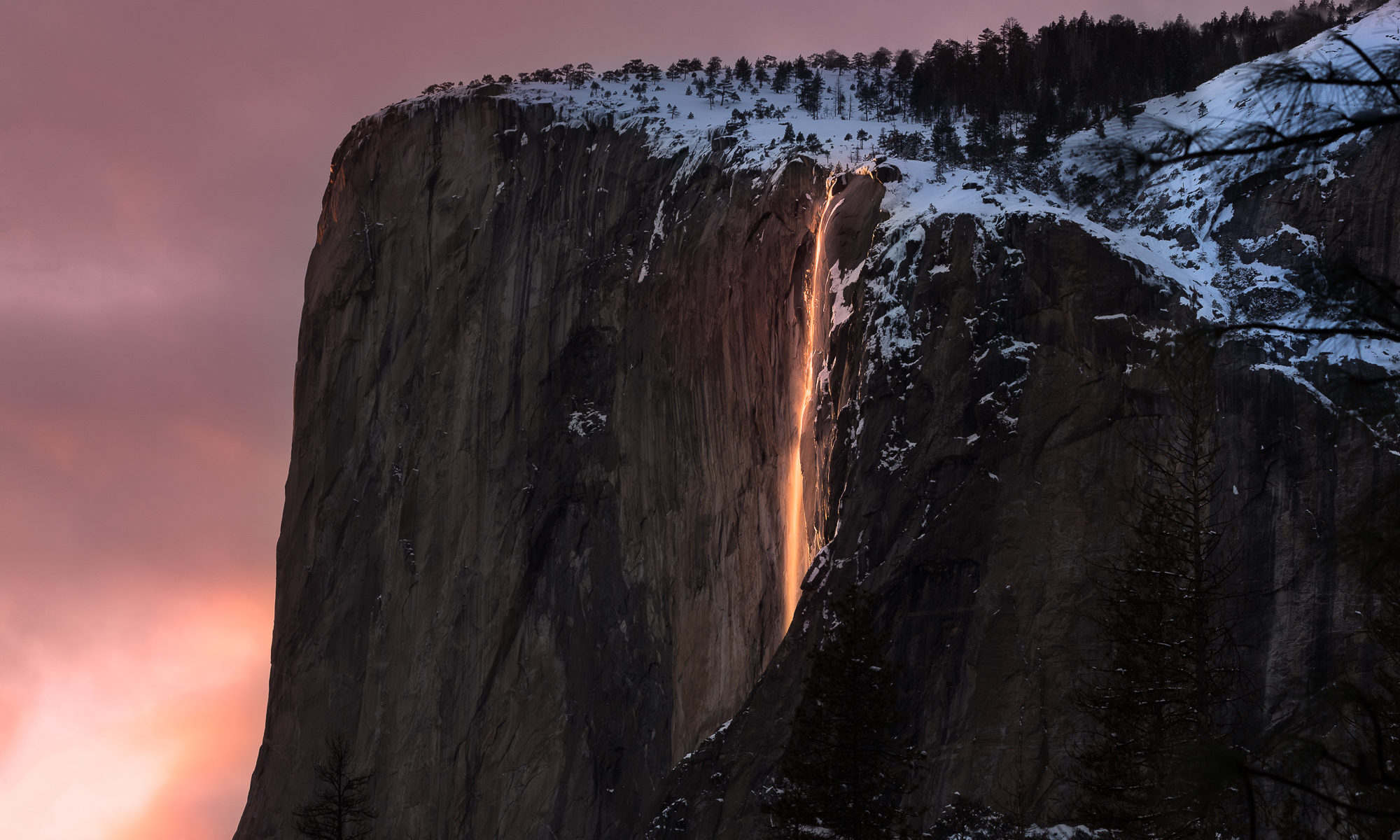
For only a few days a year, the setting sun lights up the seasonal horsetail falls, cascading down the sheer face of El Capitan in Yosemite National Park.

A couple of weekends ago, I had the opportunity to witness one of nature’s most spectacular light phenomenons. For only a few days of only some years, a seasonal waterfall in Yosemite National Park glows like lava as it catches the last rays of waning sunlight. I had long wanted to witness this event in person, but timing or weather had thus far made it impossible. Luckily, my good friend Steve was on the ball, and invited me along. He had already taken care of all the logistics (thank you Steve!) and all I had to do was pack for snow and show up.
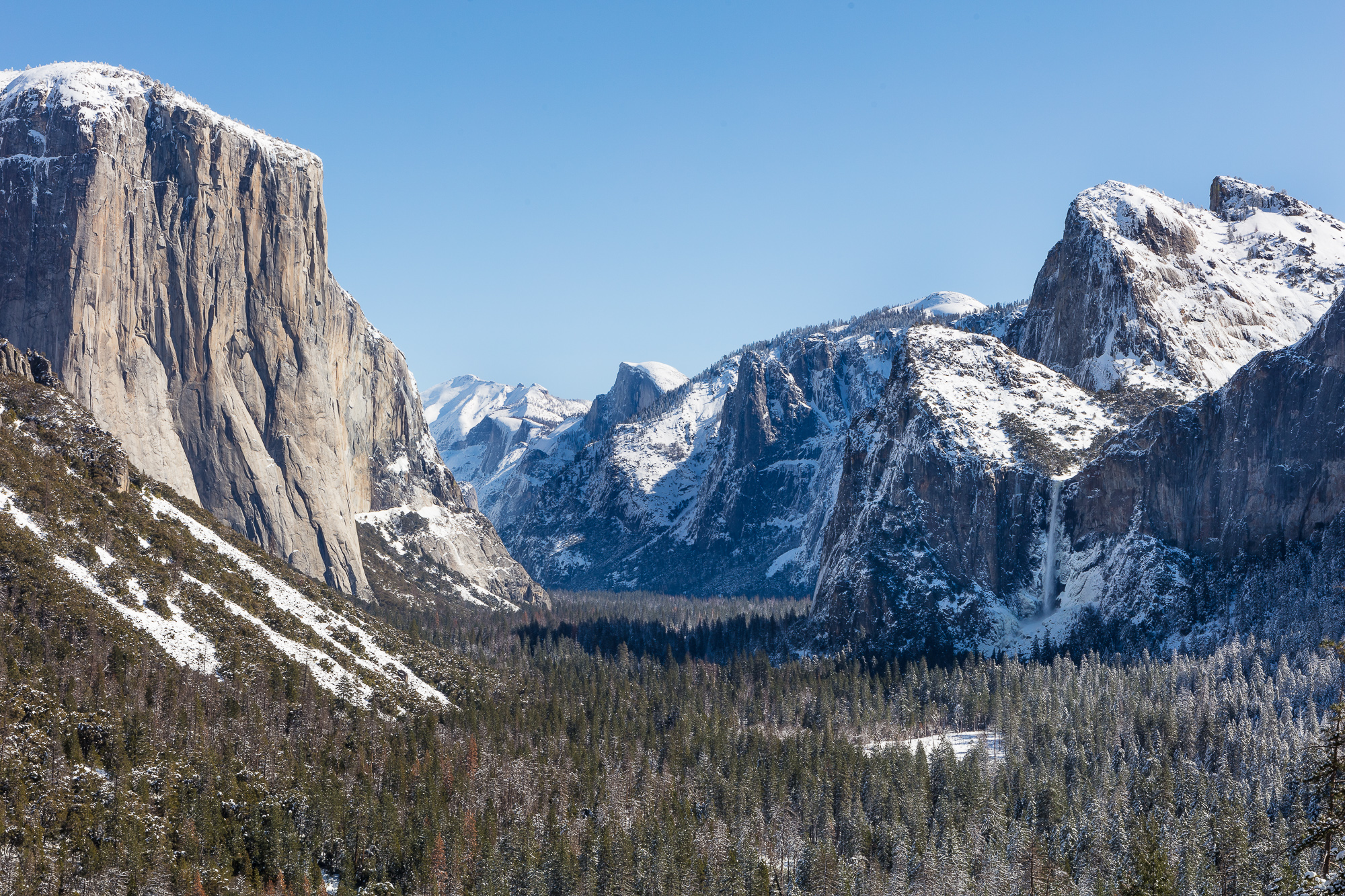
Snow covers the floor of Yosemite Valley after a winter storm.

After a morning drive to Yosemite from the San Francisco Bay Area, we soon found ourselves in one of the most beautiful valleys on Earth. A recent storm had dropped several feet of snow on the ground and frosted the landscape, accentuating Yosemite Valley in all it wintry glory.
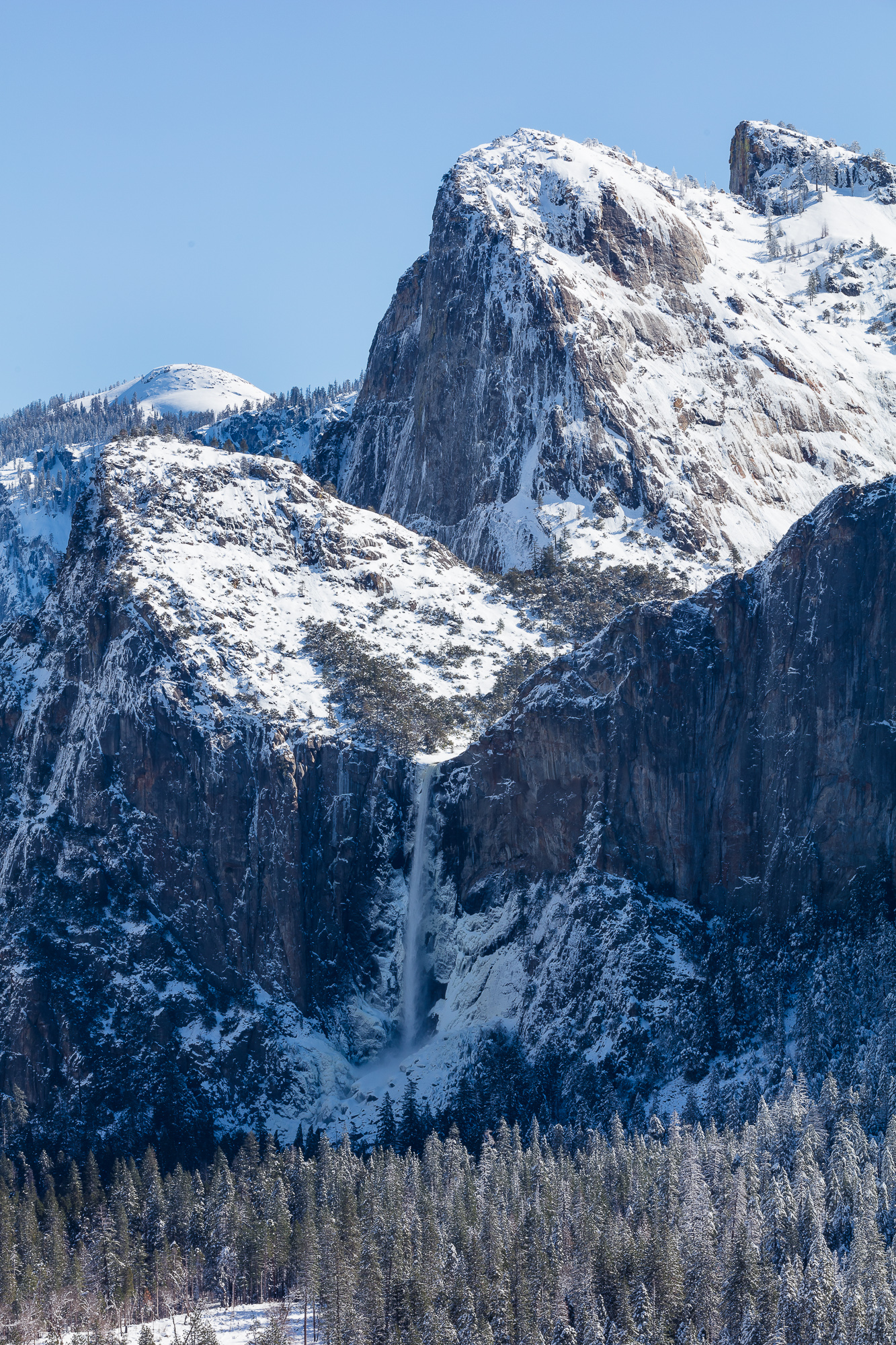
Snow covers the floor of Yosemite Valley after a winter storm.

As I often do with grand vistas, I not only captured the standard landscape shots, but also used my telephoto lens to find scenes within the scene. Switching to my 70-200mm allowed me to isolate Bridalveil Falls cascading down icy cliffs.
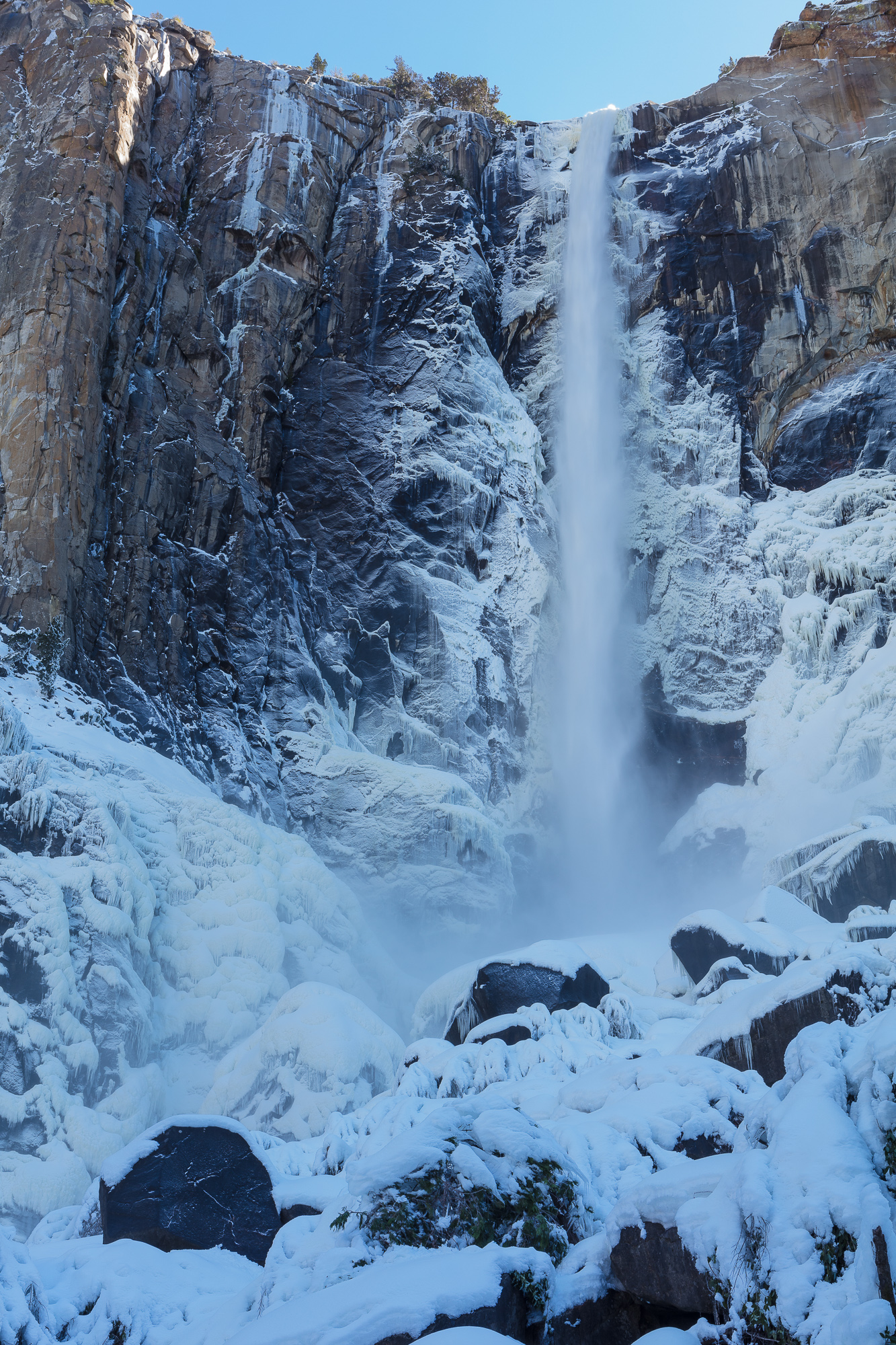
Bridalveil Falls forms an icy sheen on the rocks below, Yosemite National Park, CA.

We stopped off at the Bridalveil Falls trail and scrambled up the slippery path to the base of the falls. Here it became a frigid dance of setting up a shot on the tripod, wiping the icy spray that had accumulated on the lens, and quickly firing a shot. Many times the same shot had to be repeated due to poor wiping skills. Being able to immediately review each shot on the back of the camera was essential for success. With deep respect, I thought of the many photography legends who likely stood in this very spot using much more challenging gear.
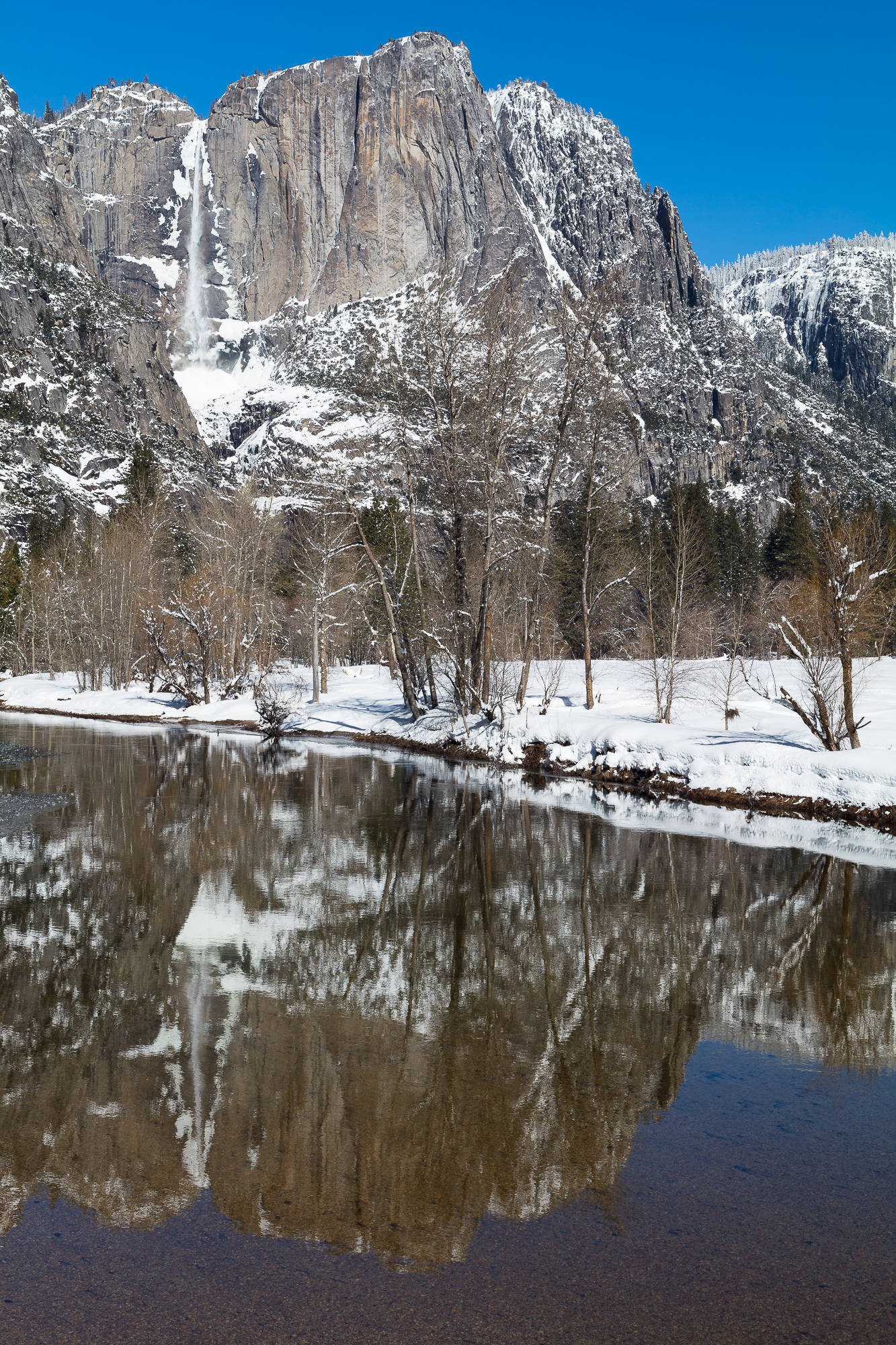
Yosemite Falls is reflected in the calm water below, Yosemite National Park, CA.
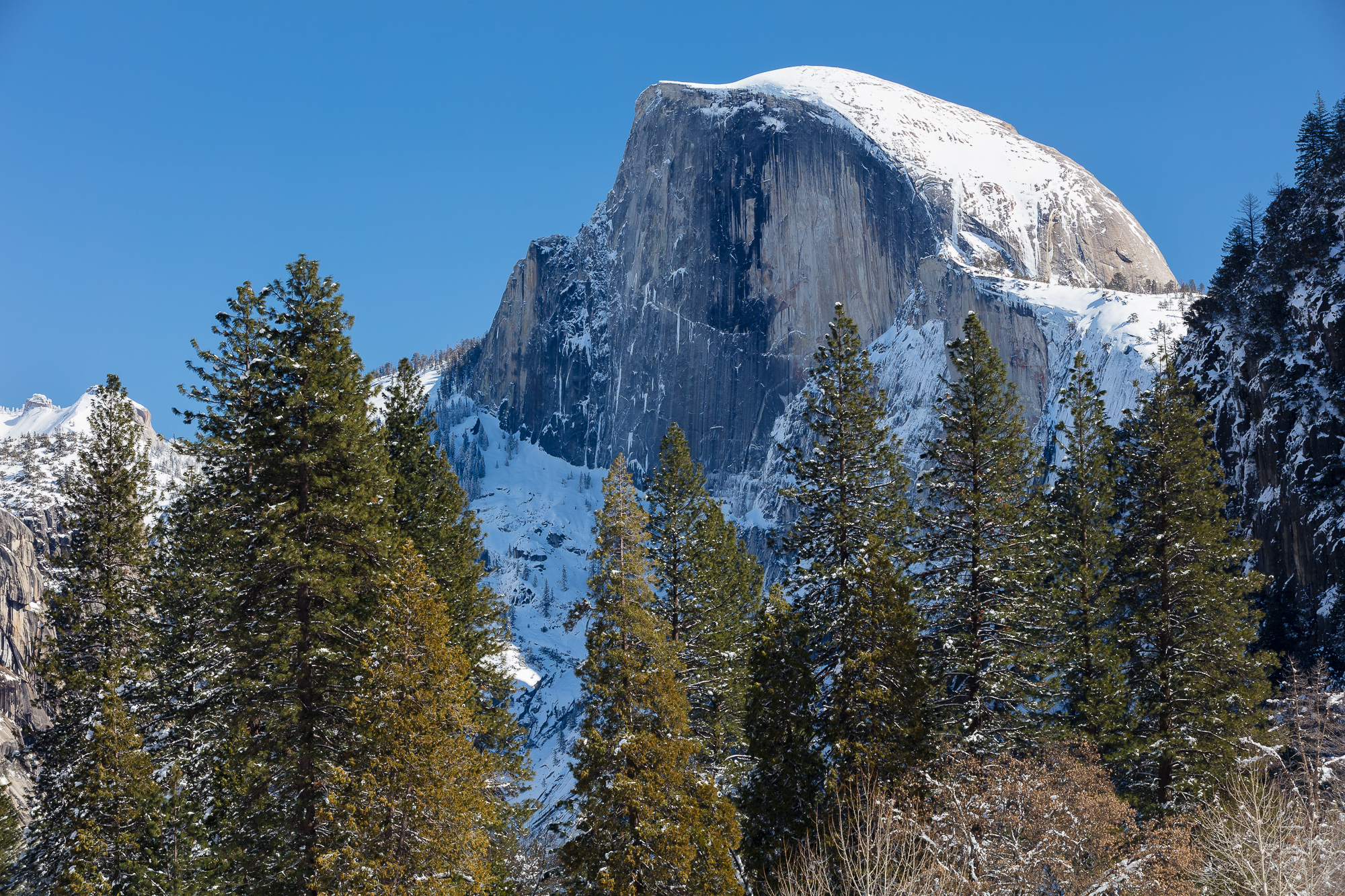
Half Dome towers above Yosemite Valley in winter.

Throughout midday, we were able to capture some of the valley’s most famous icons, dusted in powdery snow.

Finally it was time to prepare for the main event. Many parking lots in Yosemite Valley were closed due to the several feet of snow on the ground. We parked at the closest lot and then snowshoed about a mile to the principal location at which the fire falls phenomenon could be viewed. We set up cameras and tripods at around 2pm, and waited until sunset, which we wouldn’t see for another three and a half hours (yes, landscape photography requires patience!).
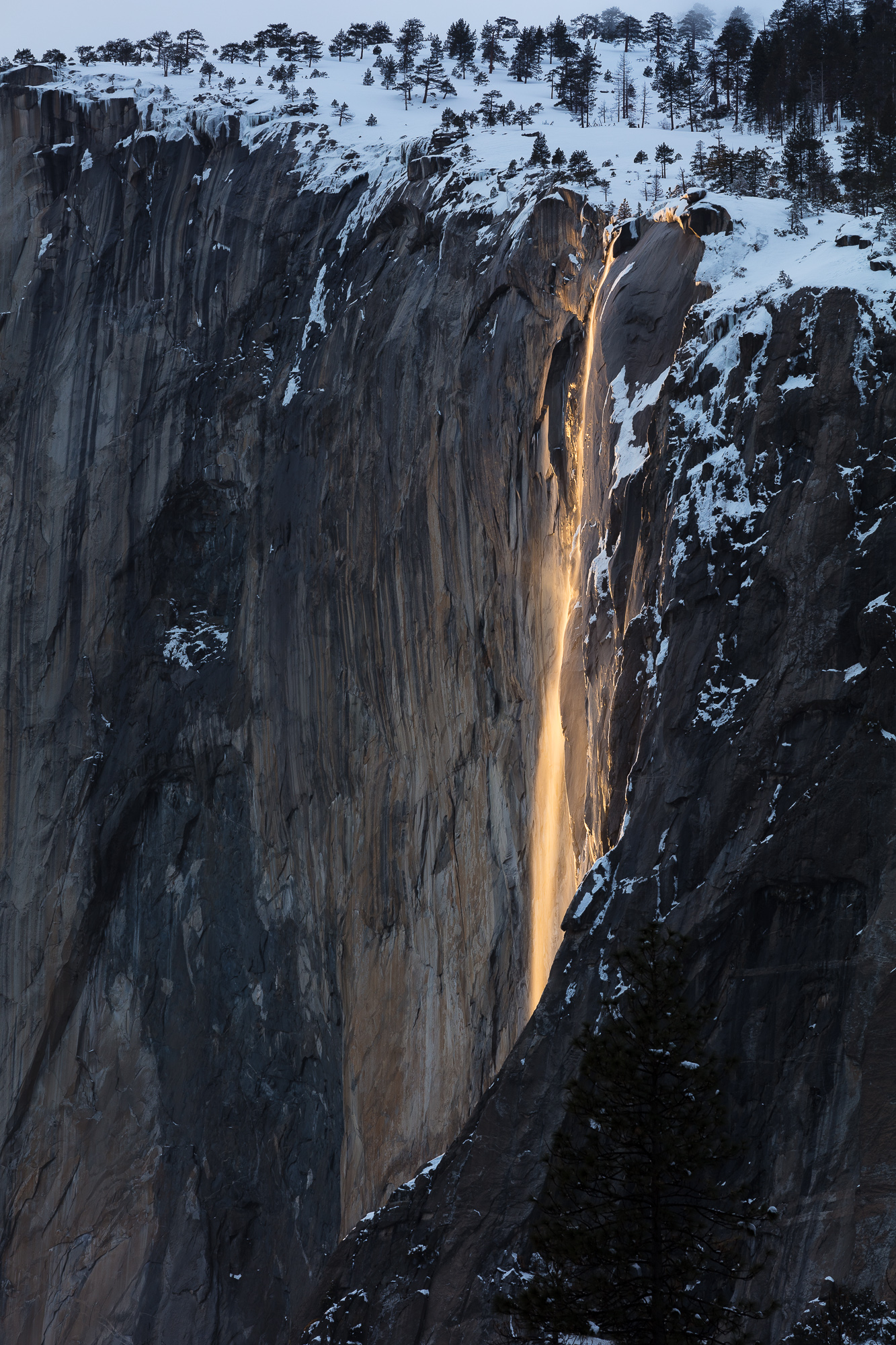
For only a few days a year, the setting sun lights up the seasonal horsetail falls, cascading down the sheer face of El Capitan in Yosemite National Park.

Finally, just after 5pm, Horsetail Falls came to life. Starting with an intense yellow, the falls turned to orange lava over the course of ten minutes.

The story of the original Yosemite “fire falls” goes back to the early years of the National Park Service, at a time when it was struggling to define the meaning of “attraction” for park visitors.  One popular sentiment of the day was that the parks had to entertain visitors, much in the way a circus would entertain audiences through spectacle.   As much of the nation was still rural, the idea of simply having access to wilderness was not as precious as today.

For example, when black bears began to raid the poorly maintained Yosemite Valley dump where all food scraps would end up, the first thought was not the safety of the wild bears. Instead of building proper barricades to prevent the bears from habituating to human food, the park service built bleachers around the dump so that visitors could watch the action.  Another such misstep was the nightly building of a large bonfire at the top of Glacier Point.  As the fire burned down, the embers were shoveled off the cliff, creating a “fire fall” to wow the crowd below in Curry Village. Thankfully this practice was eliminated in the early 1960s. Little did people realize that nature was already providing a much more spectacular display of its own.
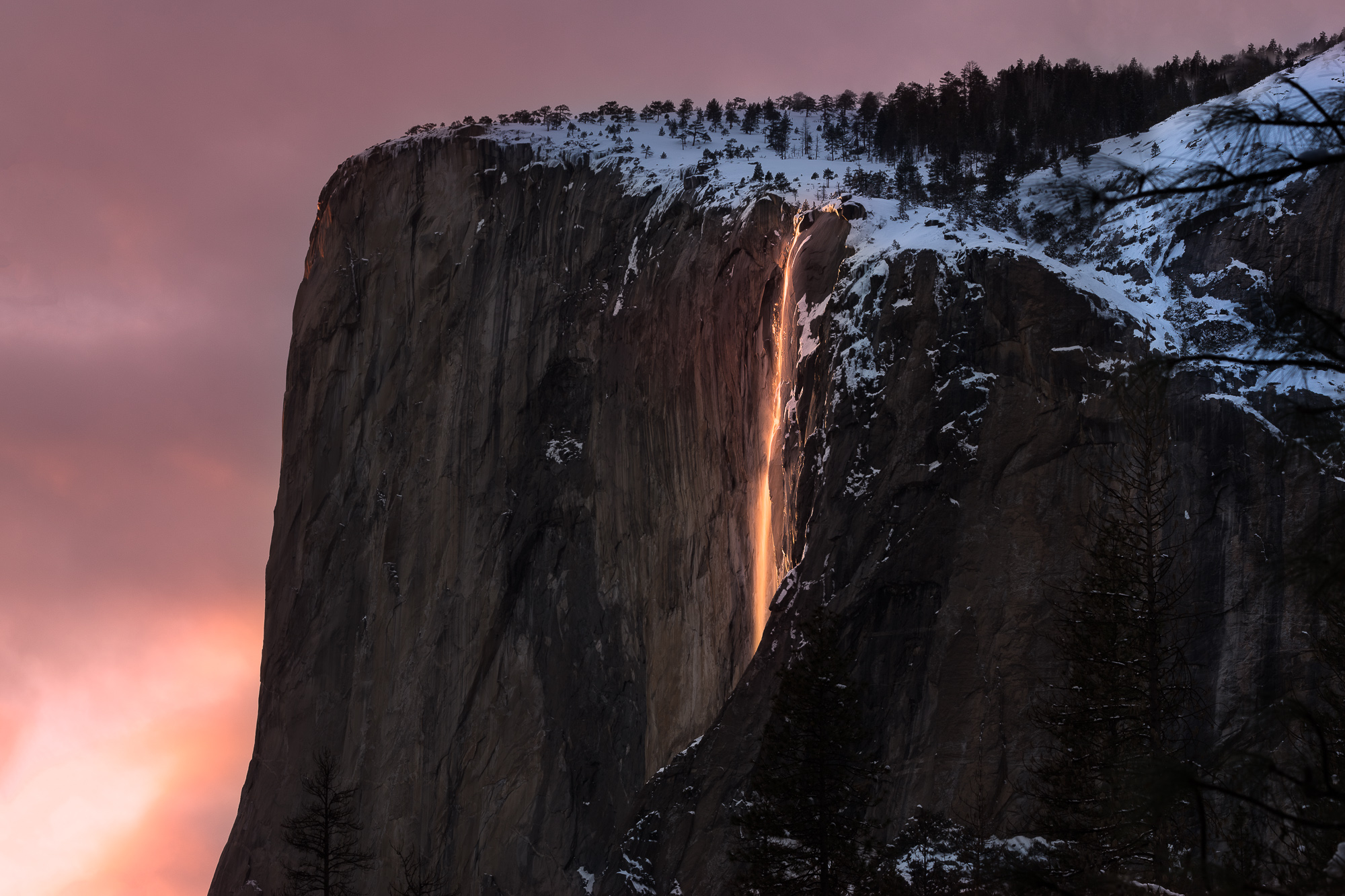
For only a few days a year, the setting sun lights up the seasonal horsetail falls, cascading down the sheer face of El Capitan in Yosemite National Park.

In 1973, photographer Galen Rowel was coming back from a climb in the valley when he looked up and saw a stunning light display against the shadowed backdrop of El Capitan.  Amazed at what he saw, he rushed to photograph it, only to see the light disappear before his eyes.  Although he didn’t know if he’d ever see something like that again, the next night he was prepared.  Sure enough, around the same time of day, Horsetail Falls (a seasonal waterfall that only flows with the proper amount of snow melt) lit up like a beacon.  He quickly composed an image that would become famous, and introduced the world to this amazing natural “fire fall”, which is now photographed by hundreds of photographers annually.
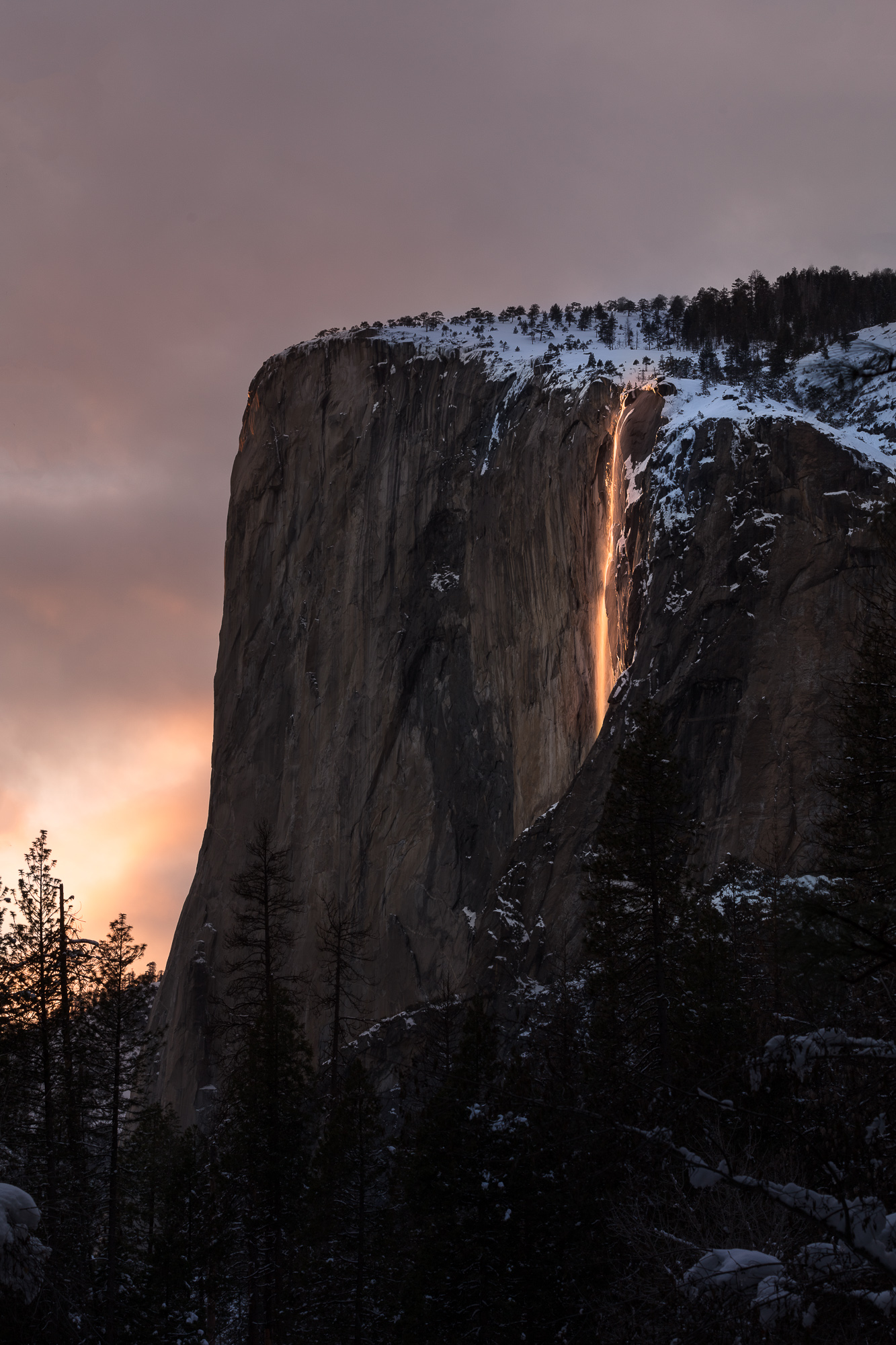
For only a few days a year, the setting sun lights up the seasonal horsetail falls, cascading down the sheer face of El Capitan in Yosemite National Park.

What Galen Rowel was seeing was the setting sun striking only Horsetail Falls, isolating it against the dark cliffs of El Capitan.  There is only about 10 minutes per day where this contrast can be seen, turning the water a reddish orange just before the sun dips over the horizon.  In addition, this perfect sun angle that is required to light the falls but not the cliff only happens twice a year for a few days at a time. And only in late February is there a chance that Horsetail Falls is actually flowing.  This explains why this natural “fire fall” was such a rare occurrence before anybody knew to look for it.

I was overjoyed to finally witness and photograph this phenomenon for myself.

Gear I used to create the photos in this post:

Piute Pass – Loads Of Snow, Swollen Creeks, And Busted Boot

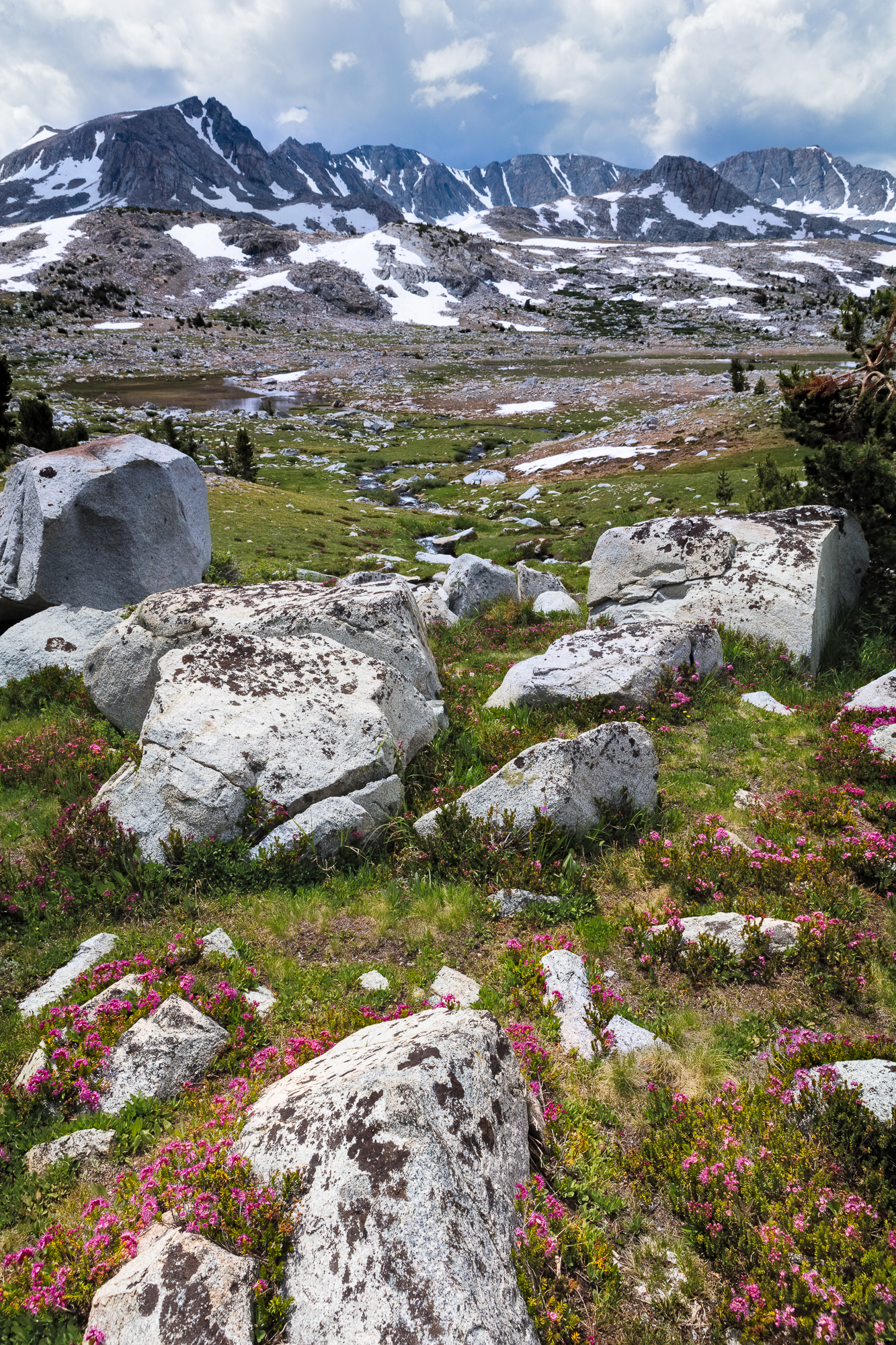
Mt Goethe and surrounding peaks provide a panoramic view just over Piute Pass, Inyo National Forest, CA.

In August my friend Steve and I attempted a quick four day loop through parts of Inyo National Forest. Our plan was to ascend Piute Pass, head down the other side to Evolution Valley, and loop back up Darwin Canyon through Lamarck Col to complete the loop at North Lake. Sounded pretty simple, and going through some beautiful country. What we hadn’t planned on when creating the trip was how much snow was still in the mountains from the heavy winter. Even though it was August, snow still covered much of our trail.

As our trip date approached, we saw that not only would we have lots of snow to contend with, but also some very wet weather. Monsoonal moisture was pushing up from the east side of the Sierra, looking to drench our trip. After some deliberation, we decided to push forward, hoping for at least one clear evening or morning in Evolution Valley. I’d certainly put up with four days of rain for one beautiful landscape shot to add to my portfolio.

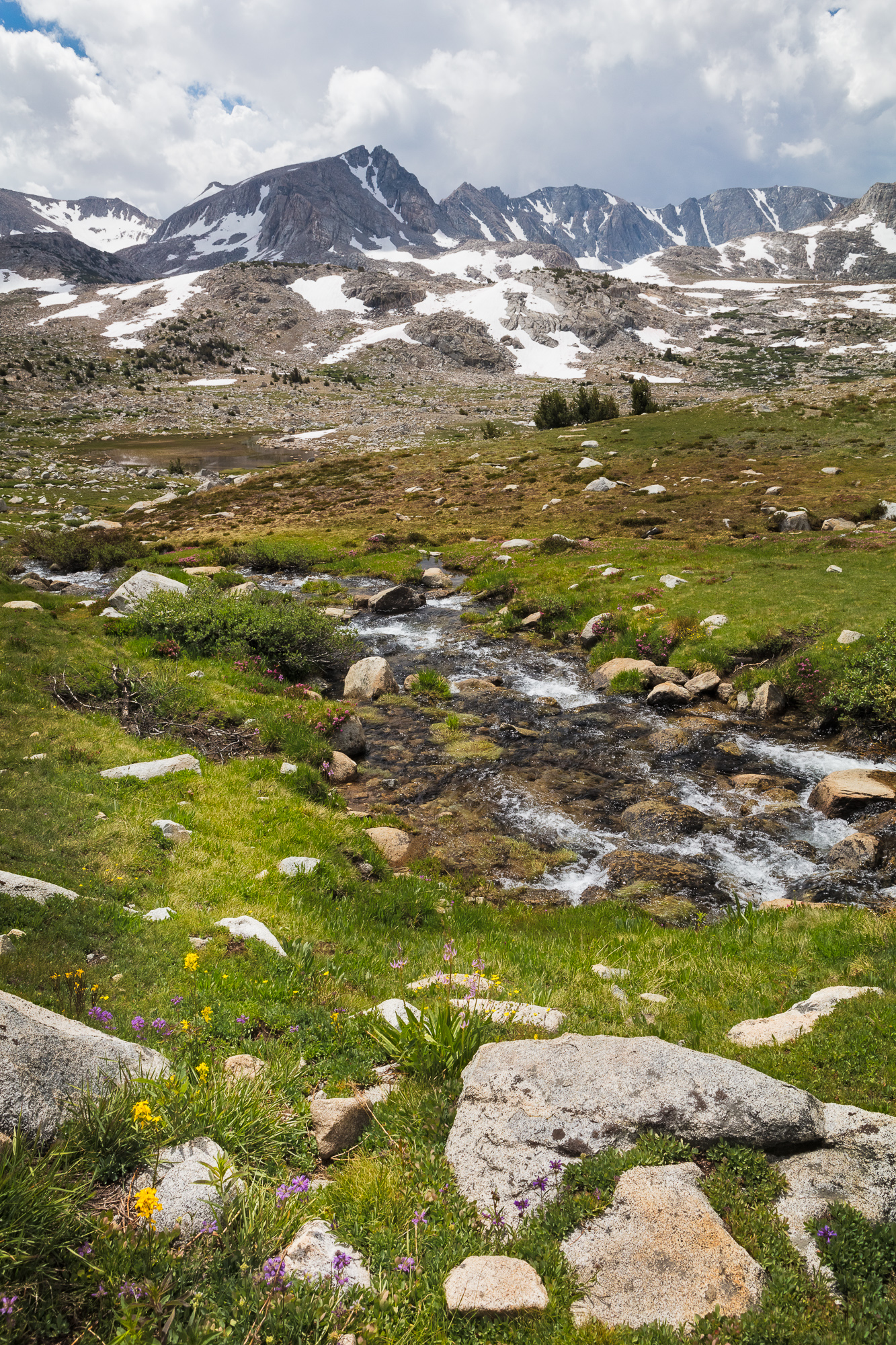
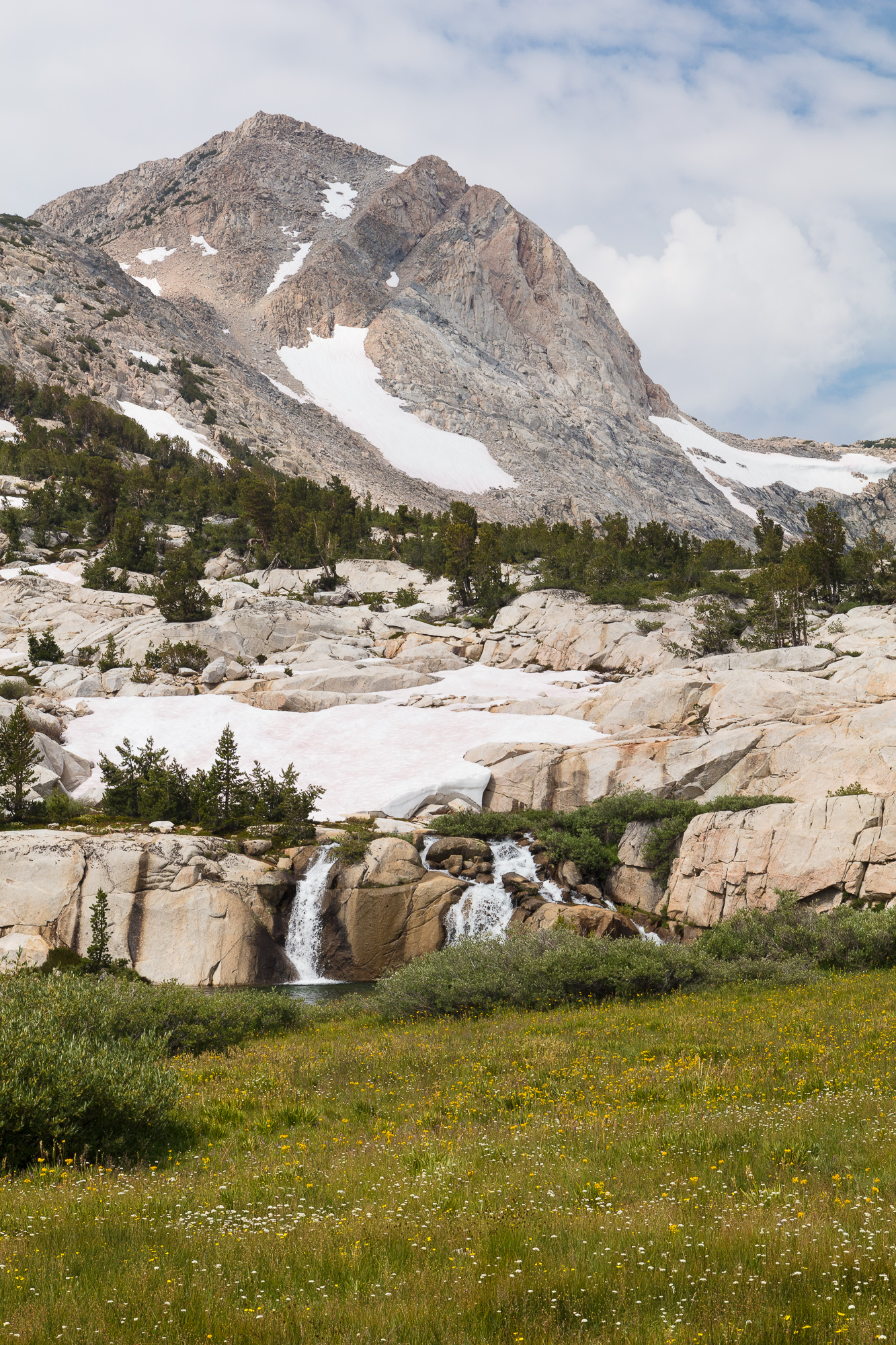
Snowmelt feeds waterfalls on the climb up to Piute Pass, Inyo National Forest, CA.

The climb up to Piute Pass was uneventful, passing a series of lakes on the way to the day’s high point. Glaciers clung to the northern slopes of the mountains, feeding small waterfalls. We did encounter several groups of happy campers who had spent the previous night at some of these lakes. I spoke briefly to a man named John and his son Clay who looked like they braved the nighttime rains in good spirits.

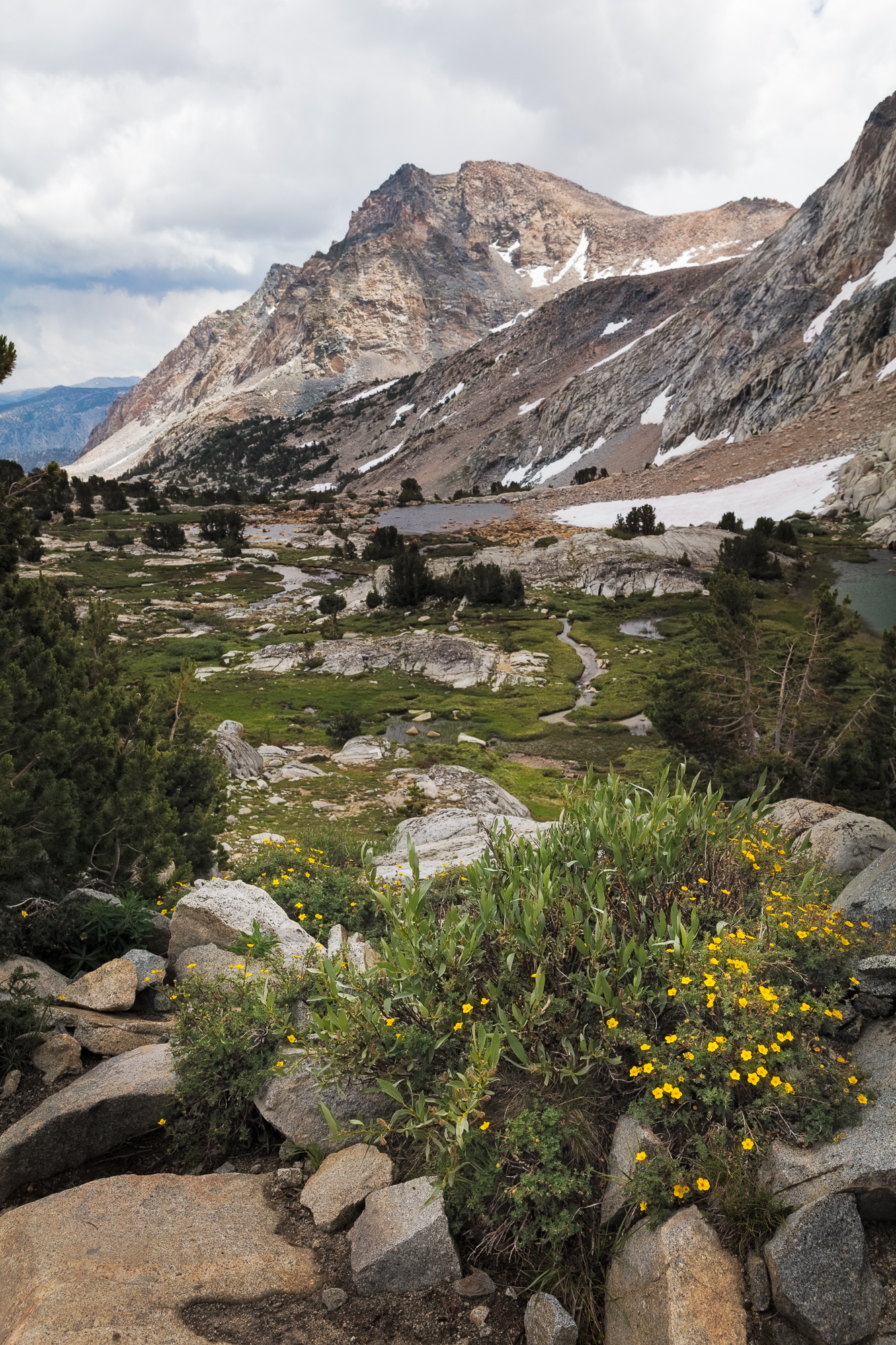
As we got closer to the top, I started seeing small fields of wildflowers. It was the right time of year for this elevation, but given how much snow was still in the mountains, I hadn’t been thinking of wildflowers at all.

Wildflowers adorn the meadows below Piute Pass, Inyo National Forest, CA

As soon as we were over the pass, we were treated to panoramic views of the mountains to the south. We had a short respite of flat ground, before the trail steepened and we descended into forest. As the rain started to fall, I donned my lightweight rain jacket and began to wonder if I was really prepared for potentially four days of rain. Soon we came across our first water crossing. The typical rock hop had swollen to a deep, fast flow, requiring the removal of my boots and a careful crossing. While the water was only up to my mid thigh, I began to worry about the crossings to come, knowing that some were much deeper.

Some days on the trail, the terrain wins the day. This was certainly one of those days. By the time we got to our campsite area, I was absolutely beat, and soaking wet from the five hours of downpour. Steve and I slogged around the area looking for a fire ring. Every spot that looked like it could work was under water. Between the rainfall and melting snow, there was so much water in the area that large pools formed in just about every flat space available. After about 45 minutes of searching, we finally found a place. I set up on a very wet slab of granite, hoping most of the water would run around my tent rather than under it. We heroically got a smoldering fire going, and tucked in for an early night.

The next morning, we woke to clear skies. However, everything I owned seemed to be soaked. Even my down sleeping back was wet on the outside, worrying me about warmth for the next cold night if it soaked through. We sat for a few minutes debating whether to push on, or just abandon and head back to the car. I was tired, wet, and worried about the difficult water crossings ahead. What finally swayed me was the discovery that my right boot was completely separating from the sole. This did not bode well for three more days of rough travel, much of it cross country. Time to head back to the car.

Wildflowers adorn the meadows below Piute Pass, Inyo National Forest, CA

Thus, with heavy hearts we repeated the terrain of day one. I tied some twine around my boot to hold it together and we climbed back up to Piute Pass from the west. Given that we had extra time to get back to the car, we stopped and took in a few beautiful wildflower displays on the western side of the pass.

Wildflowers adorn the meadows below Piute Pass, Inyo National Forest, CA

While we didn’t get to see the glory of Evolution Valley, it was beautiful country nonetheless. Even though it is always difficult when you don’t reach your goals, we still enjoyed a night out in the wilderness, 22 miles of challenging hiking, and some high elevation August wildflowers. Failed trip? Maybe. But it is hard to bemoan getting some solitude out in the natural world. It does much to replenish my soul, even when the going is tough.

Gear I used to create the photos in this post:
This Is A Crappy Photo

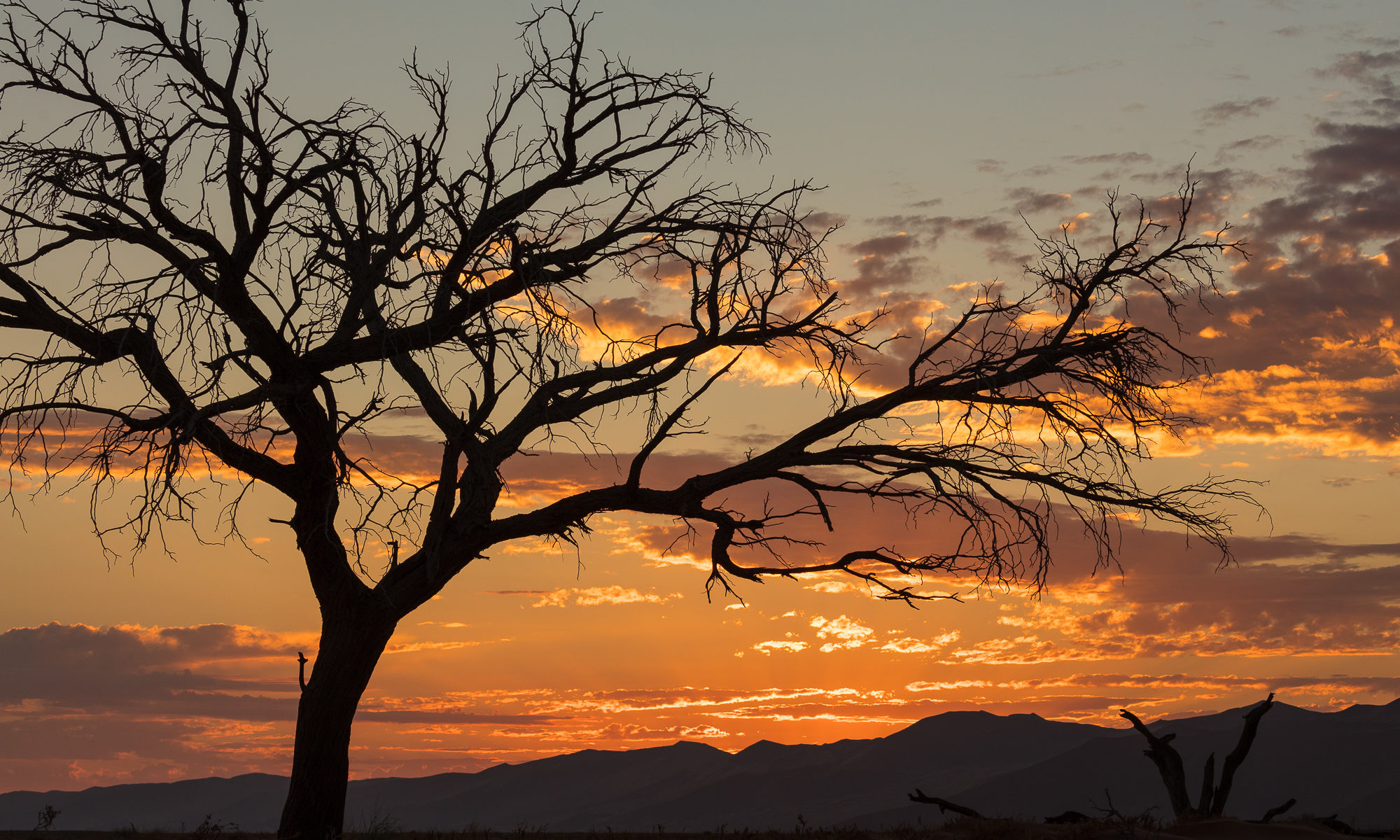
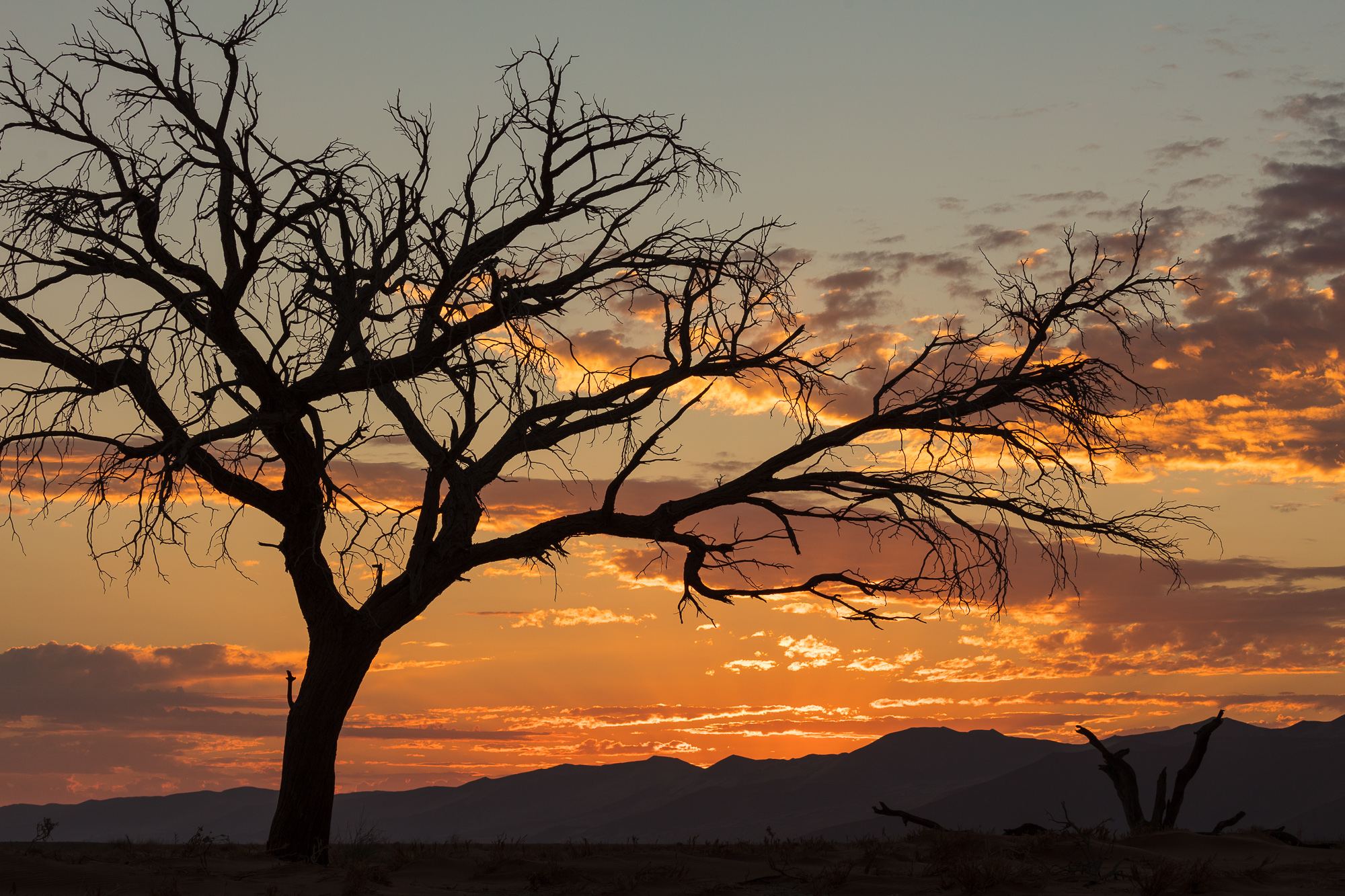
A desert tree silhouettes against a sunset sky, Namib-Naukluft National Park, Namibia.

I captured this tree silhouette at the peak of a glorious sunset in the heart of the Namib desert. I spent some time with this tree, crafting the photo. I wanted to reduce the tree to a graphic form against the beautiful colors of the sky. Because the tree was reaching to the right, I oriented its trunk to the far left of the photo so that it is reaching into the frame and up and over the distant mountains.

After taking a look on the computer, and doing some basic processing, I was really happy with it. That is until I showed it to a friend, and was met with a frown and shrug of the shoulders. “It doesn’t really do anything for me,” was the response I remember.

Now to give a little bit of background, this friend has a great eye for photography and is certainly not one to heap praise where it is not due. As surprised as I was by the reaction, I knew I needed to pay attention to this critique because of my friend’s impeccable taste. So what went so wrong?

A desert tree silhouettes against a sunset sky, Namib-Naukluft National Park, Namibia.

The more time I spent with the photo, the more I began to agree with the review. I finally realized that I was the victim of an age old pitfall of art. I had spent so much effort creating the photo, I was attributing more value to its end result than I should have. Okay, so its not a horrible image. But like all critical photographers, I thought a lot about this fresh perspective. The fine branches of the silhouette are too chaotic and it has a relatively weak subject matter. The colors of the sunset are not enough to hold the main focus of the image.

Since I share many successful photos with you, I thought I’d share a failure. Well, maybe not a failure, but one that leaves me with a “meh” feeling. The lesson here is to seek honest, unbiased feedback for your work. Think about who you go to for a quick ego boost, and who is there to offer a fresh opinion that might just push you to be a better photographer.

Sunset Over Azhagappapuram

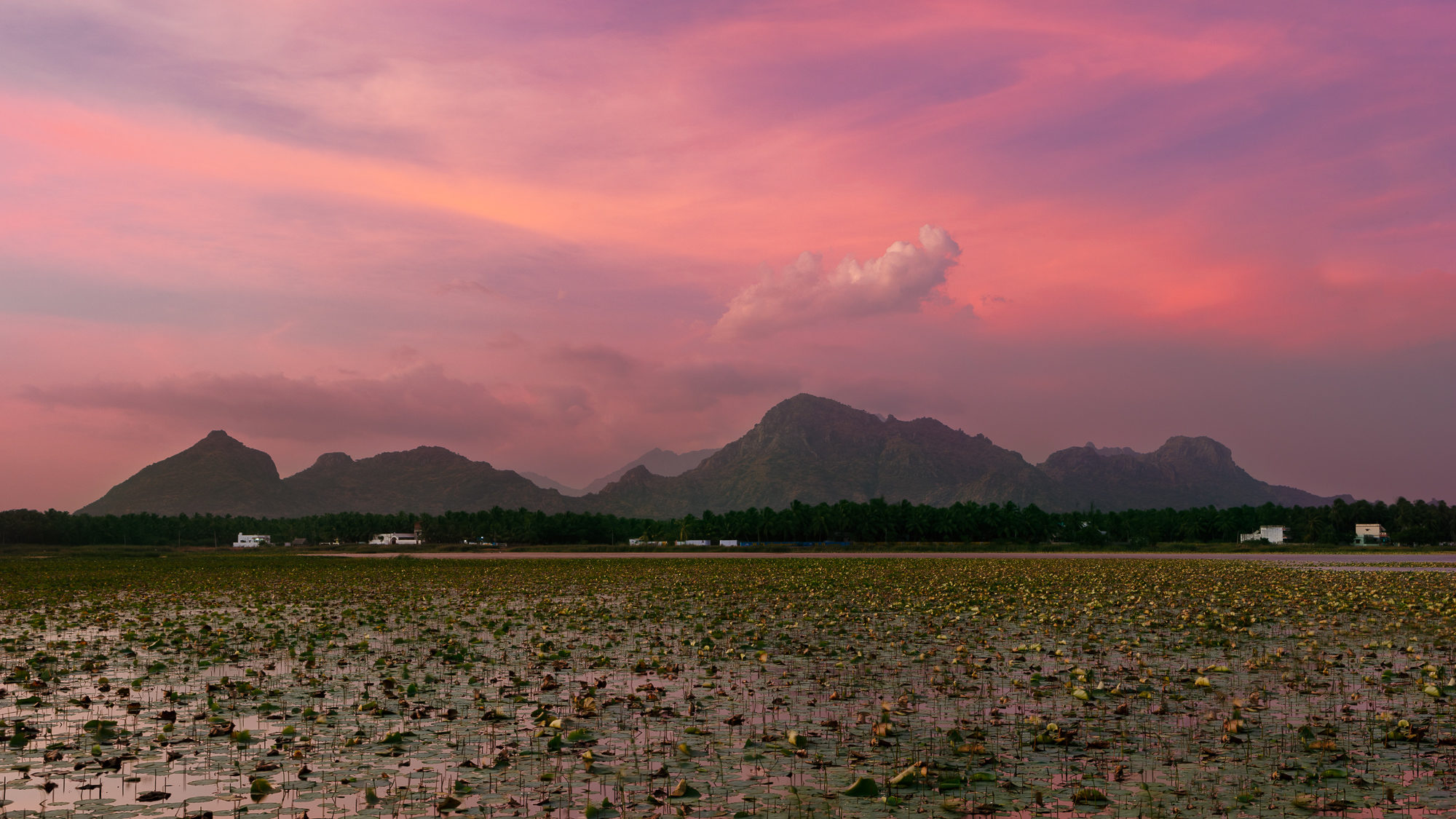
Evening clouds turn to fire over the mountains north of Azhagappapuram, Tamil Nadu, India.

I took this photo on the final day of a fantastic trip to India last year. I was in the state of Tamil Nadu, at the southern tip of India staying with my friend Frans. The village in which he grew up is just on the far side of this small lake, so I only had to travel a few minutes from where I was staying to get this shot.

I had been eyeing the sky for a few days, hoping for some clouds at sunset that would catch the last rays of the day. Luck was with me for my last evening in town, as the clouds started to build in the afternoon.

Unfortunately, I did not get the still water that I was hoping for, in order to create a reflection of the southern most expanse of the Western Ghats. In typical southern Tamil Nadu style, wind was whipping across the water at great speed, creating small white caps (definitely NOT what I was hoping for!) In fact, this area is known for its expanse of wind farms, which should have given me a clue that waiting for a calm day was likely an exercise in futility.

Evening clouds turn to fire over the mountains north of Azhagappapuram, Tamil Nadu, India.

However, I had previously scouted a small area of lotus plants close to the shore, which helped the photo in two ways. First, the lotuses broke up the waves that the wind was creating. And second, they added some level of interest to the foreground. This was the next best option given there was no chance for a reflection.

As a side note, these plants would have been much more beautiful had any blossoms been on the plants. But alas, they were picked clean. As I was wondering about why this was, I saw a man in a canoe further along the shore, slowly making his way through the lotuses and plucking any fresh blossoms. Oh well, maybe time for a little photoshop? Just kidding of course….

Apparently, this area doesn’t see many photographers or foreigners. As I was standing by the shoreline with my tripod, many people stopped on the nearby road to watch what I was doing. That was okay – the resulting photo was well worth the extra attention.

Every day I was there, I discovered more of the natural beauty of the area’s land and animals. I will certainly return to cover this amazing landscape more in depth.

Gear I used to create the photos in this post:
Copyright 2017 Hank Christensen