A number of years ago, I was in Barcelona for a week for work. I took advantage of the opportunity, to do a little bird photography, hoping to get species that I’ve never seen before. To maximize my chances while I was there, I hired a local guide to take me out into the Spanish countryside to see as much as we could in a day.
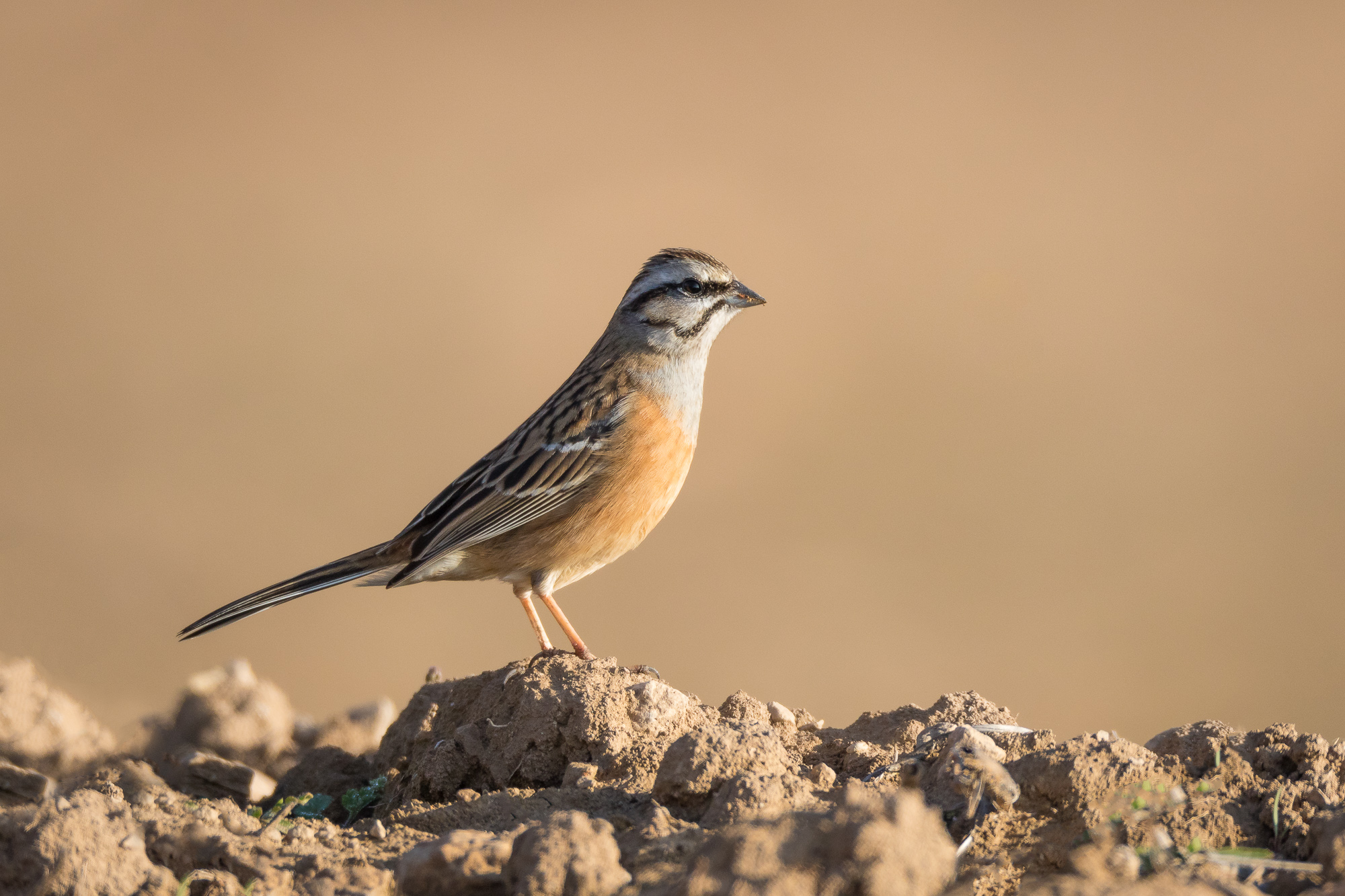
A rock bunting stands atop a small rock, Barcelona, Spain.
One of my first observations is that birds seemed much more skittish than those I’m used to photographing in the US. I’m not sure why, but it definitely made approaching more difficult. I was happy to have my 800mm telephoto, which at least gave me something to work with. This rock bunting stayed around long enough to get reasonably close, but still flushed before my desired distance.
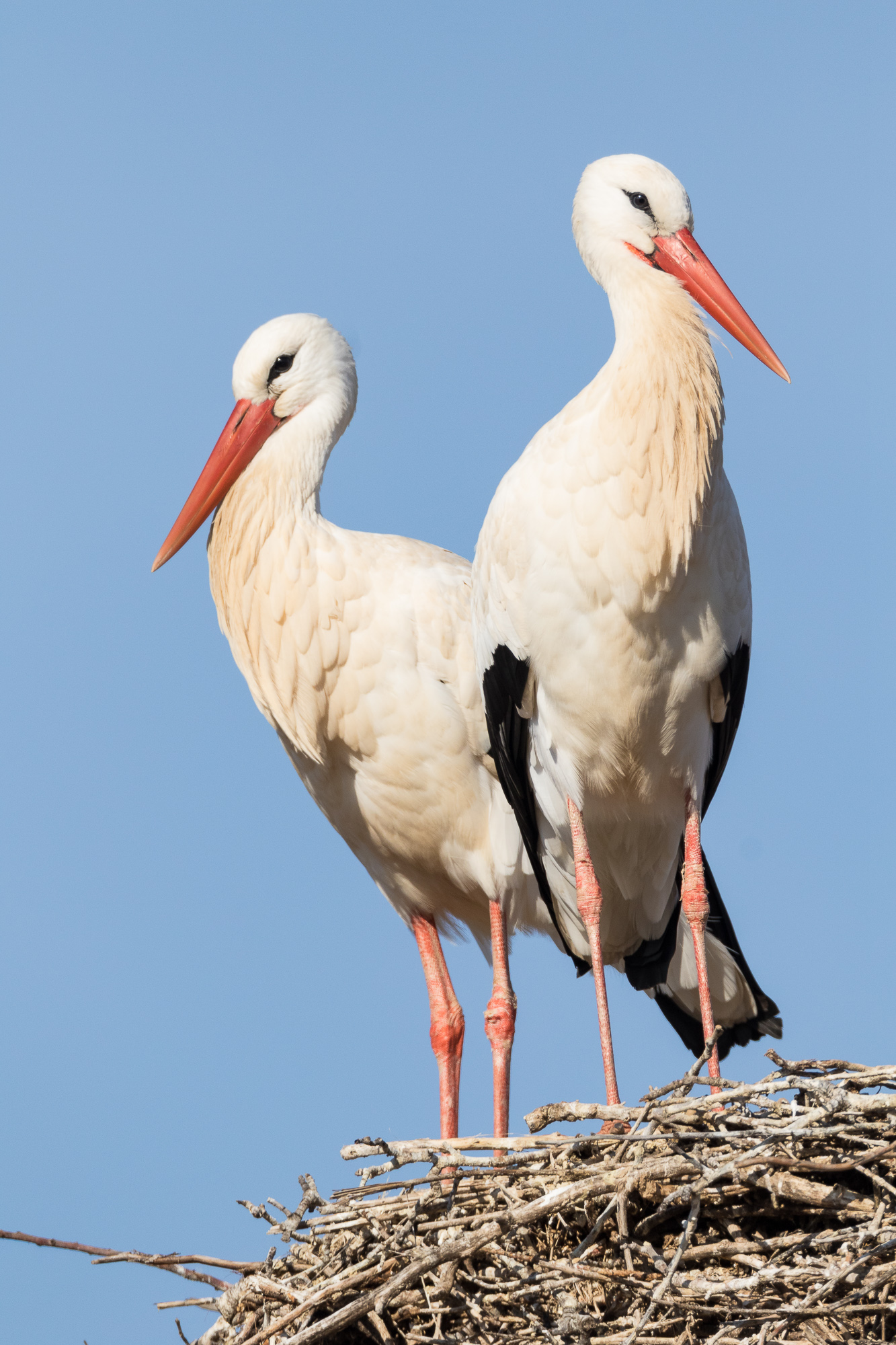
Two white storks stand in a large nest, Barcelona, Spain.
Working a wetland area afforded better opportunities, as the birds here seemed to feel more comfortable. These two white storks seemed totally comfortable with our presence, and gave me many different looks while standing in their nest.
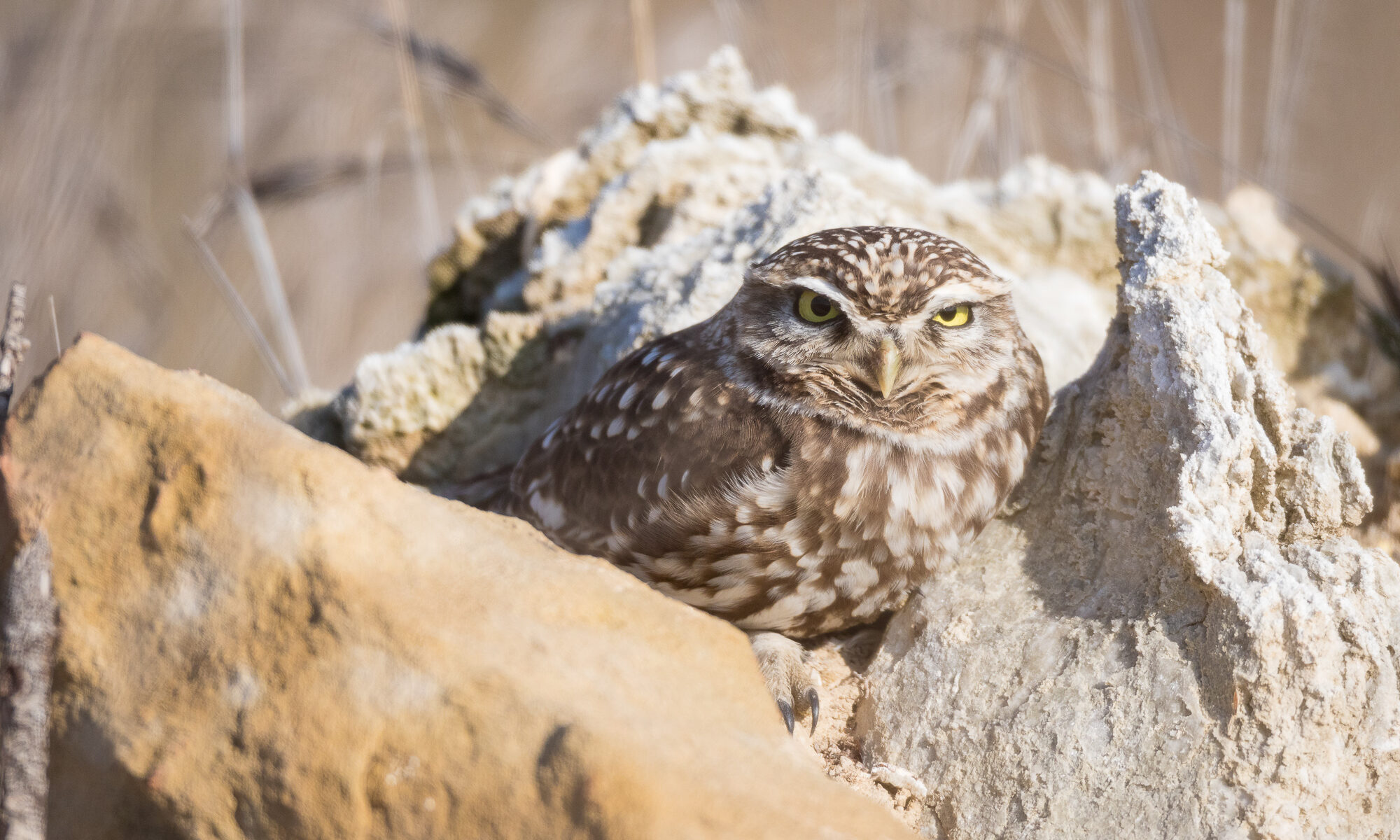
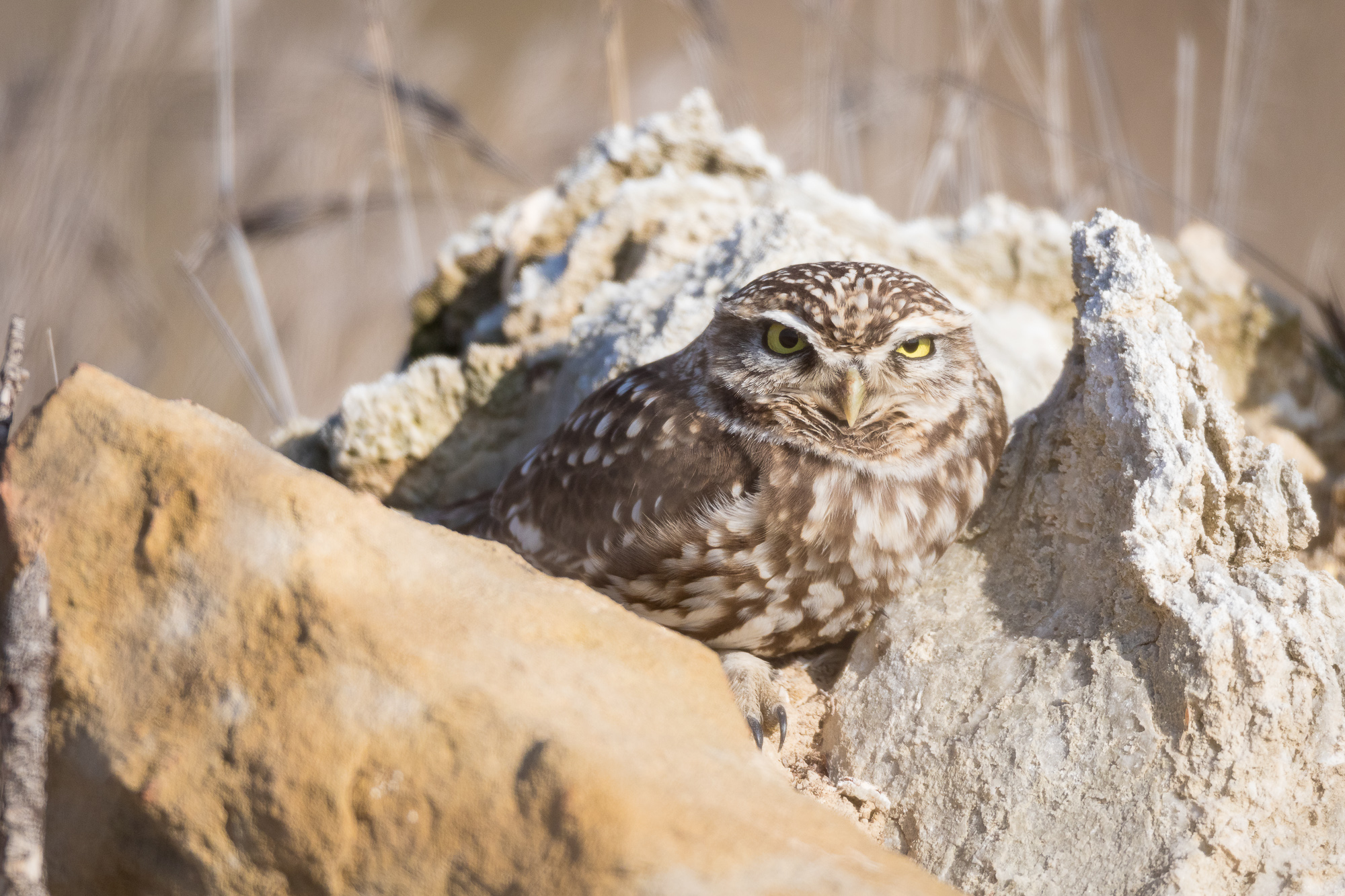
A little owl hides among a rock pile, Barcelona, Spain.
Catching photos of an owl was a direct result of hiring a local guide. He knew the area well and was up to date with all the latest sightings and locations. This little owl was nesting deep within a rock pile, but we lucked out and were able to see him hunkered down on top of the rocks in the afternoon sun. It reminded me of the burrowing owls that populate much of California.
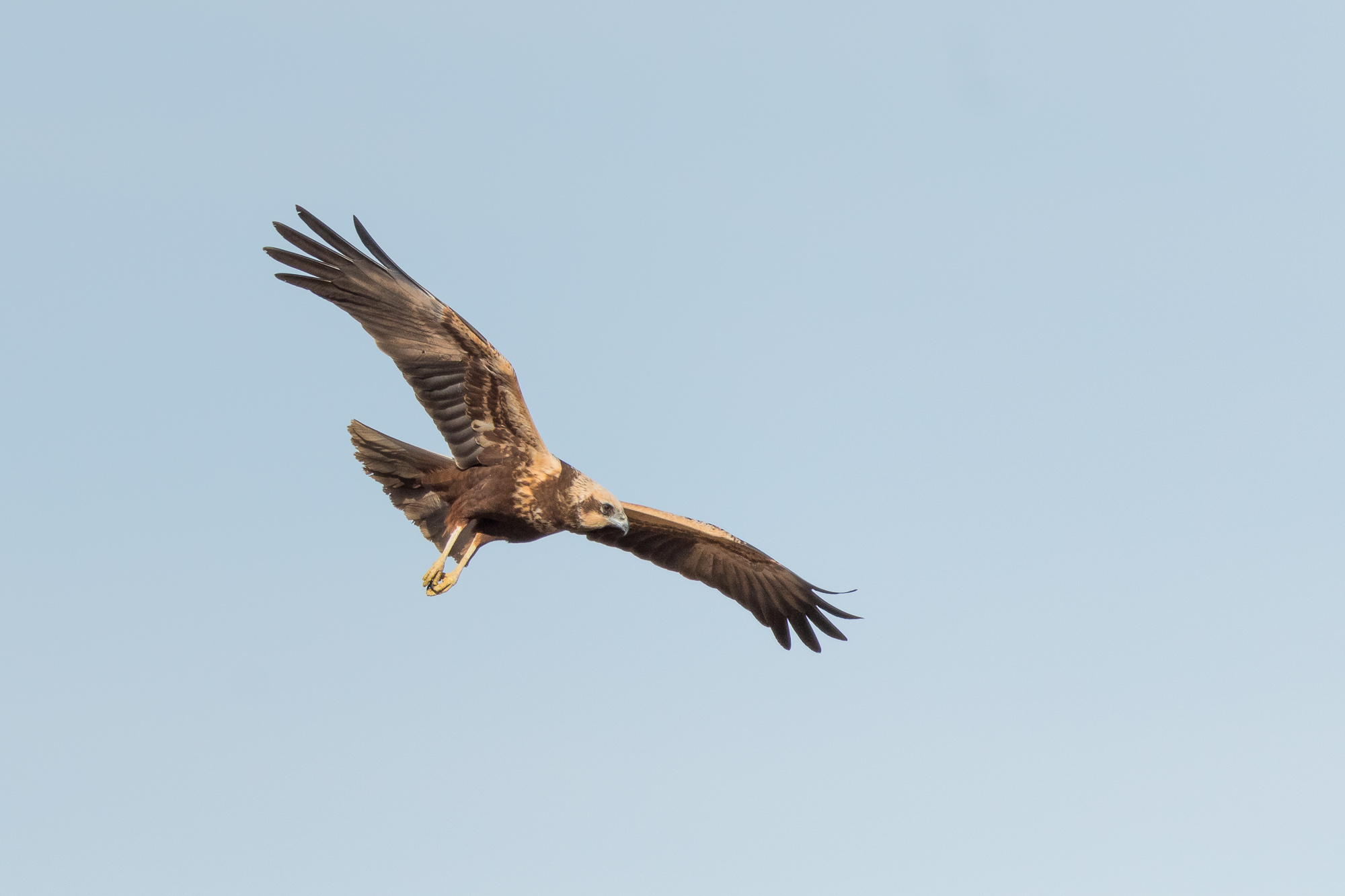
A eurasian marsh-harrier flies low over a marshland, Barcelona, Spain.
I had a few opportunities to try my hand at birds in flight. Slow, gliding birds of prey can sometimes make easier targets, and this marsh-harrier certainly obliged.
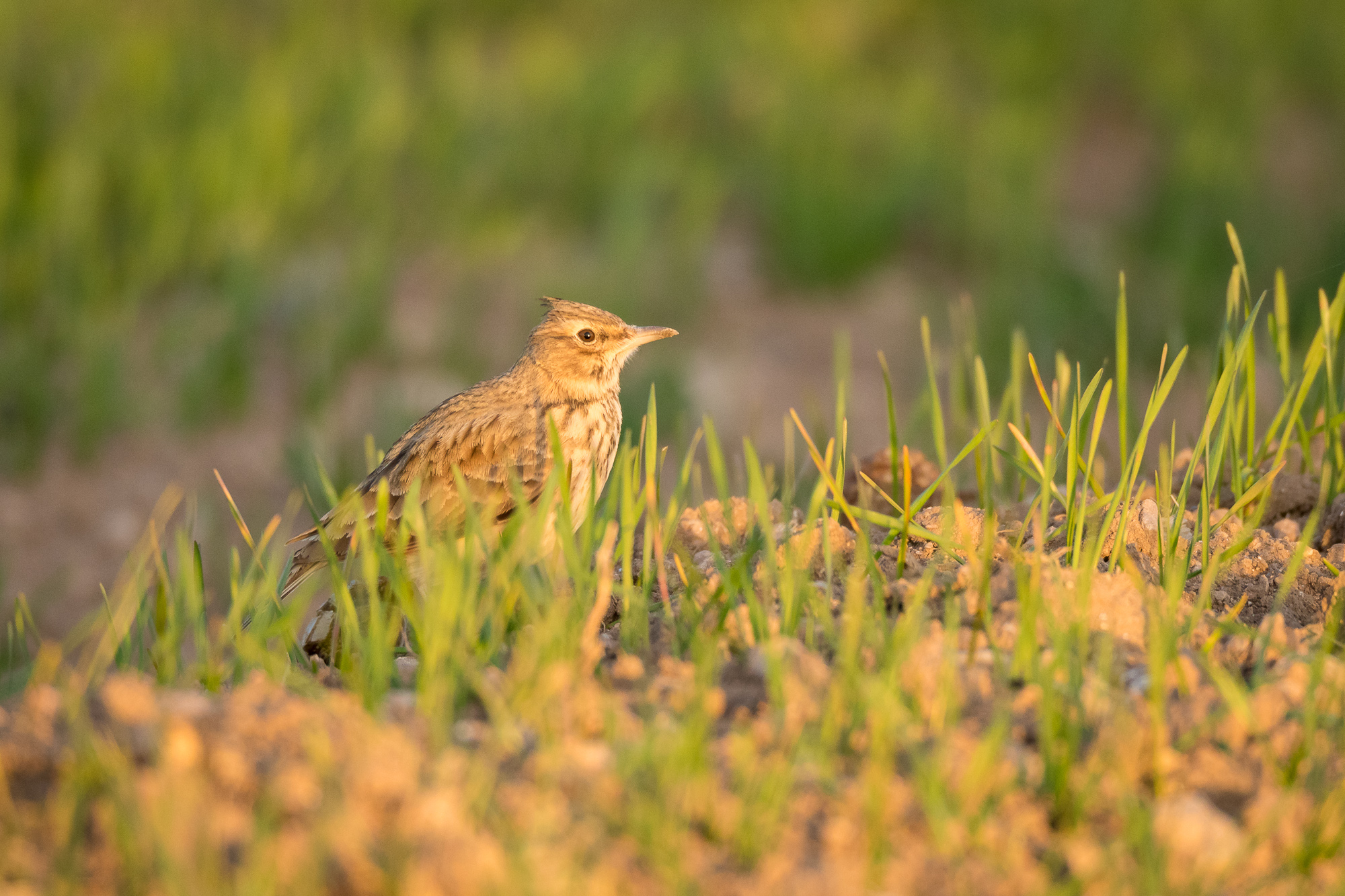
A crested lark sits at the edge of a field, Barcelona, Spain.
Near the end of our long day, we happened upon several crested lark in the late evening sun. Again, not as close as I’d normally shoot portraits of birds, but at least the lighting was pleasant.
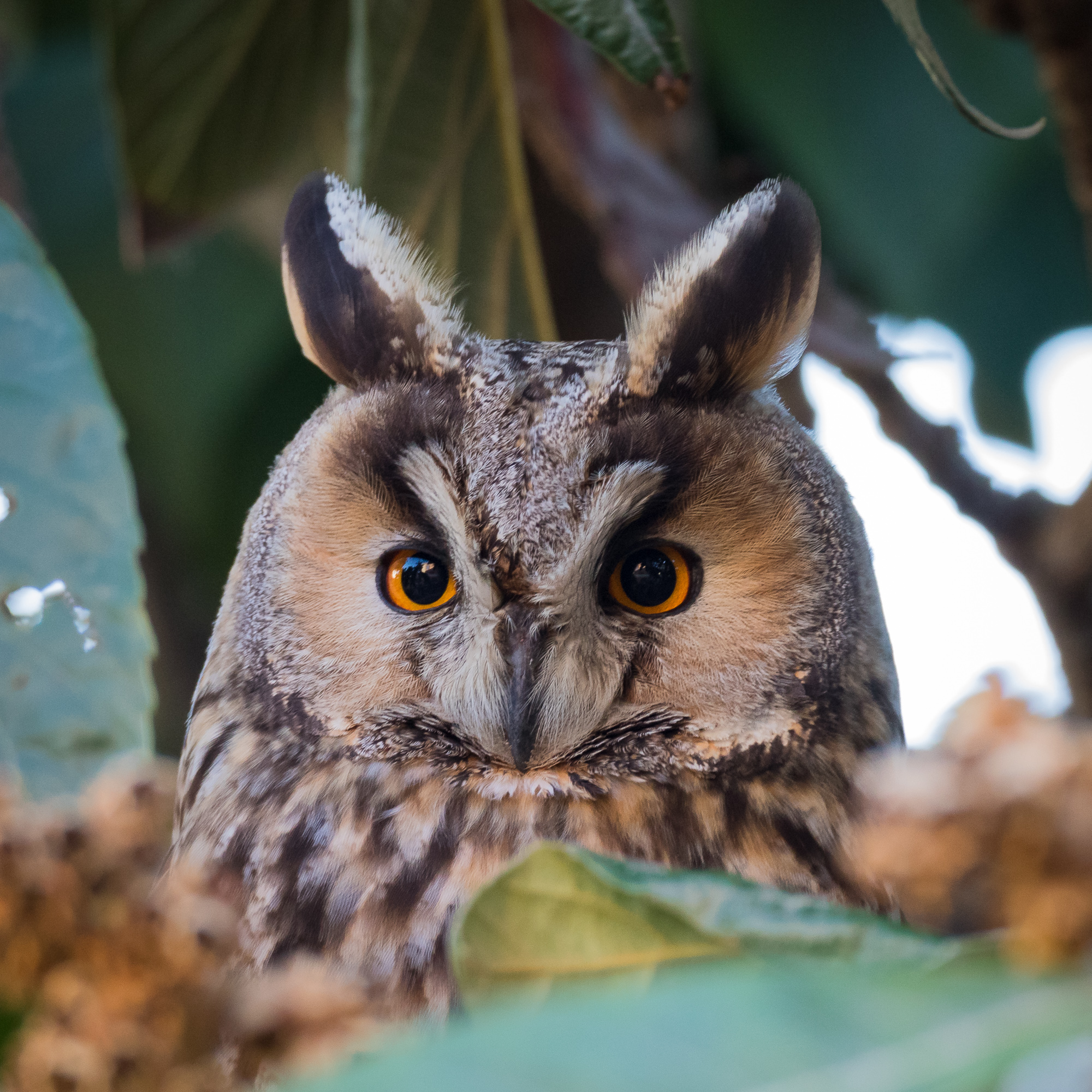
A long-eared owl hides in the canopy of a fig tree, Barcelona, Spain.
We ended the day in a small town in the countryside. My guide knew of a couple of fig trees just off the town square that hosted resident long-eared owls. After a short wait, one of them popped his head out from between leaves and checked us out.
Overall it was a long day with lots of driving, but a great opportunity and an experience I’ll not soon forget. It reinforced the value of hiring a guide, especially given my time was short and I was in an unfamiliar location.
I’ve been spending some time going through my archives of unpublished photos, and came across a trip to India a few years back where I was fortunate to be able to visit Kabini – a protected wildlife area that is part of the larger Nagarhole National Park in Karnataka.
I was able to do four safari outings over two days into the park, and see some of the local fauna. While I didn’t chance upon any of the area’s tigers, I did see quite a cast of characters.
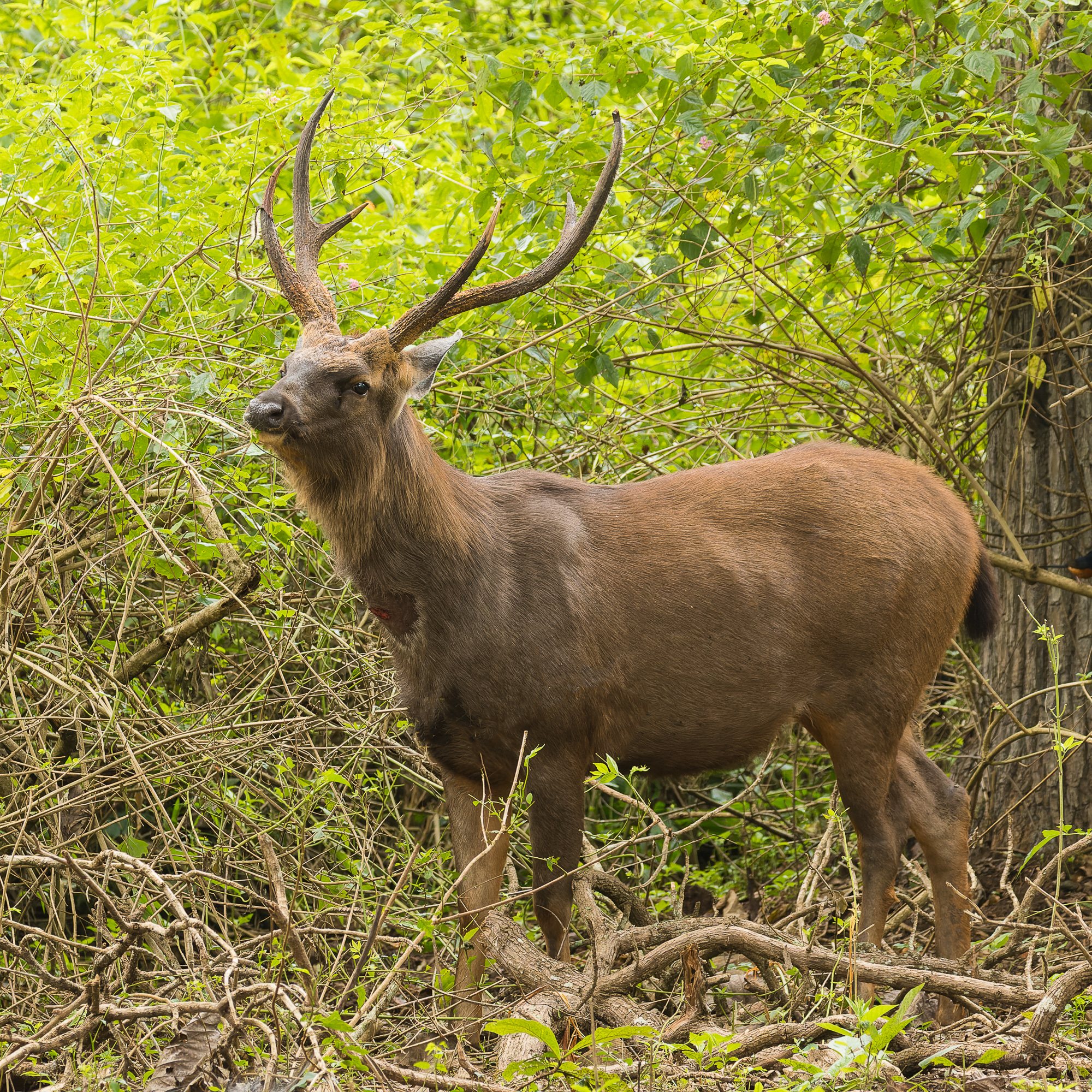
A sambar deer forages in the thick underbrush of the forest, Nagarhole National Park, India.
The sambar deer is large and shaggy, typically alone or in small groups. They remind me most of elk in North America, and as seen in this photo, I’ve usually seen them semi-hidden in dense brush.
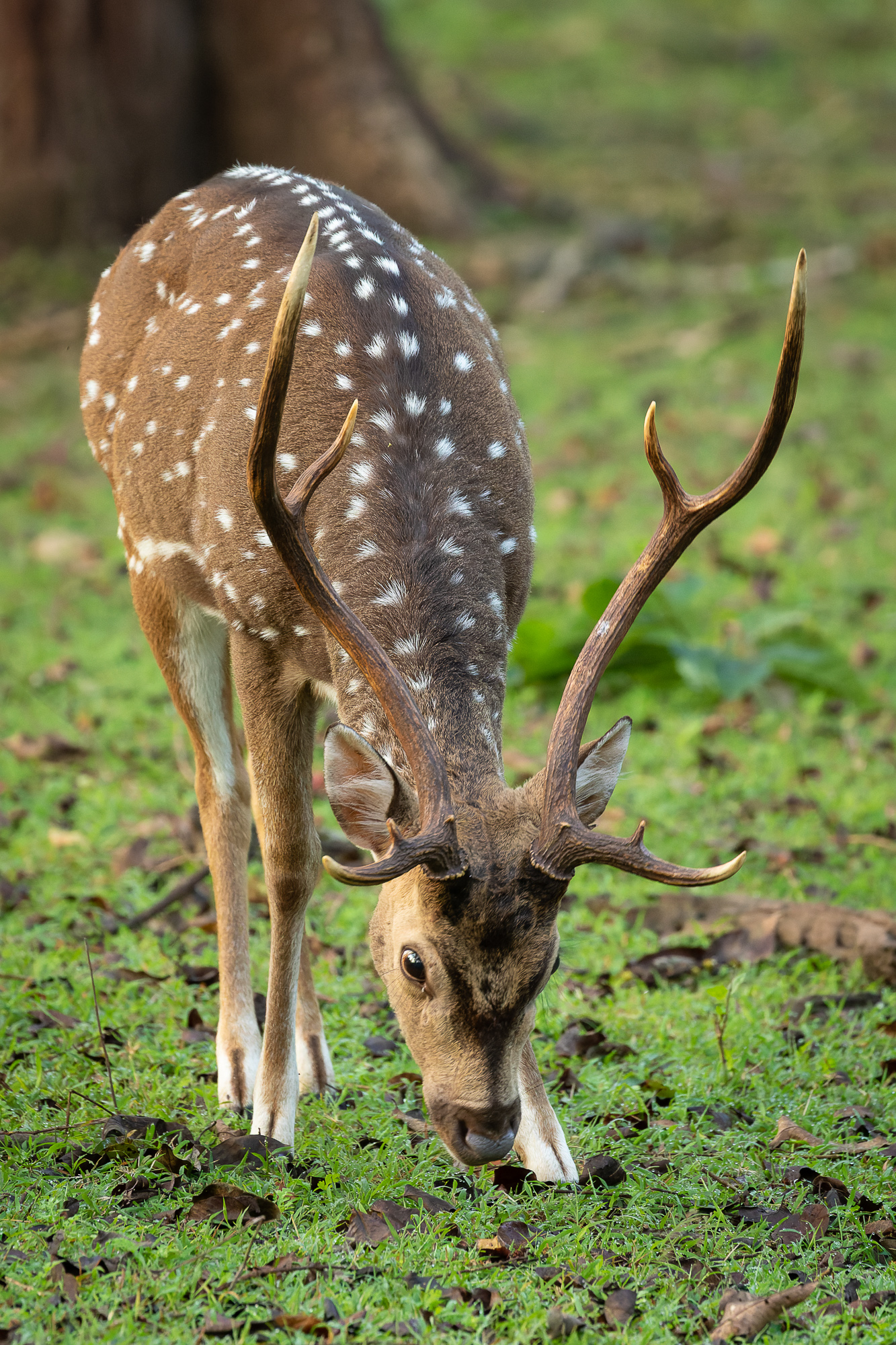
A small chital grazes on the forest grass, Nagarhole National Park, India.
Much more common in the area are chital – a slightly smaller spotted deer that travel in herds. They are not very skittish, usually seen in more open areas.
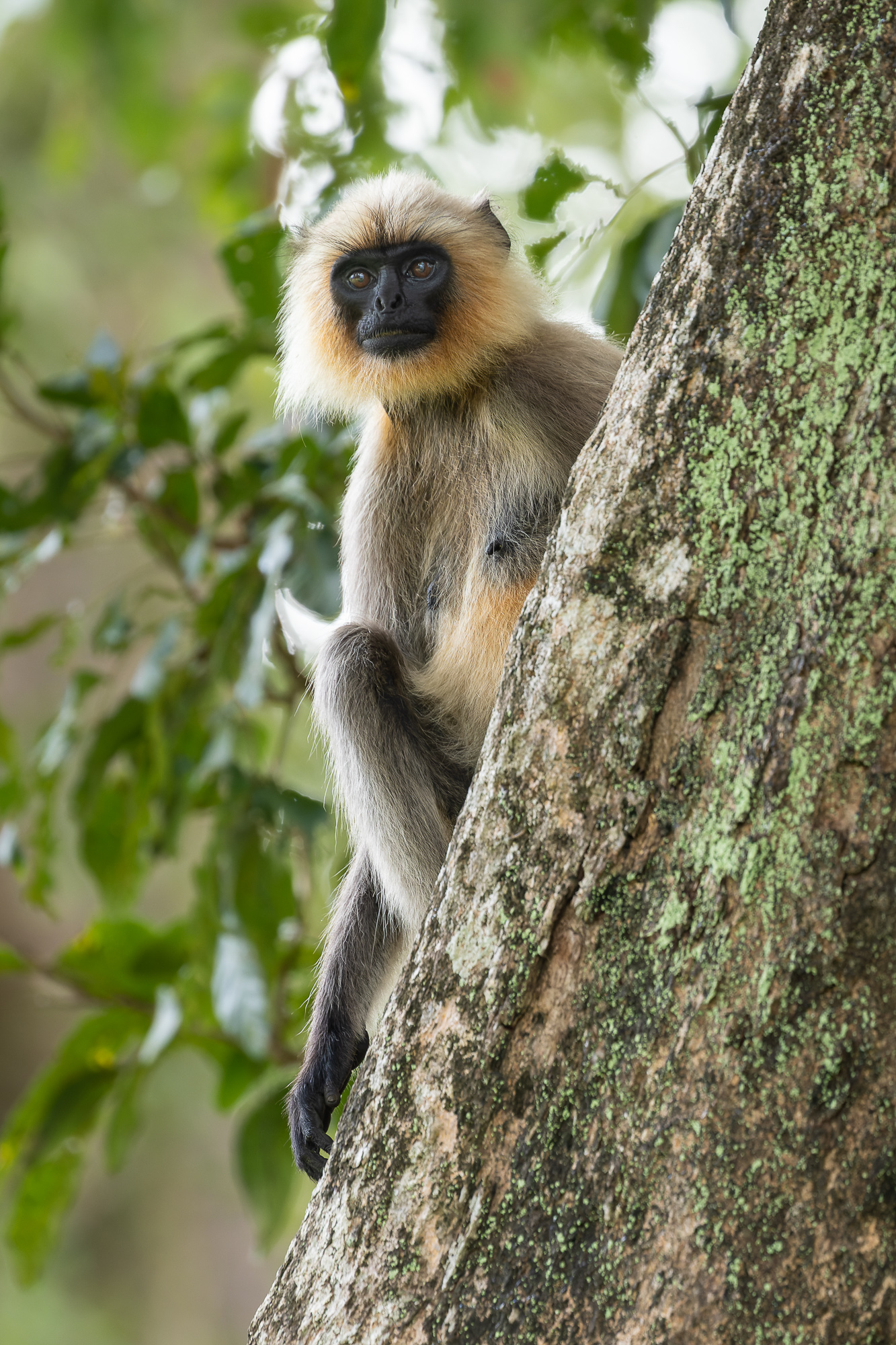
A tufted gray langur sits in a branch surveying the forest, Nagarhole National Park, India.
Occasionally we were treated to troop of tufted gray langurs. I could sit and watch their antics all day, as many of their expressions and movements are human-like. It is nice seeing them play in natural environments verses the multitude of macaques that have invaded some of the towns and cities.
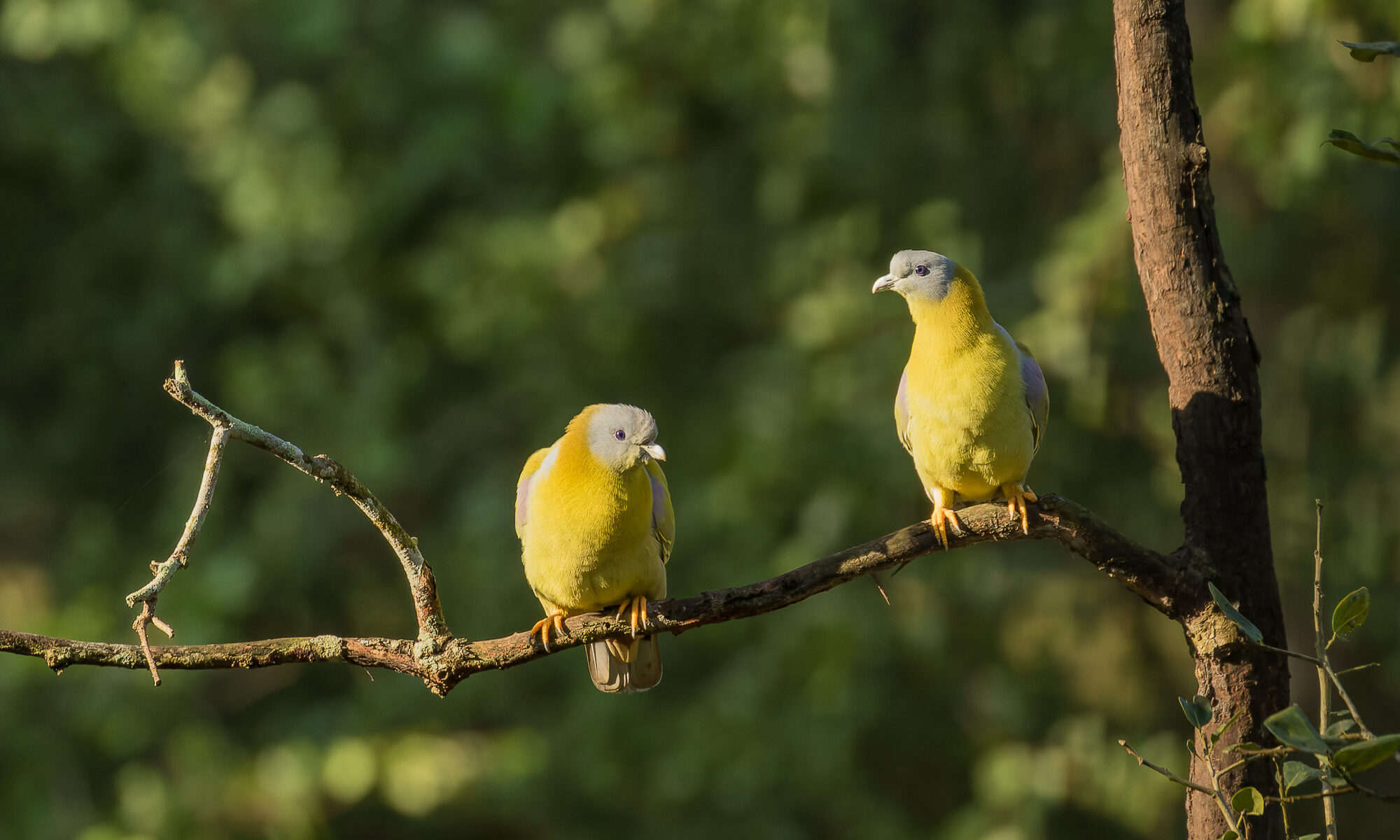
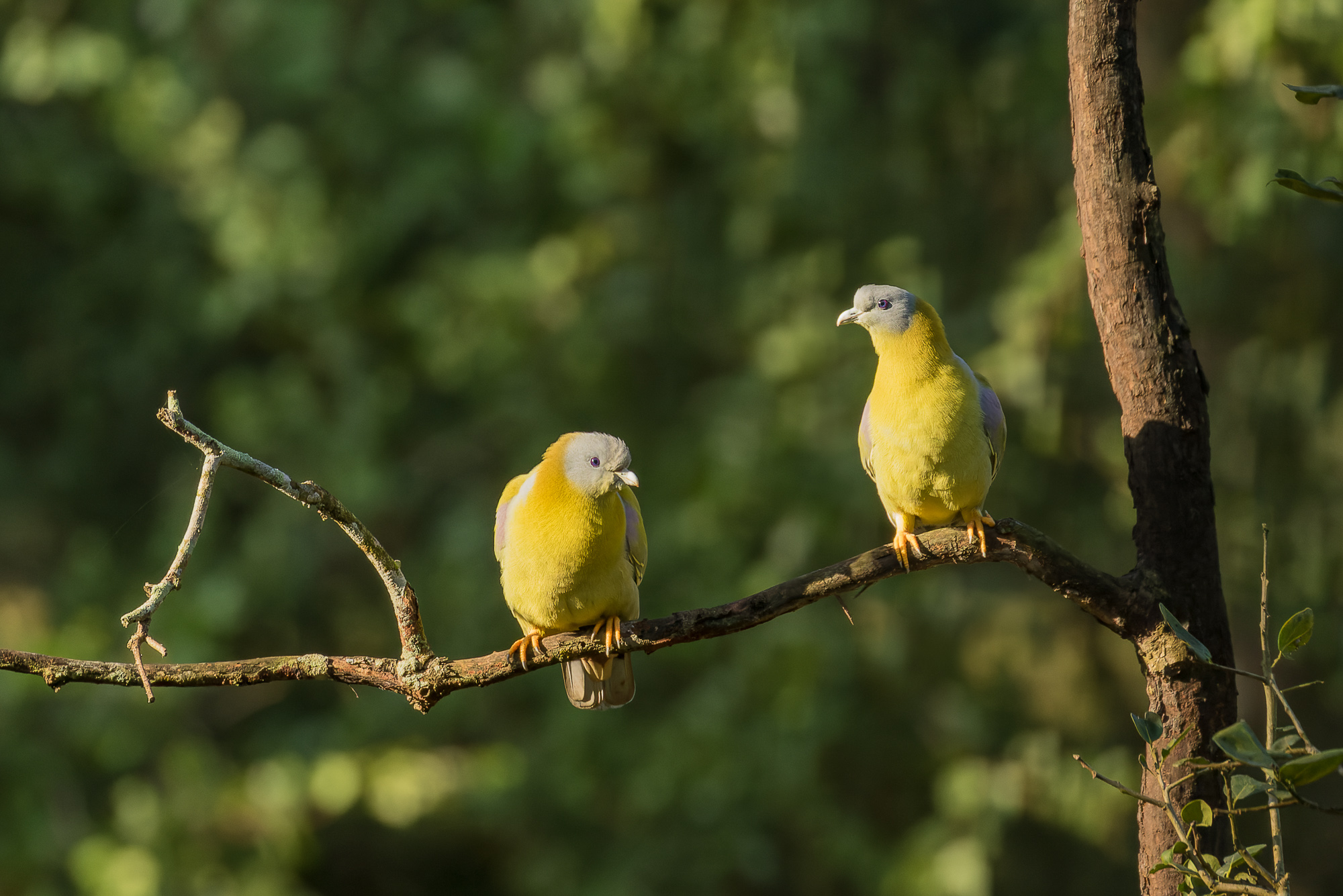
Two yellow-footed green pigeons perch in a jungle clearing, Nagarhole National Park, India.
This was a bird I had never seen before, and had to rely on one of my phone apps to identify. These are yellow-footed green pigeons, and I was lucky to catch them fly up on a bare branch in the sunshine for a brief moment.
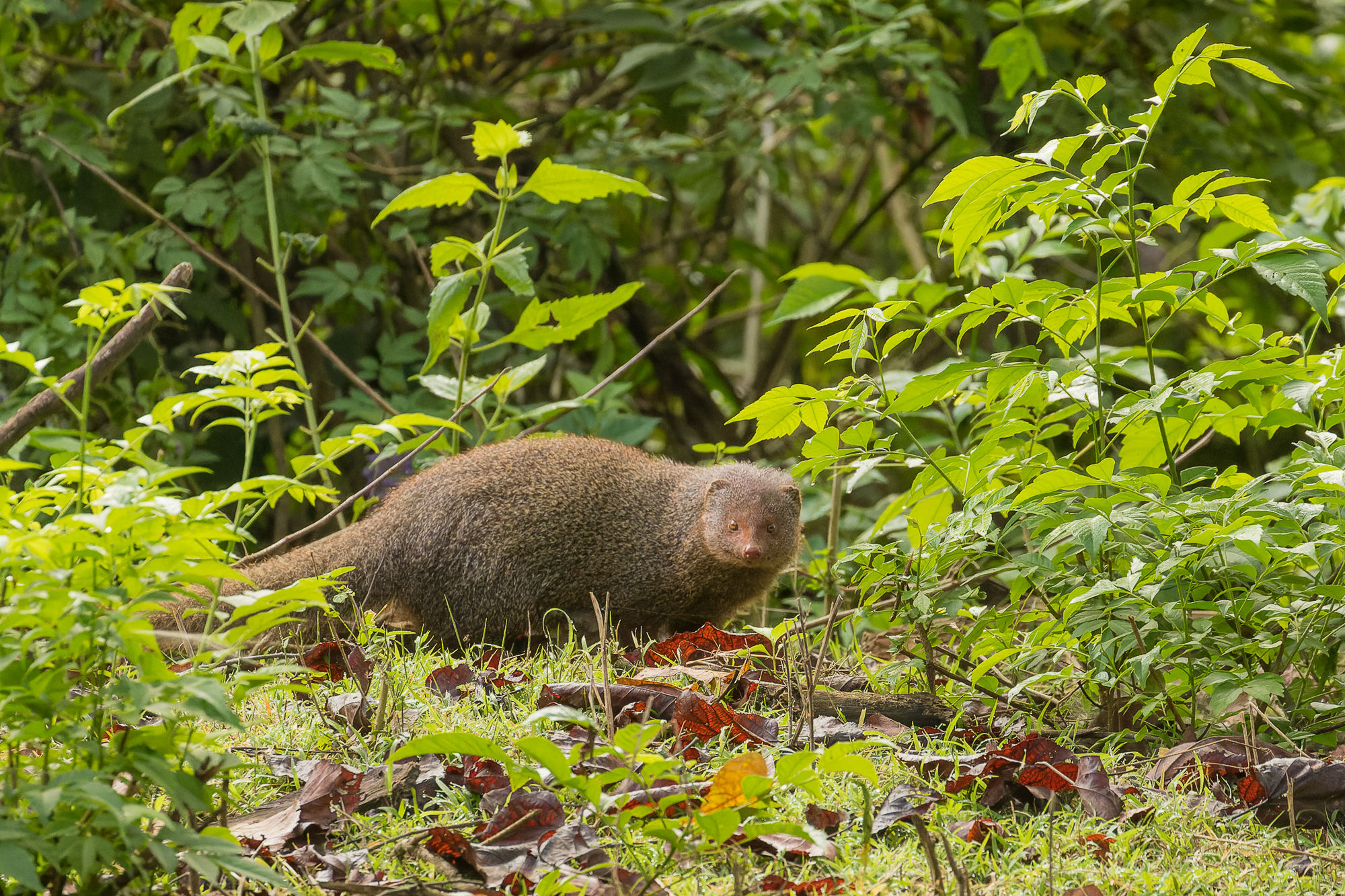
A ruddy mongoose moves silently through the forest, Nagarhole National Park, India.
One of my more memorable sightings of the trip were a couple of mongoose – a stripe-necked mongoose and (as pictured here) a ruddy mongoose. They were fast and elusive, so this was the best shot I got of the sightings.
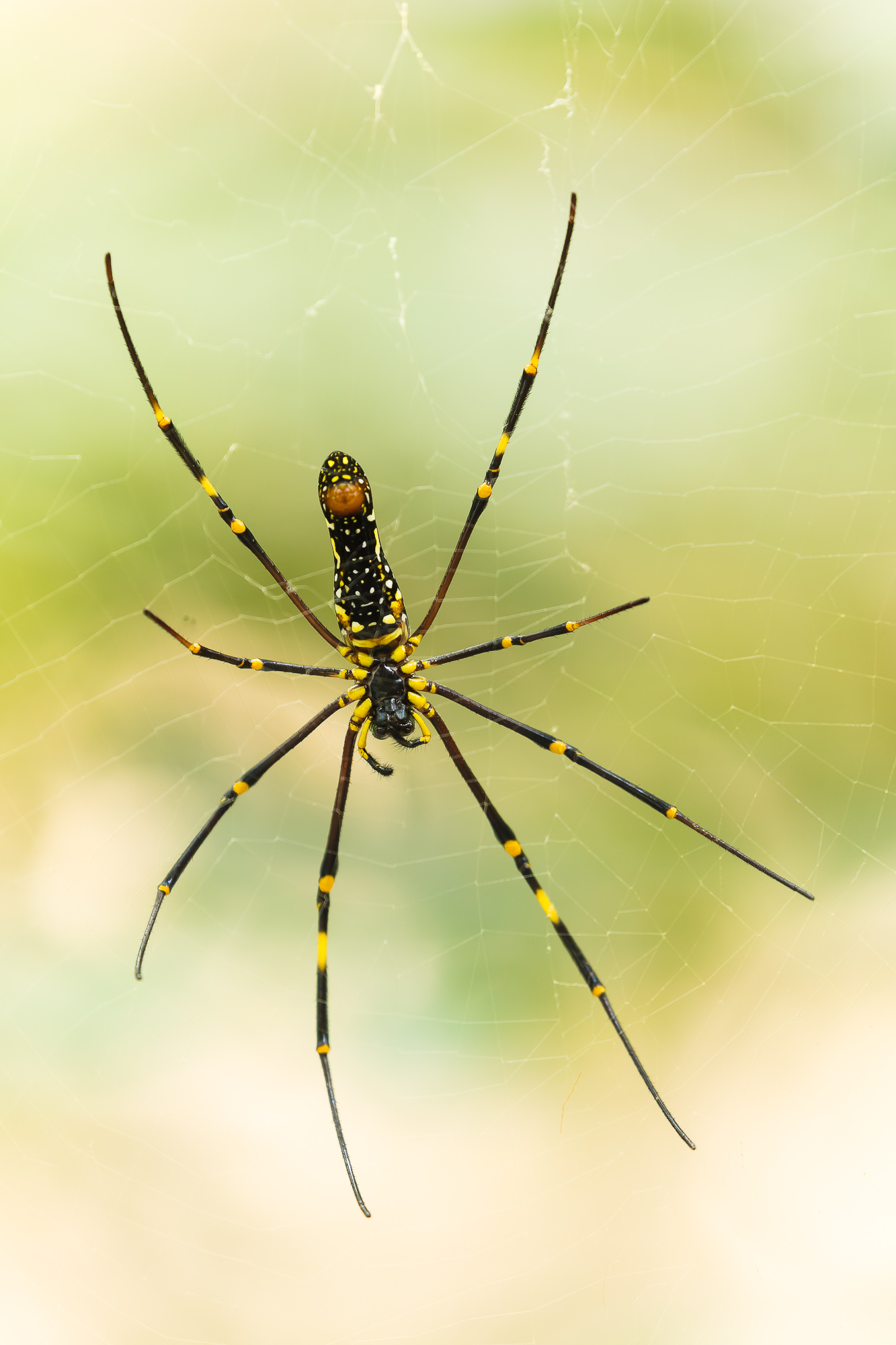
At around 8 inches across (including legs) this female giant wood spider sits on her web in a dense jungle, Nagarhole National Park, India.
Not to be outdone by the mammals, there were also plenty of spiders to see (yay!) In fact, the lodge that my friend booked for us was known for their variety of spider species and even had an onsite naturalist that gave guided spider tours around the property. Of course, had I known this reputation before the trip, I might have requested a different accommodation.
This is a photo of a giant wood spider who had spun a large web next to our room’s staircase. To say it was huge is a bit of an understatement – it definitely filled my dreams with unease while I was there. The wood spiders’ web can reach 20 feet across from one tree to another, creating a wall of death for unwary insects. These spiders are big enough to catch small birds or bats, though thankfully I didn’t see any of that.
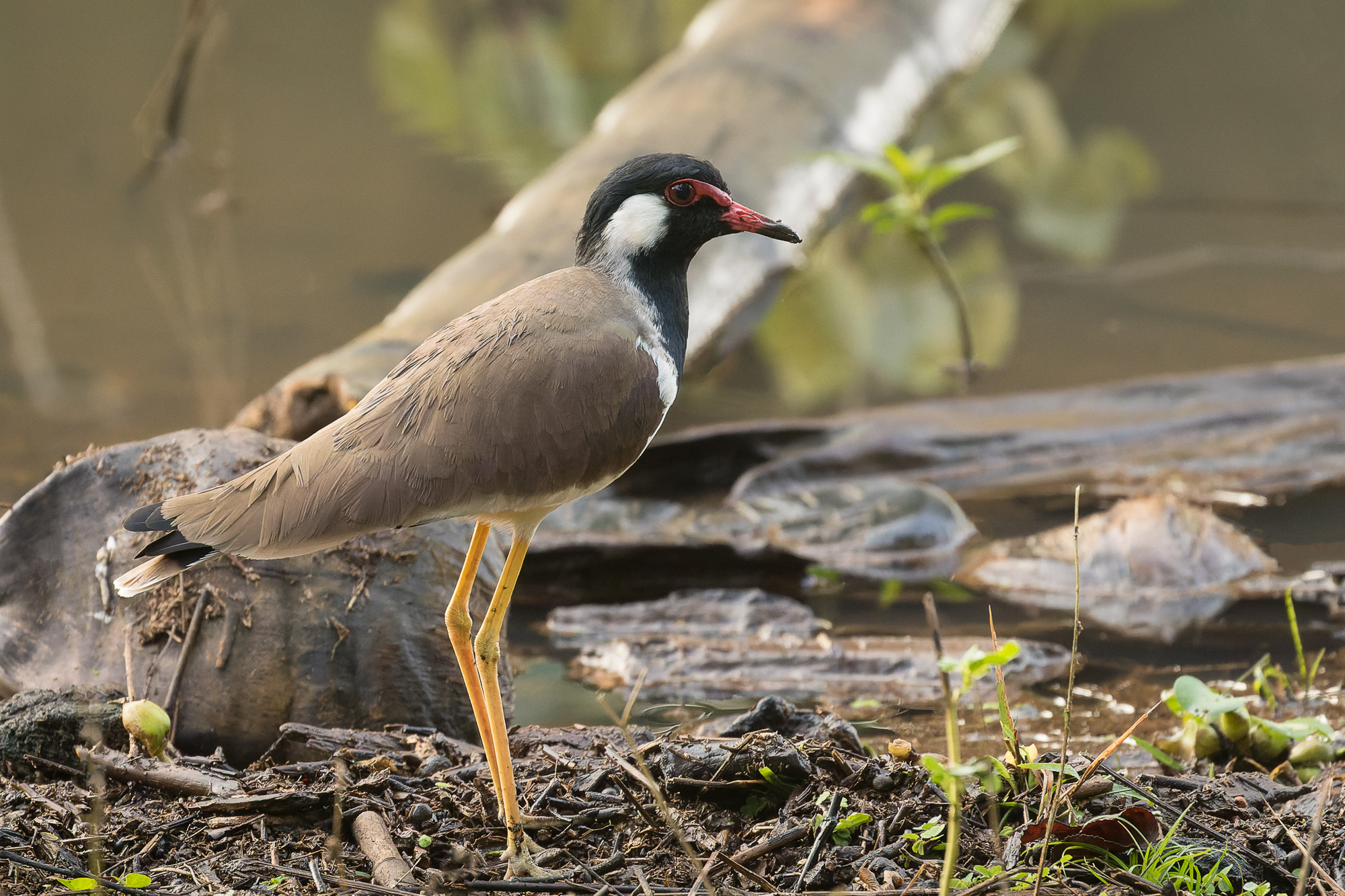
A red-wattled lapwing stands on the bank of a small pond, Nagarhole National Park, India.
On a lighter note, there were several ponds dotted throughout the forest, and I saw a red-wattled lapwing on the edge of one of them. Lapwings are members of the plover family which I have photographed fairly regularly over the years.
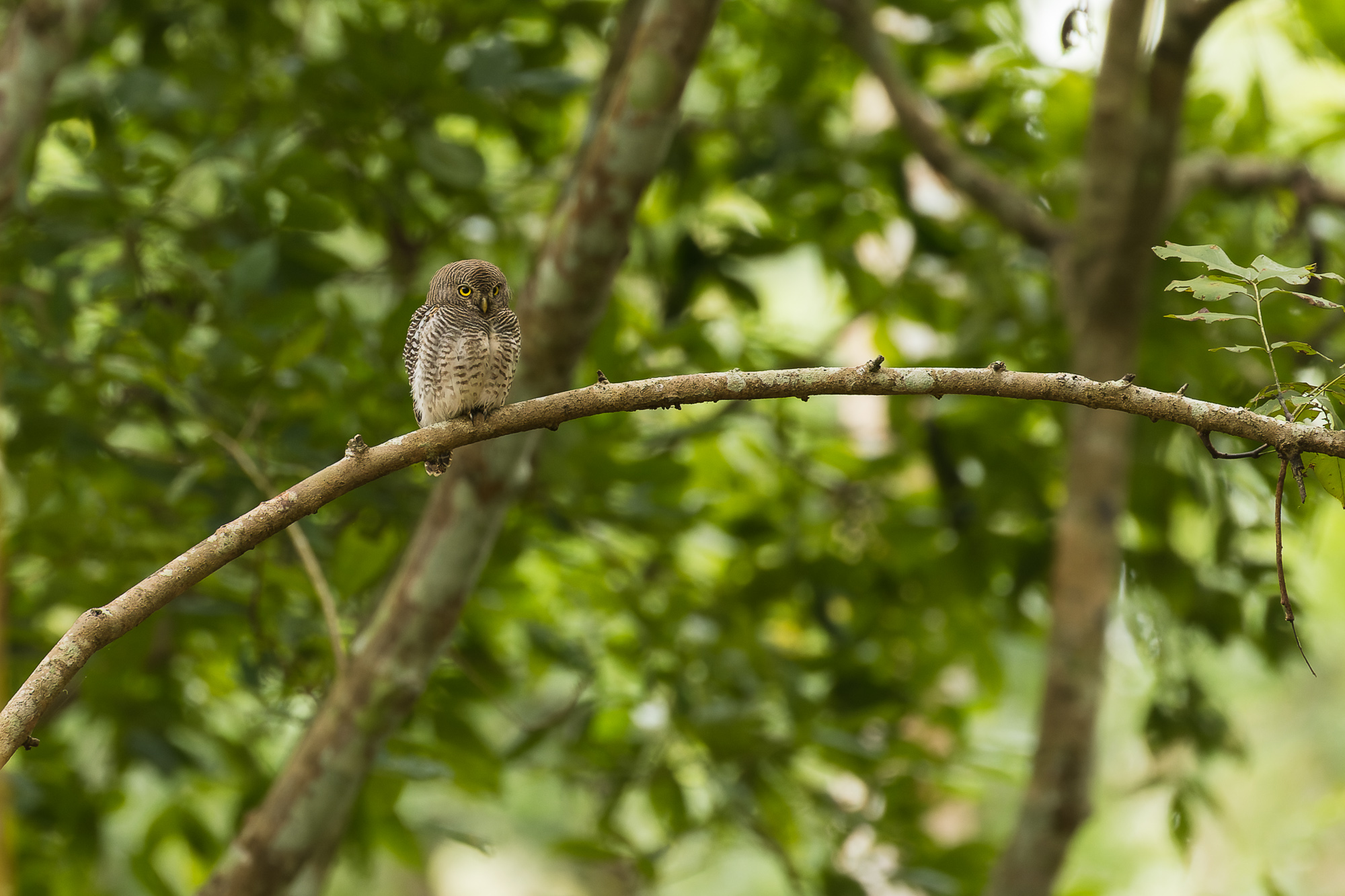
A tiny jungle owlet perches in the dark canopy of the forest, Nagarhole National Park, India.
I was blessed with two owl sightings. First a jungle owlet, the smallest owl I have ever photographed. They are about 8 inches long and weigh approximately 3 ounces. This one was perched quite far away in the dark recesses of the jungle.
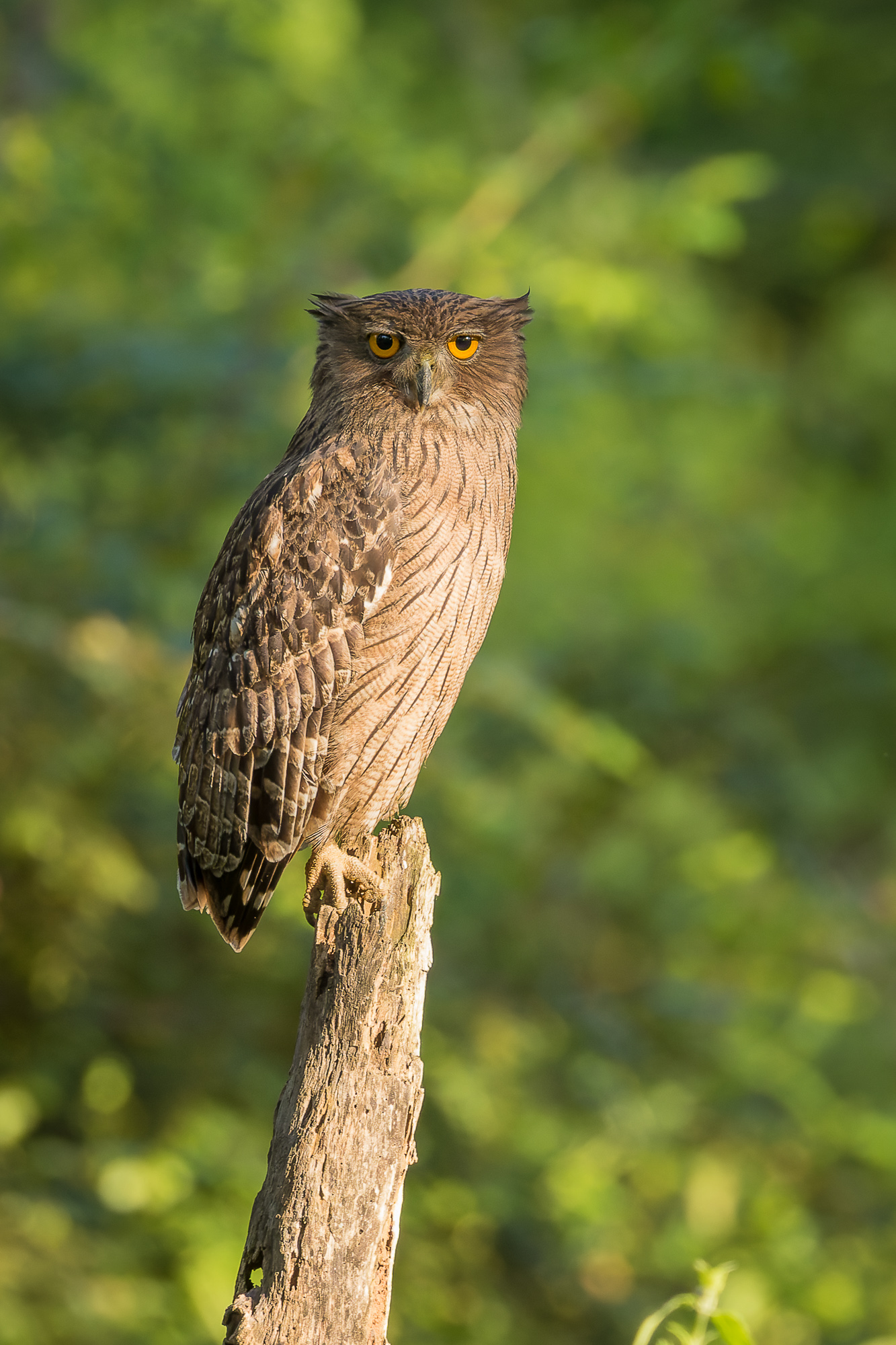
A brown fish-owl perches in a jungle clearing, Nagarhole National Park, India.
Later I encountered a much larger owl, the brown fish owl. This one was perched in a small clearing and we asked the driver to maneuver our vehicle so that the background was as far from the tree stump as possible. This allowed the background to blur away, creating a nice sharp portrait of the fish-owl. These owls can be up to 24 inches long and weigh as much as 5 pounds.
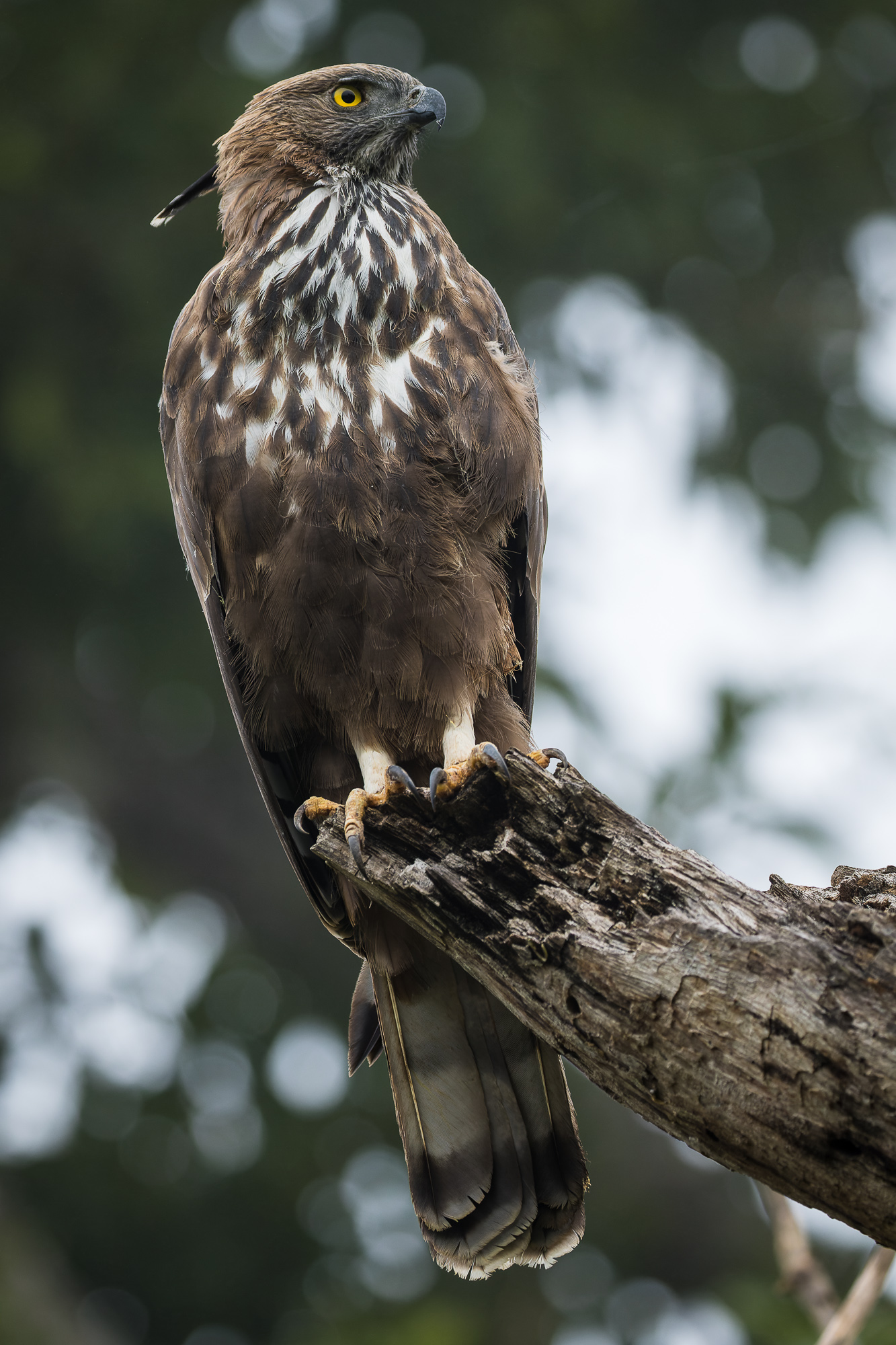
A changeable hawk-eagle perches in a dead tree, Nagarhole National Park, India.
Last notable sighting for the trip was a changeable hawk-eagle. I had seen several of these over the course of the two day excursion, but right at the end of our last day, we got to see this one much closer.
Overall it was a great trip, creepy spiders and all. I’d definitely welcome another opportunity to visit – you never know what you’re going to see in that dark jungle.
A great horned owl sits on a tree branch at dusk, surveying the area for potential prey.
This week’s shot was taken near Bishop, CA in an open field with a nearby stream. Although I was out shooting landscapes, I had my 100-400L mounted on a second body and slung over my shoulder. I was glad I thought to bring this “just in case” setup. You never know when you’ll run into wildlife!
Some friends alerted me to the owl’s presence, and as I got closer, I was presented with two problems, both relating to the lighting conditions. First of all, the sun was setting behind the tree in which the owl was perched. This created a strong silhouette of the tree branch with the owl. Sometimes silhouettes can work well with birds, especially if there is a strong graphical element to the shape of the bird. That wasn’t going to work here, because the shape of the owl was a simple oval – nothing interesting there. Moving closer to the tree and beneath it shielded me from the setting sun and allowing my camera meter to expose properly for the scene.
Now I was presented with the second lighting problem – it was getting dark. I had my landscape tripod with me, but I had ditched it as I started stalking closer to the tree. I knew I wouldn’t have had time to set up my lens on the tripod anyway, so I was stuck hand-holding. I checked my camera-recommended shutter speed (I often shoot in aperture priority), and knew that I couldn’t hand-hold at that speed and keep the image sharp. So I did what any modern digital shooter would do – I cranked up the ISO. I knew I could at least have a chance of recovering the photo from excessive noise. There is no salvaging a blurry photo.
After I had fired off a few shots, the owl decided he would rather have a little more solitude and flew off to another perch. It was very serendipitous to have run into this bird – if I had gone out specifically looking for a great horned owl, I’m sure I never would have found one.