Kabini – Nagarhole National Park, India

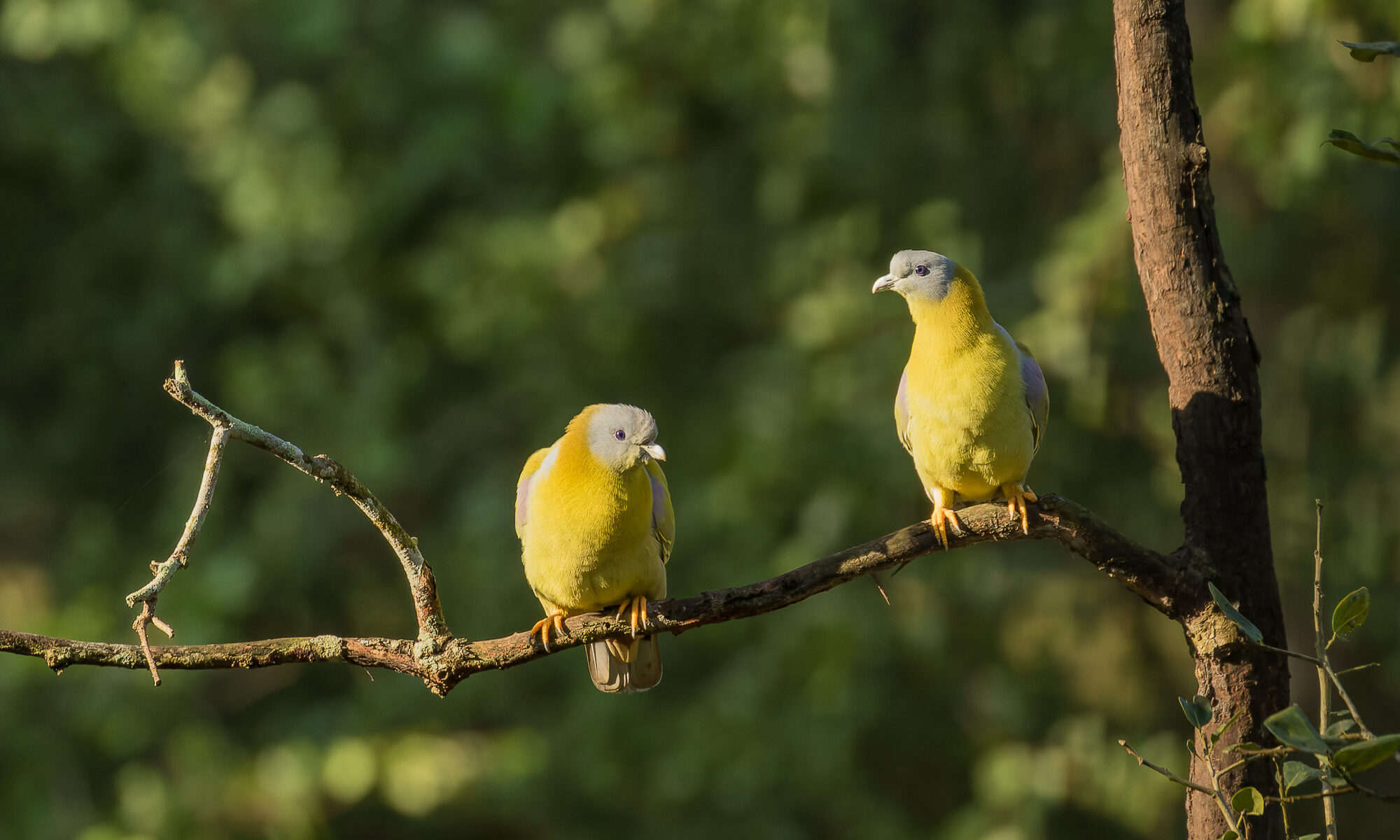
Two yellow-footed green pigeons perch in a jungle clearing, Nagarhole National Park, India.

I’ve been spending some time going through my archives of unpublished photos, and came across a trip to India a few years back where I was fortunate to be able to visit Kabini – a protected wildlife area that is part of the larger Nagarhole National Park in Karnataka.

I was able to do four safari outings over two days into the park, and see some of the local fauna. While I didn’t chance upon any of the area’s tigers, I did see quite a cast of characters.
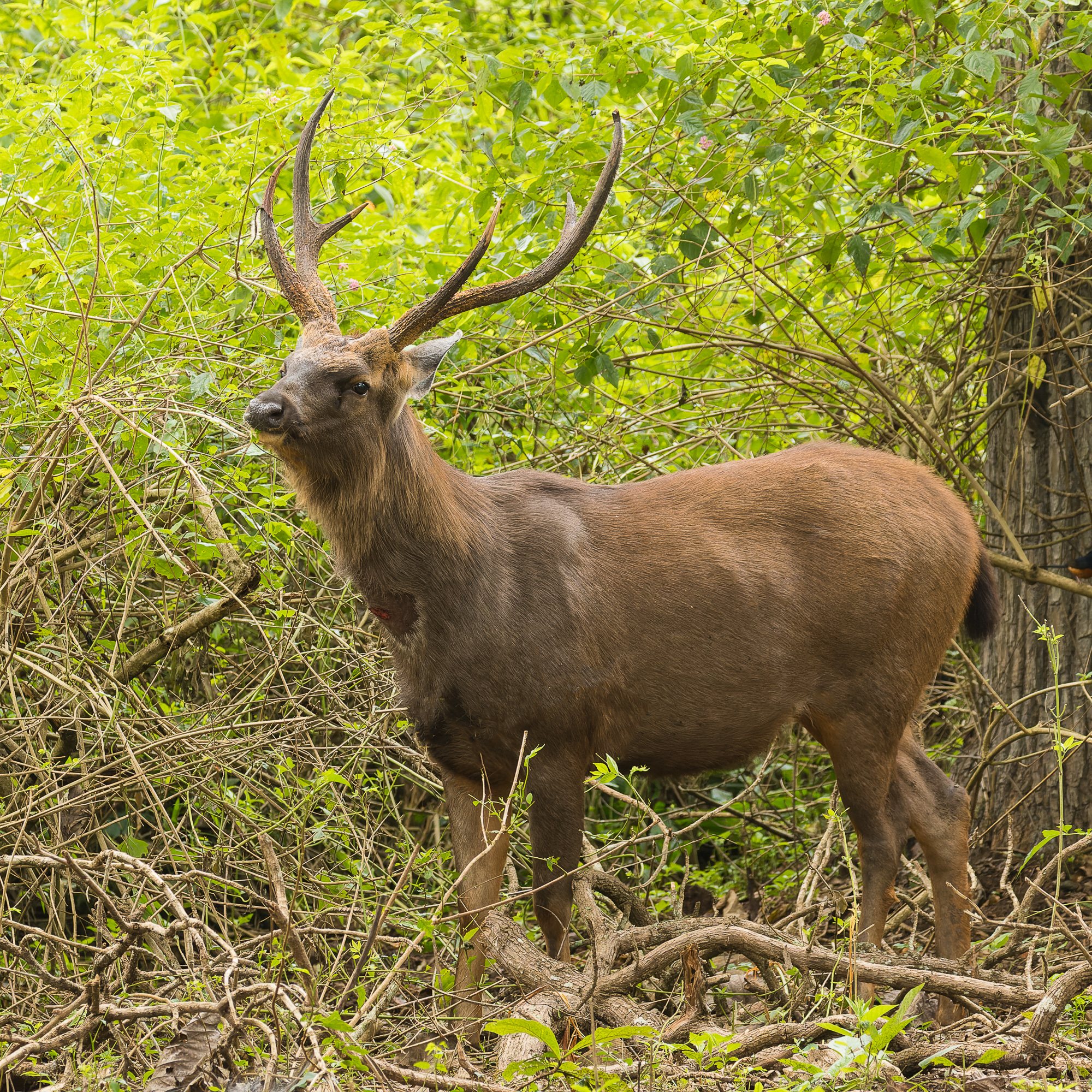
A sambar deer forages in the thick underbrush of the forest, Nagarhole National Park, India.

The sambar deer is large and shaggy, typically alone or in small groups. They remind me most of elk in North America, and as seen in this photo, I’ve usually seen them semi-hidden in dense brush.
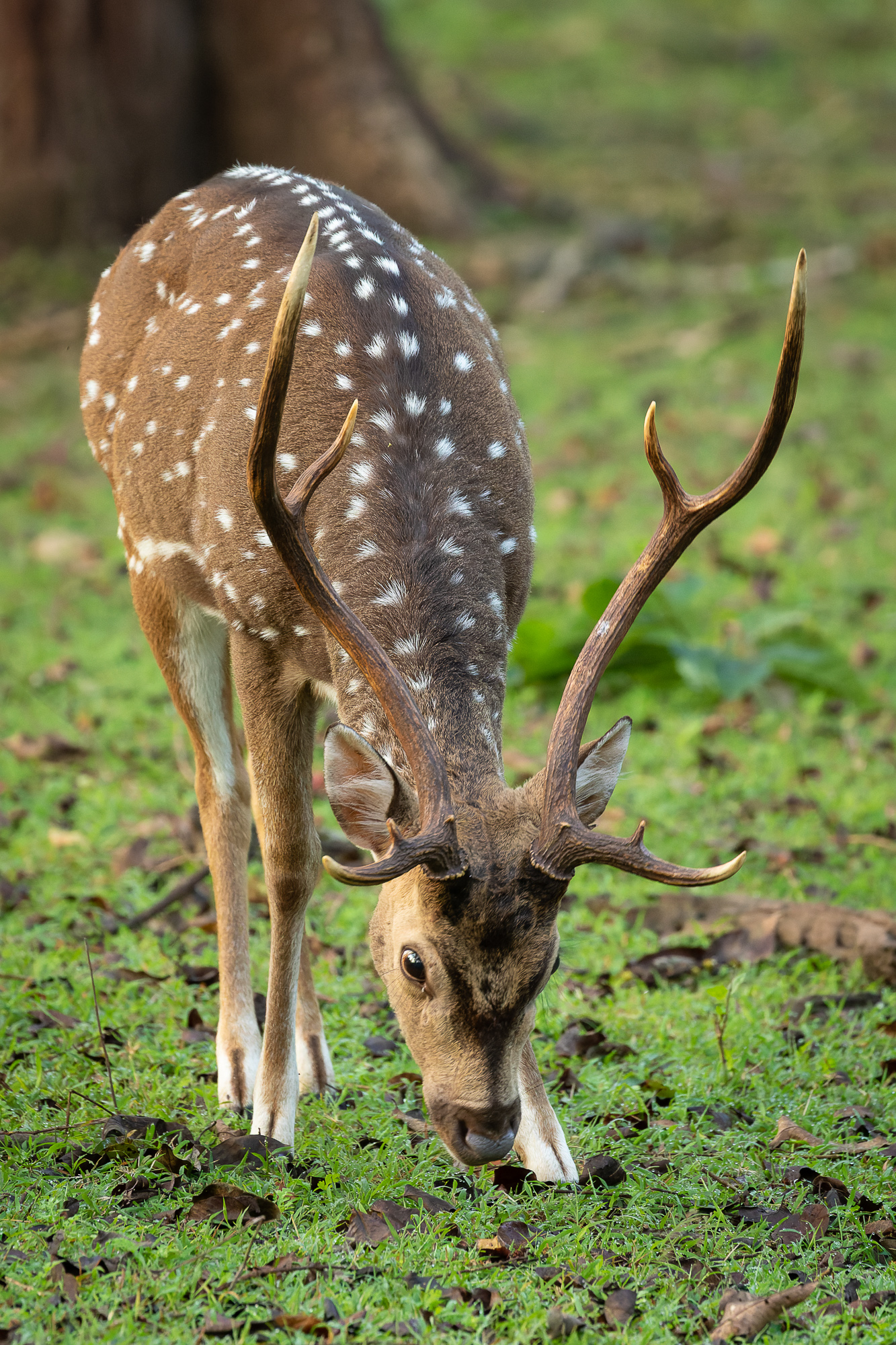
A small chital grazes on the forest grass, Nagarhole National Park, India.

Much more common in the area are chital – a slightly smaller spotted deer that travel in herds. They are not very skittish, usually seen in more open areas.
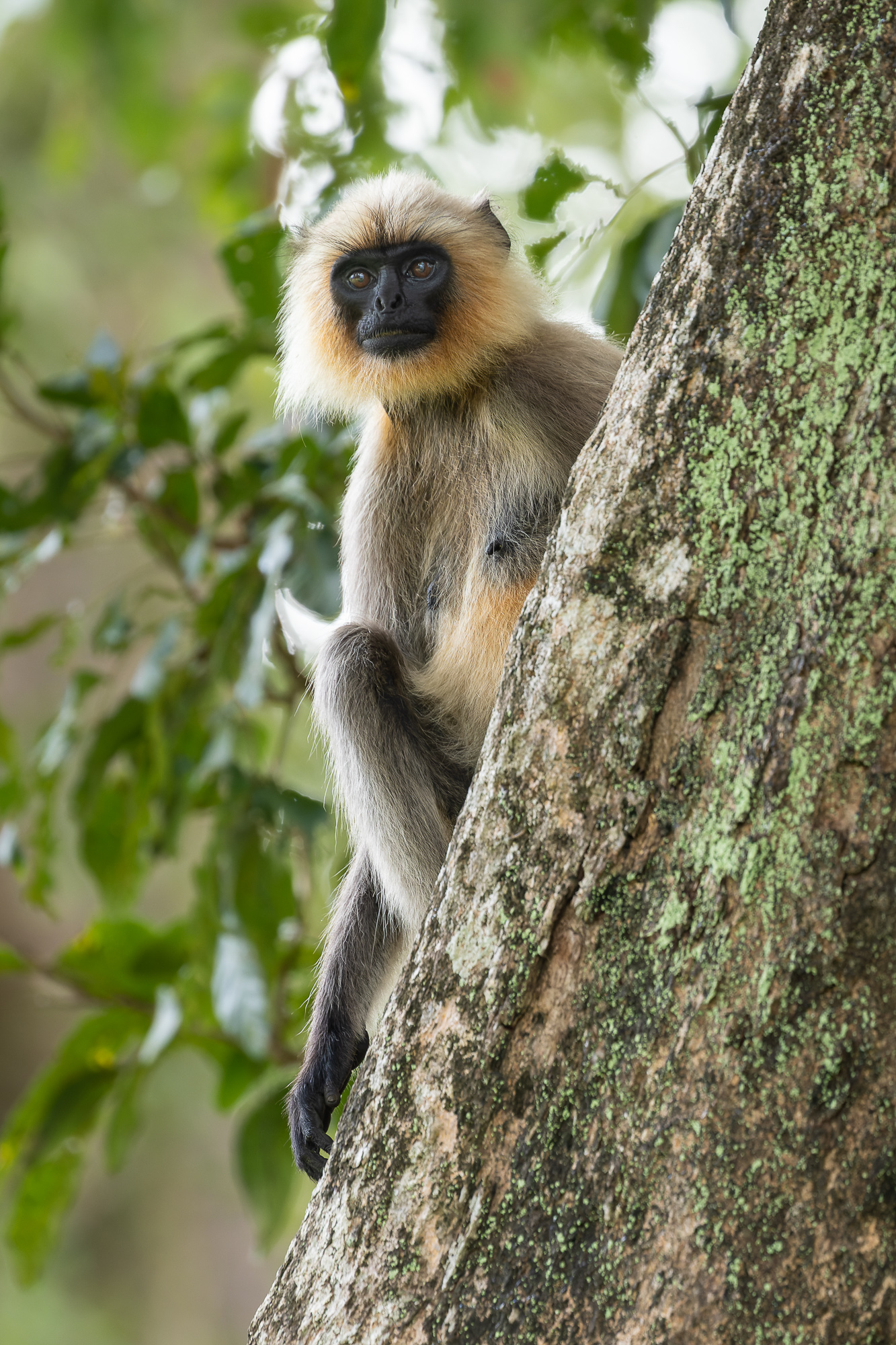
A tufted gray langur sits in a branch surveying the forest, Nagarhole National Park, India.

Occasionally we were treated to troop of tufted gray langurs. I could sit and watch their antics all day, as many of their expressions and movements are human-like. It is nice seeing them play in natural environments verses the multitude of macaques that have invaded some of the towns and cities.
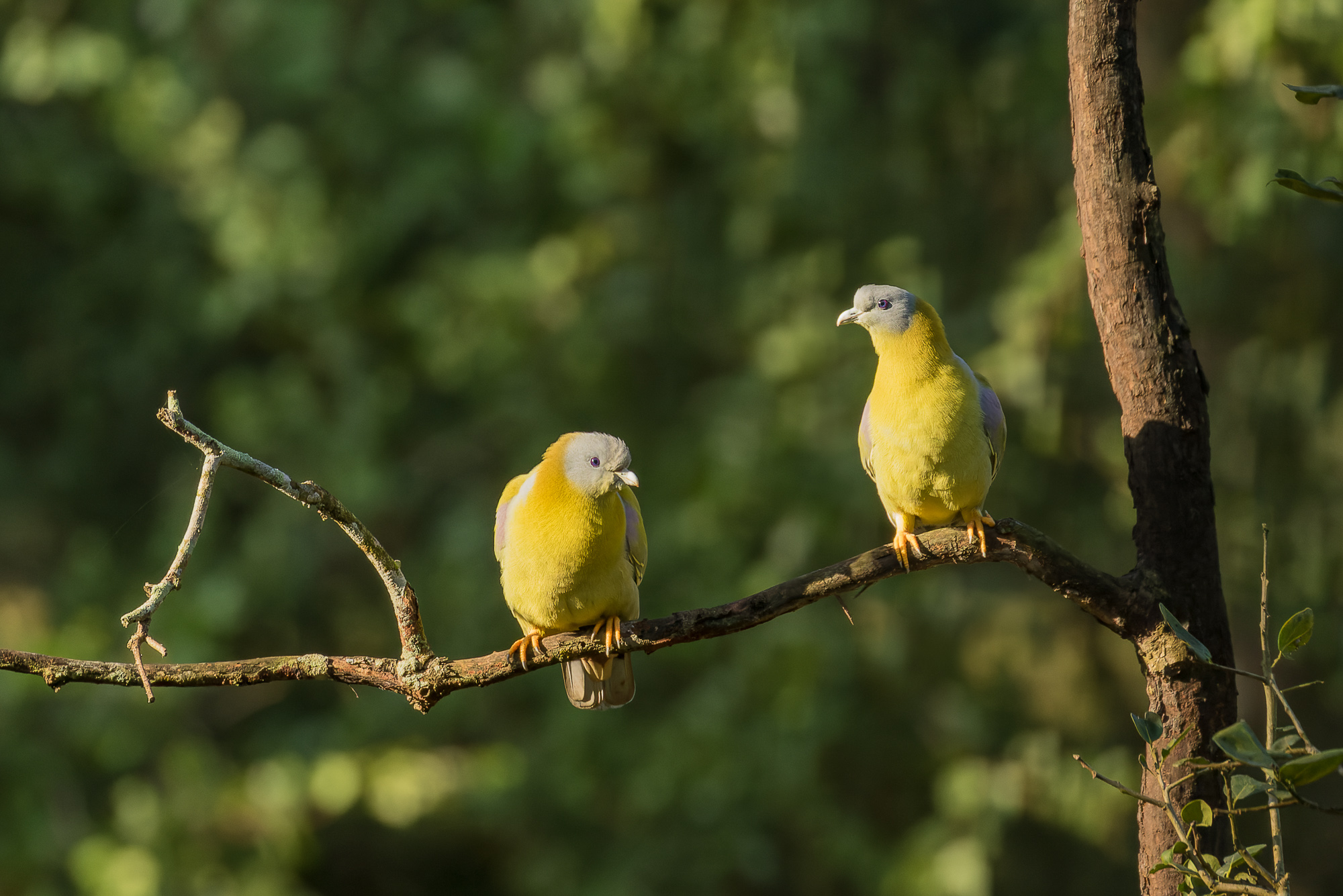
Two yellow-footed green pigeons perch in a jungle clearing, Nagarhole National Park, India.

This was a bird I had never seen before, and had to rely on one of my phone apps to identify. These are yellow-footed green pigeons, and I was lucky to catch them fly up on a bare branch in the sunshine for a brief moment.
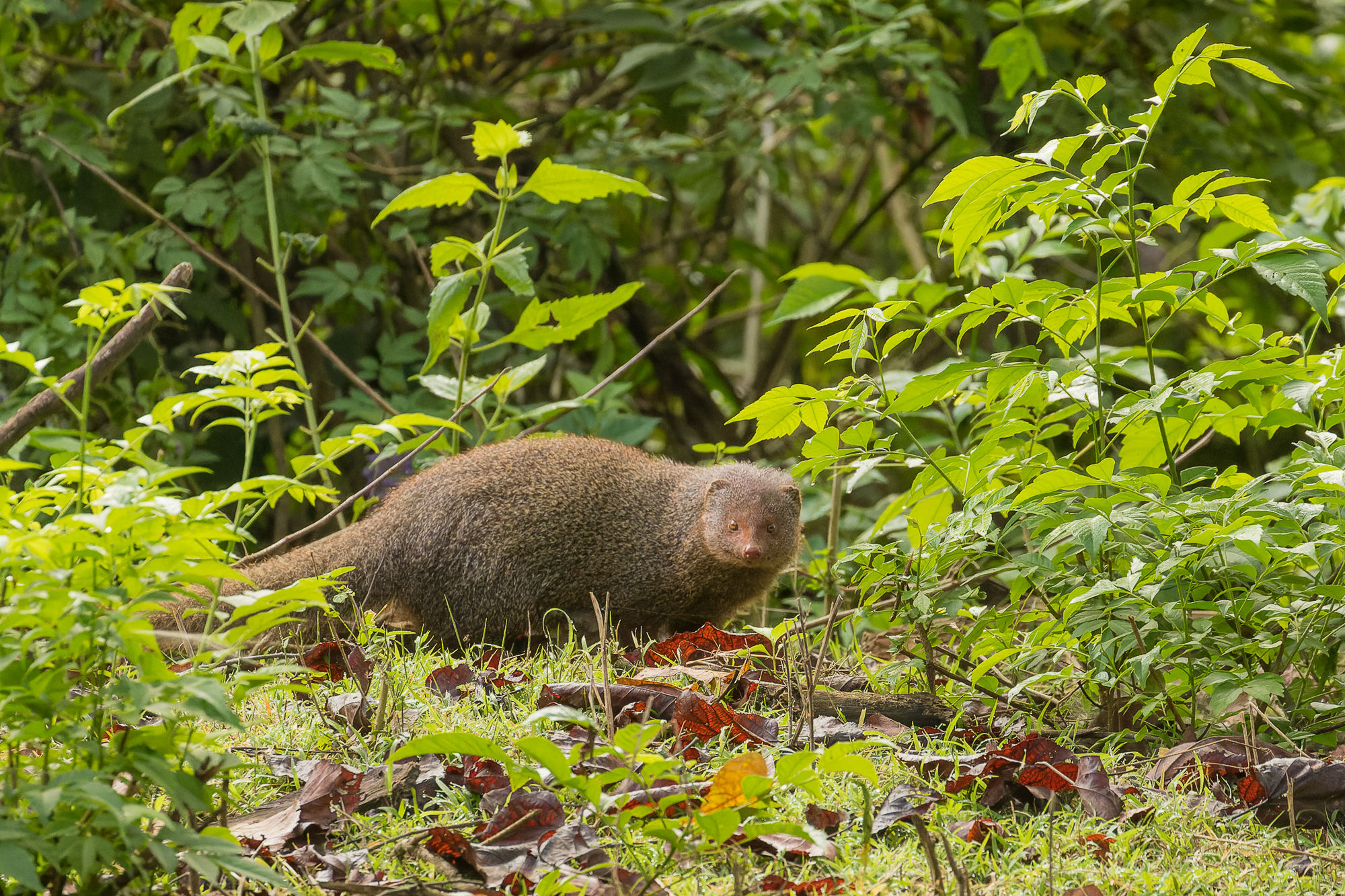
A ruddy mongoose moves silently through the forest, Nagarhole National Park, India.

One of my more memorable sightings of the trip were a couple of mongoose – a stripe-necked mongoose and (as pictured here) a ruddy mongoose. They were fast and elusive, so this was the best shot I got of the sightings.
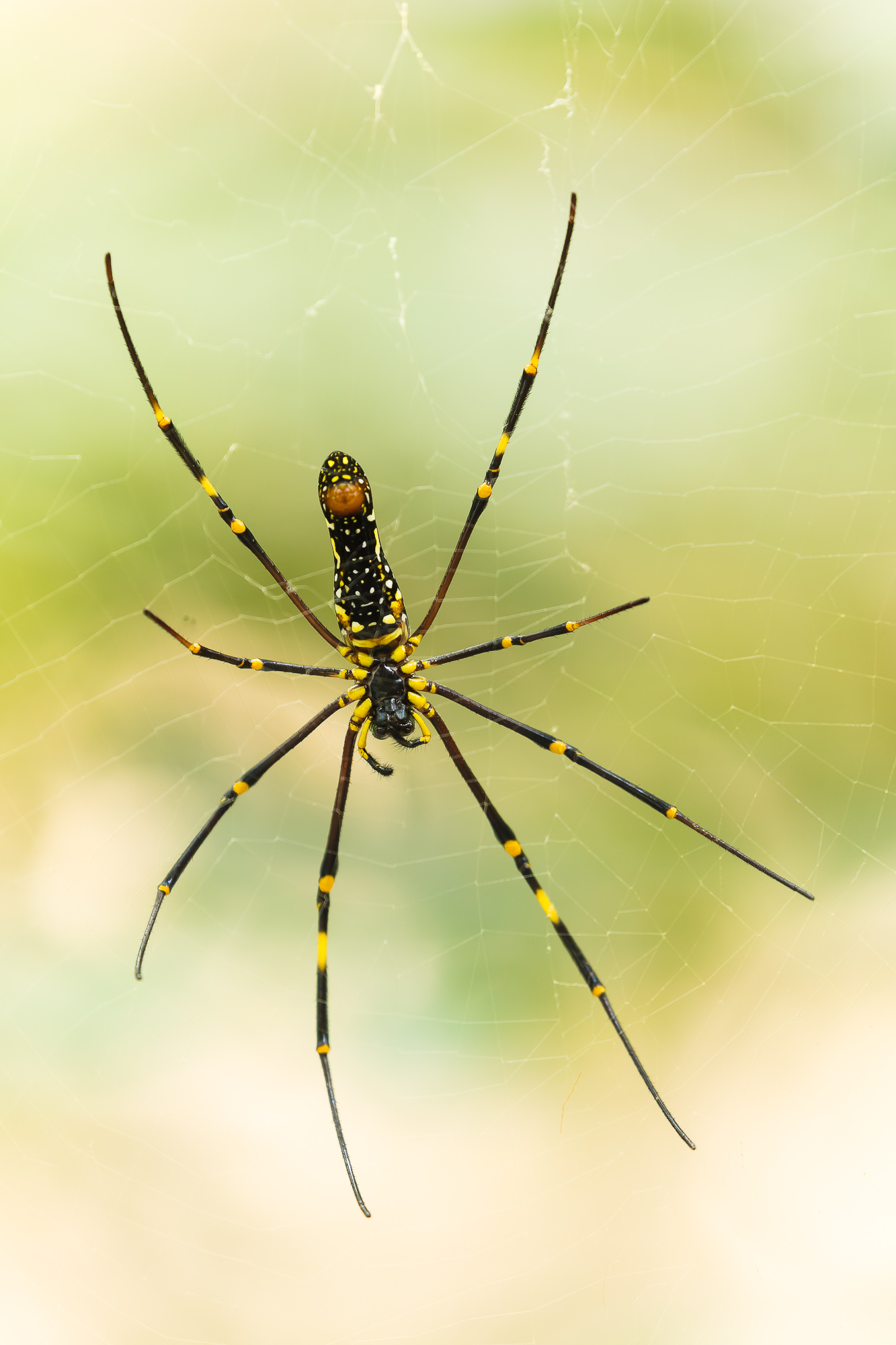
At around 8 inches across (including legs) this female giant wood spider sits on her web in a dense jungle, Nagarhole National Park, India.

Not to be outdone by the mammals, there were also plenty of spiders to see (yay!) In fact, the lodge that my friend booked for us was known for their variety of spider species and even had an onsite naturalist that gave guided spider tours around the property. Of course, had I known this reputation before the trip, I might have requested a different accommodation.

This is a photo of a giant wood spider who had spun a large web next to our room’s staircase. To say it was huge is a bit of an understatement – it definitely filled my dreams with unease while I was there. The wood spiders’ web can reach 20 feet across from one tree to another, creating a wall of death for unwary insects. These spiders are big enough to catch small birds or bats, though thankfully I didn’t see any of that.
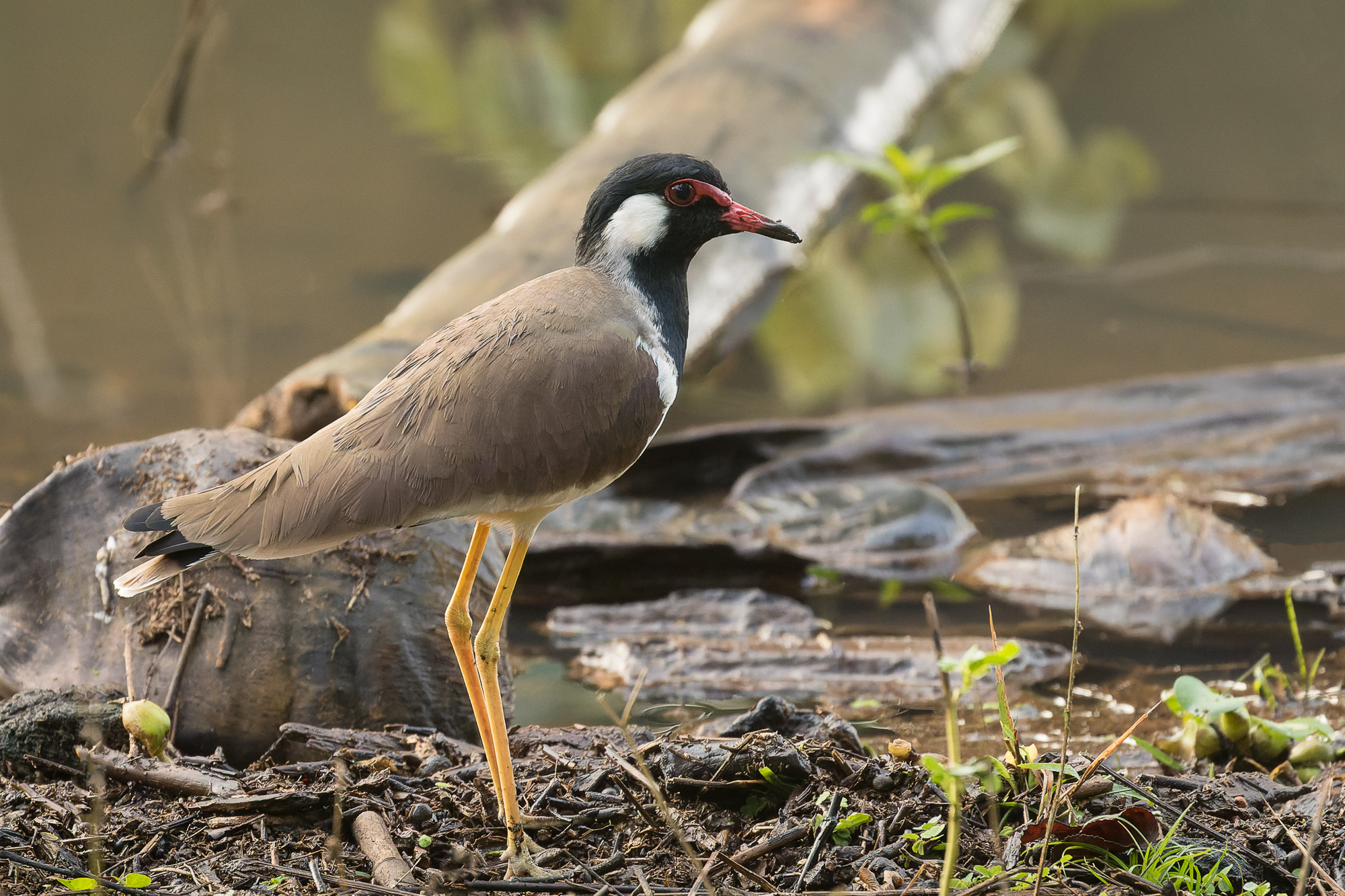
A red-wattled lapwing stands on the bank of a small pond, Nagarhole National Park, India.

On a lighter note, there were several ponds dotted throughout the forest, and I saw a red-wattled lapwing on the edge of one of them. Lapwings are members of the plover family which I have photographed fairly regularly over the years.
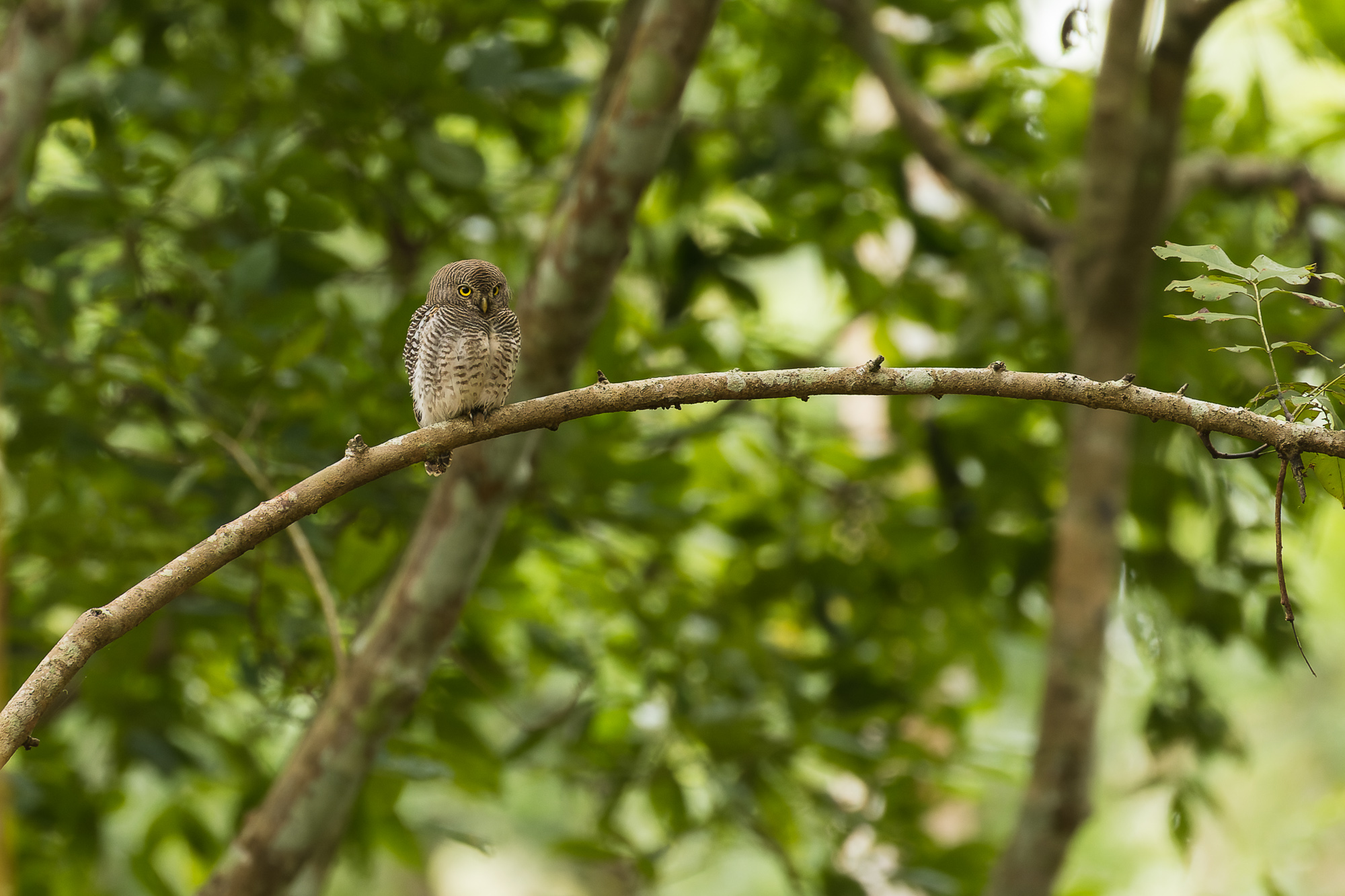
A tiny jungle owlet perches in the dark canopy of the forest, Nagarhole National Park, India.

I was blessed with two owl sightings. First a jungle owlet, the smallest owl I have ever photographed. They are about 8 inches long and weigh approximately 3 ounces. This one was perched quite far away in the dark recesses of the jungle.
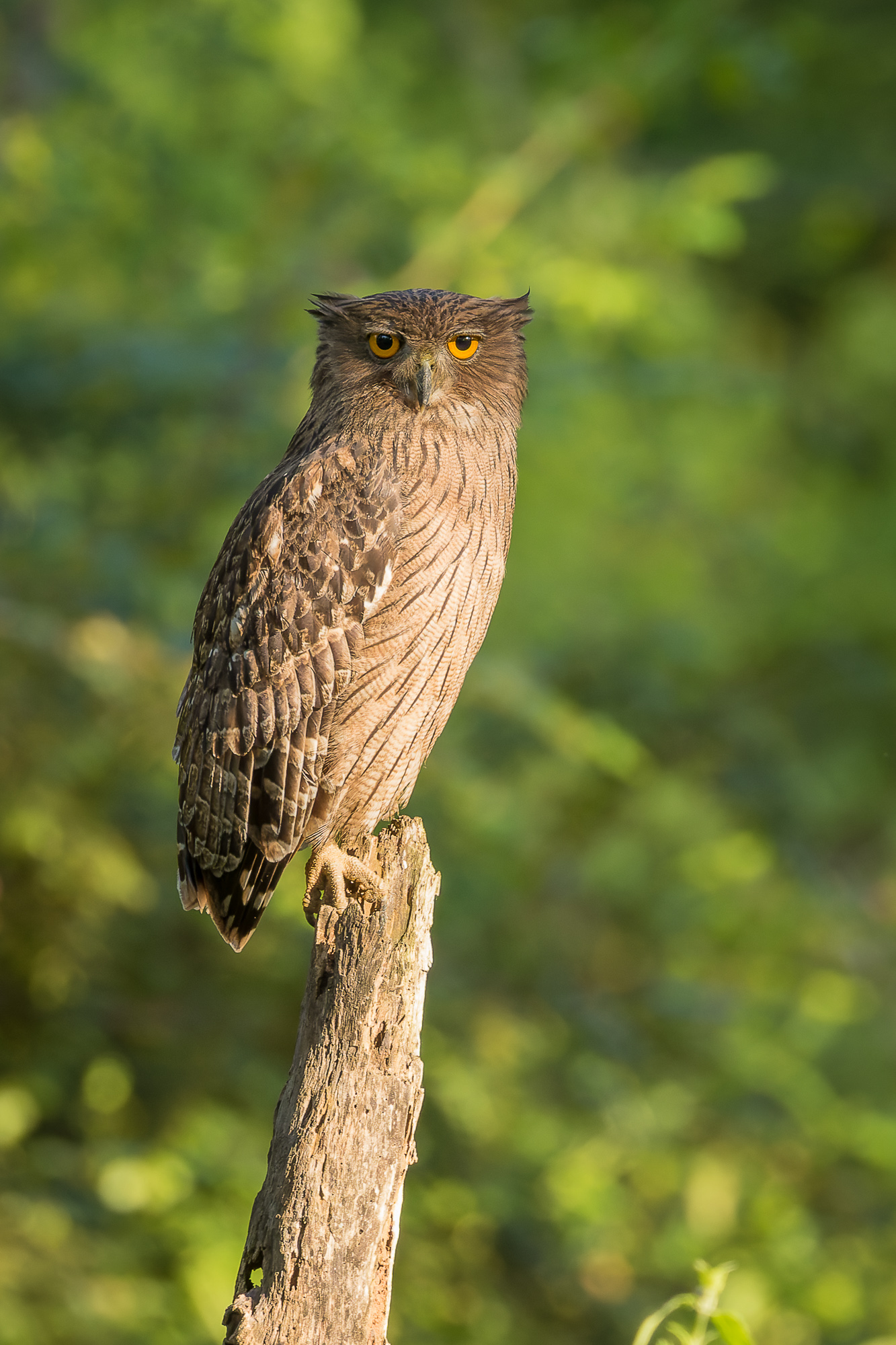
A brown fish-owl perches in a jungle clearing, Nagarhole National Park, India.

Later I encountered a much larger owl, the brown fish owl. This one was perched in a small clearing and we asked the driver to maneuver our vehicle so that the background was as far from the tree stump as possible. This allowed the background to blur away, creating a nice sharp portrait of the fish-owl. These owls can be up to 24 inches long and weigh as much as 5 pounds.
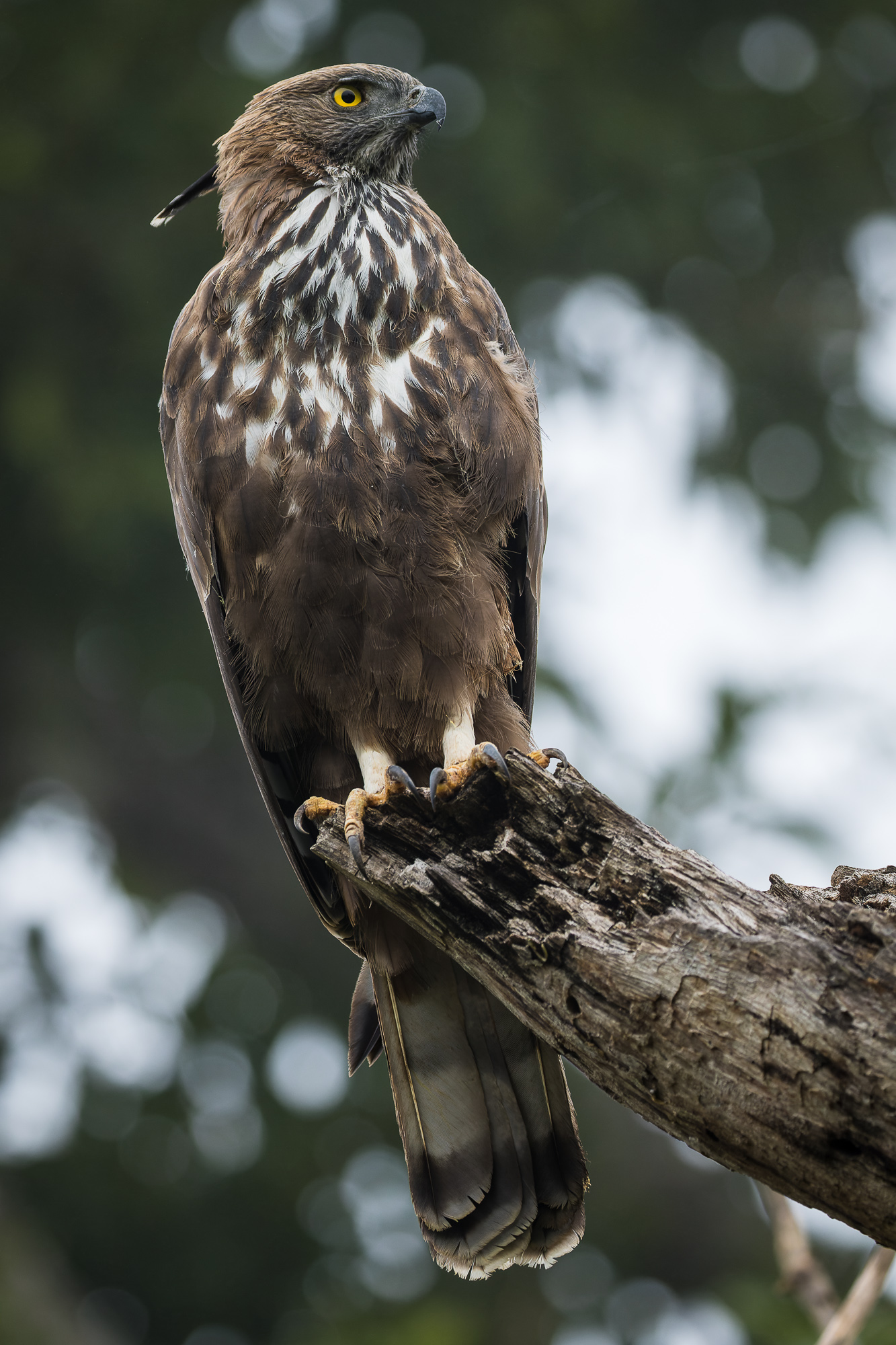
A changeable hawk-eagle perches in a dead tree, Nagarhole National Park, India.

Last notable sighting for the trip was a changeable hawk-eagle. I had seen several of these over the course of the two day excursion, but right at the end of our last day, we got to see this one much closer.

Overall it was a great trip, creepy spiders and all. I’d definitely welcome another opportunity to visit – you never know what you’re going to see in that dark jungle.
Wildlife Photography – Work From Home?

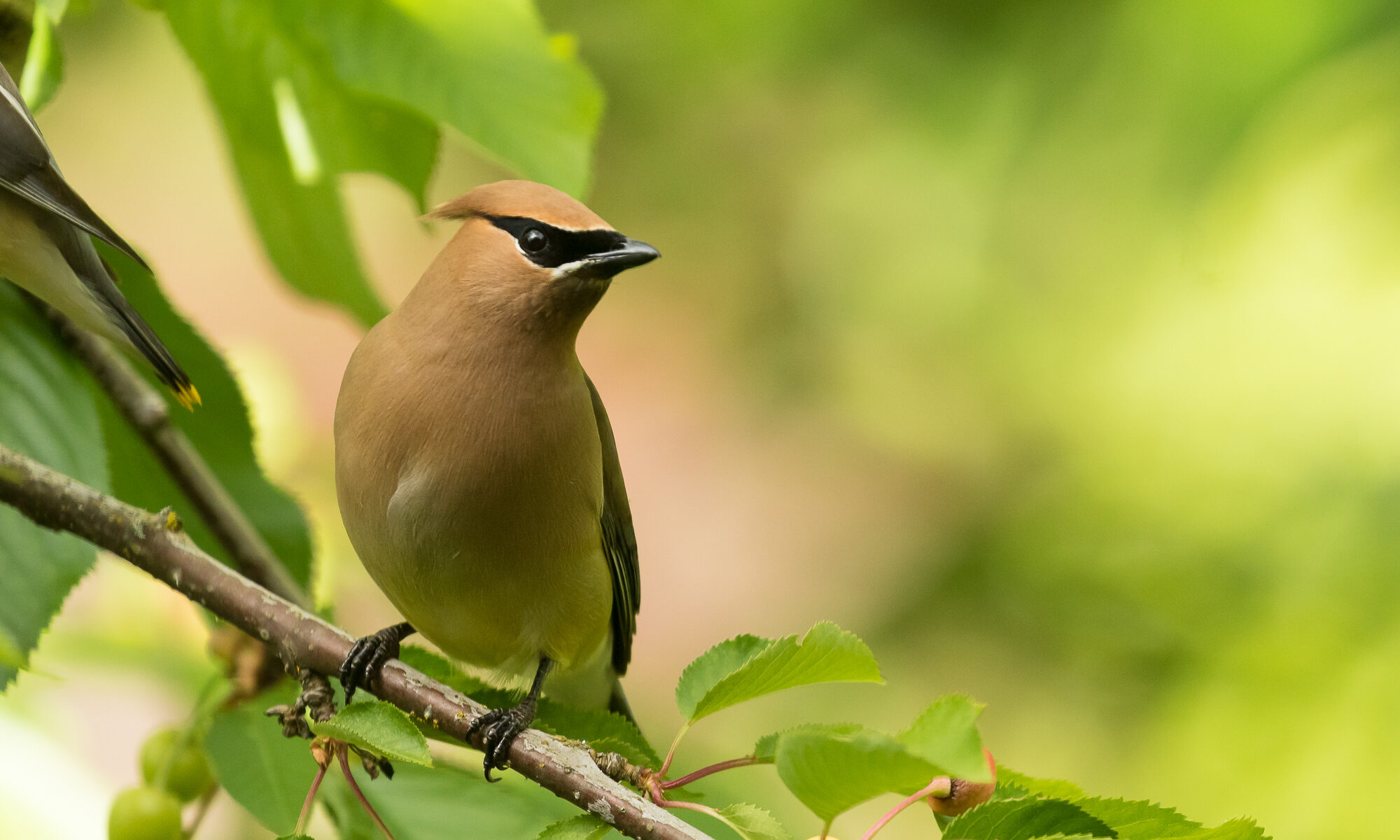
A cedar waxwing perches on a branch of a cherry tree, Vancouver, WA.

A big change for me during the pandemic was not getting out much to photograph. Luckily, I have a cherry tree right outside my office window, so I was able to do a little “at home” wildlife photography from the comfort of my own office chair! These photos were taken over about a 2 week period in late spring, as the cherries began to ripen.

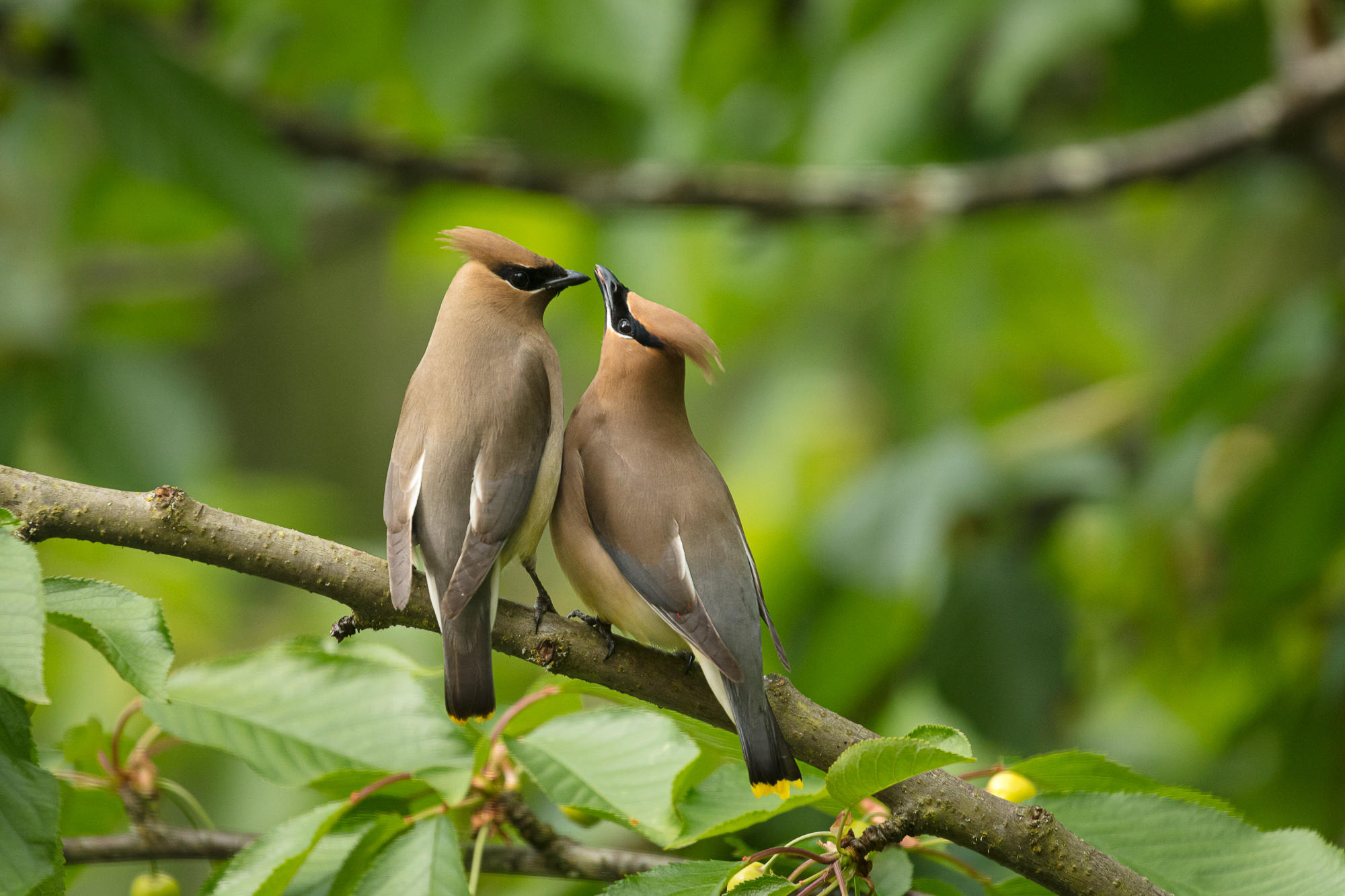
A cedar waxwing feeds another fresh cherries while perched on a branch, Vancouver, WA.

My early season visitors included a flock of cedar waxwings with fledglings. Although the cherries were not quite ripe, they didn’t seem to mind, and were busy feeding their young.

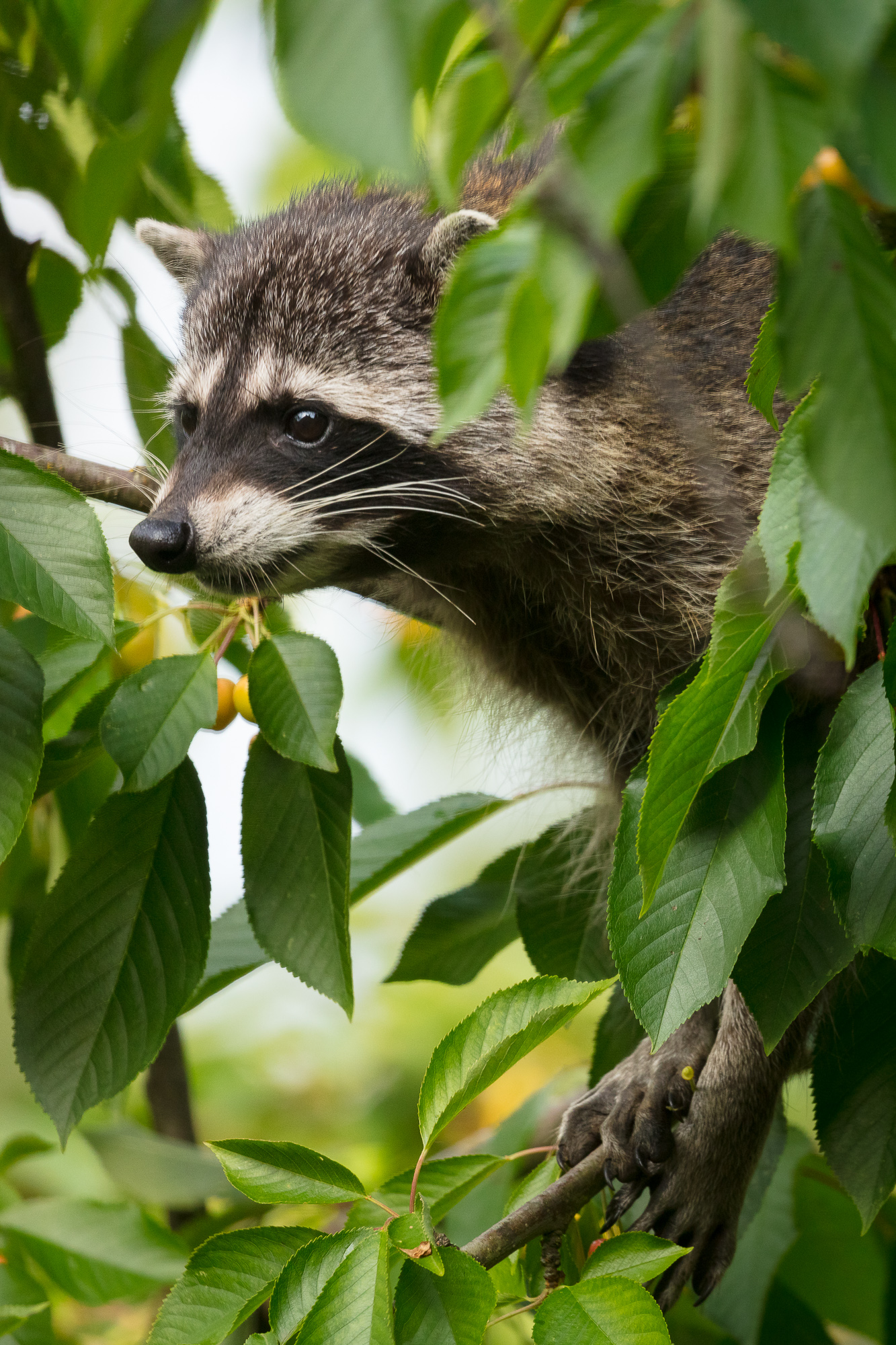
A raccoon searches for ripe cherries, Vancouver, WA.

Next was a neighborhood bandit, also trying to grab as many early cherries as possible. He visited me a few mornings in a row, and I watched helpless as much of the tree’s bounty disappeared in his little hands.

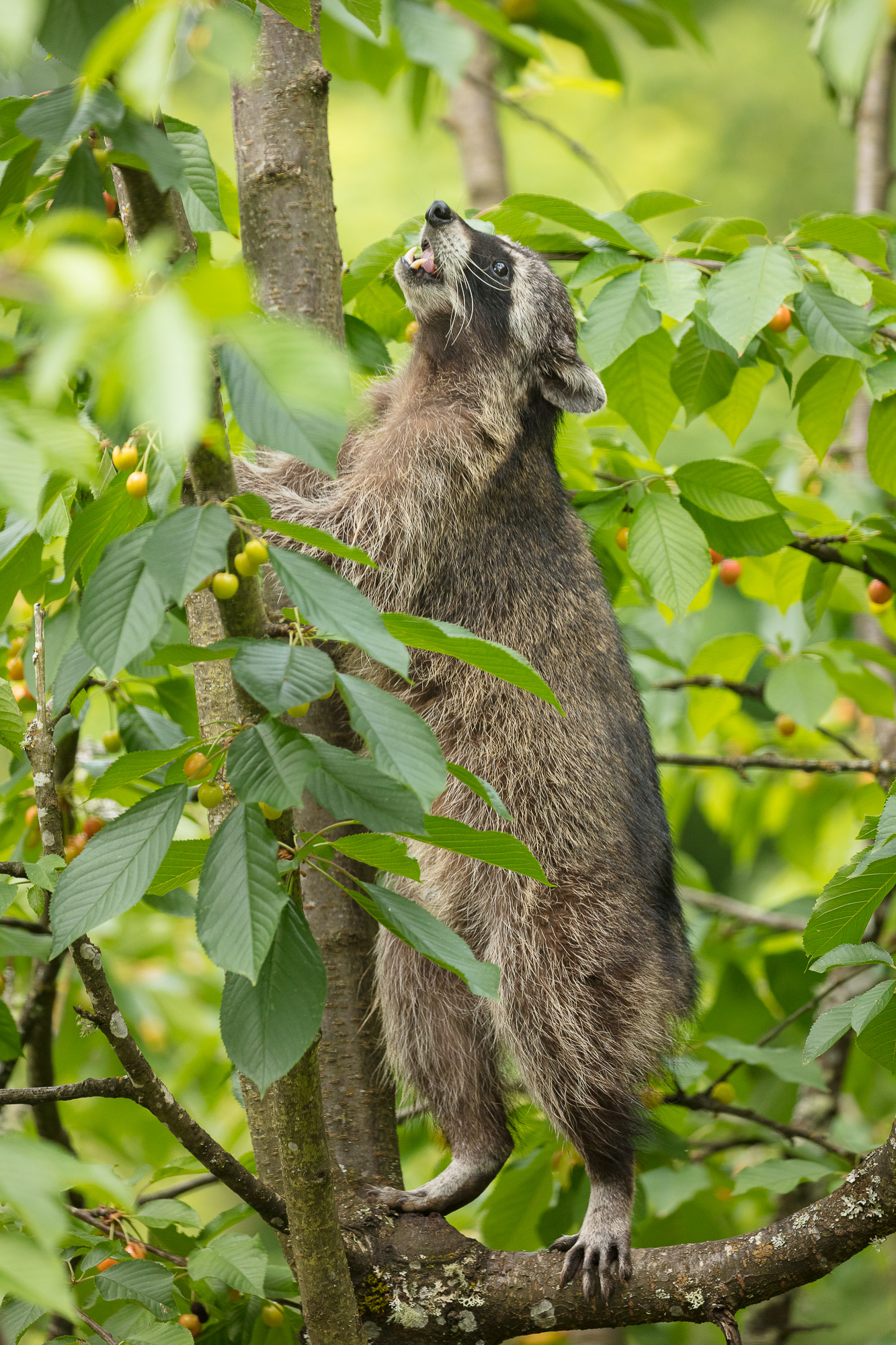
A raccoon searches for ripe cherries, Vancouver, WA.

My shooting location worked well because I was directly across from the middle of the tree (shooting from the second story) rather than looking up into the tree. In addition, I was using my office as a blind of sorts, so the animals weren’t aware of my presence. Until I met this guy:

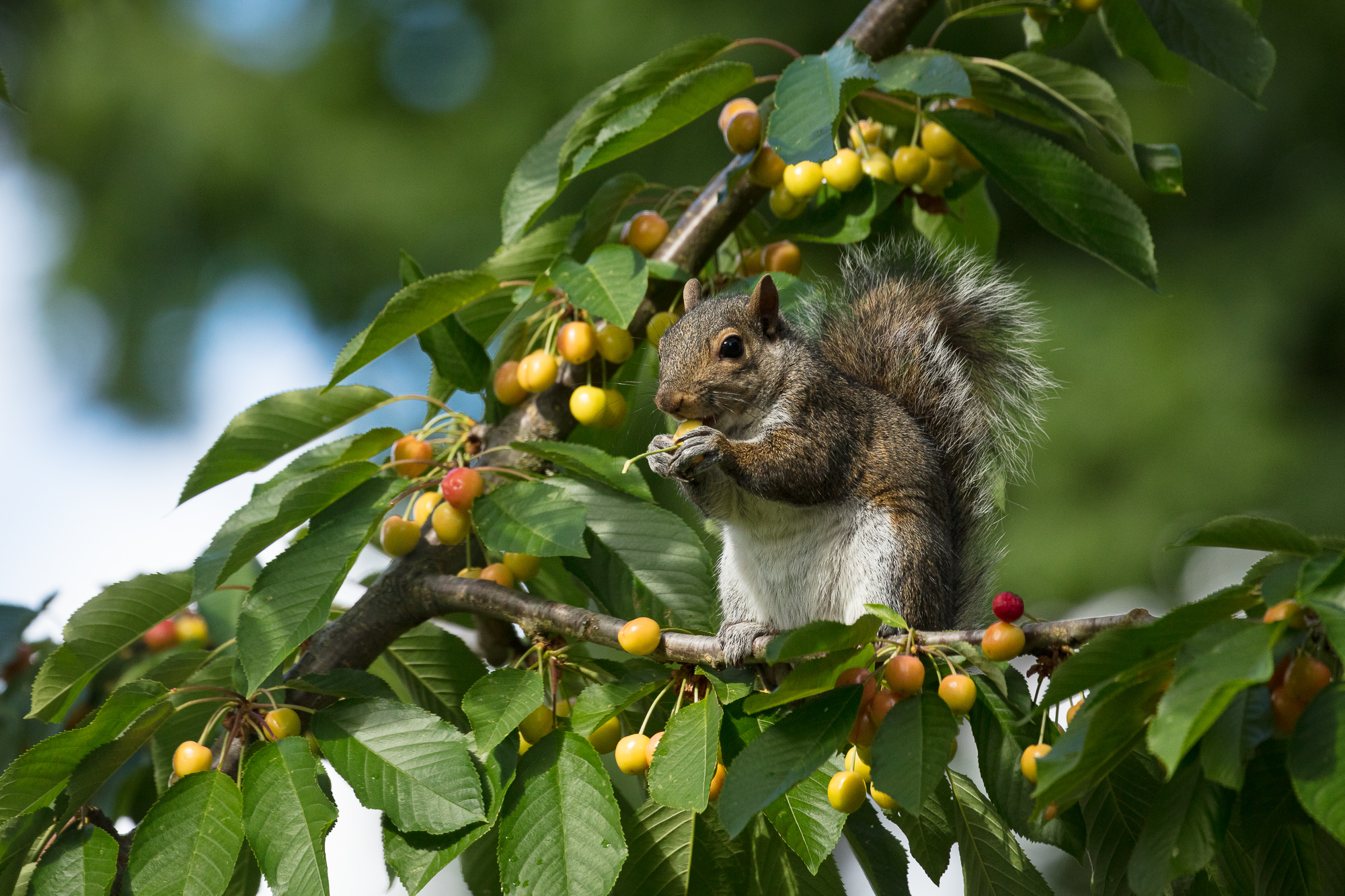
An eastern gray squirrel searches for ripe cherries, Vancouver, WA.

Mr. Squirrel would regularly sit on a branch and stare through my window at me, while downing as many cherries as he could. He was definitely taunting me.

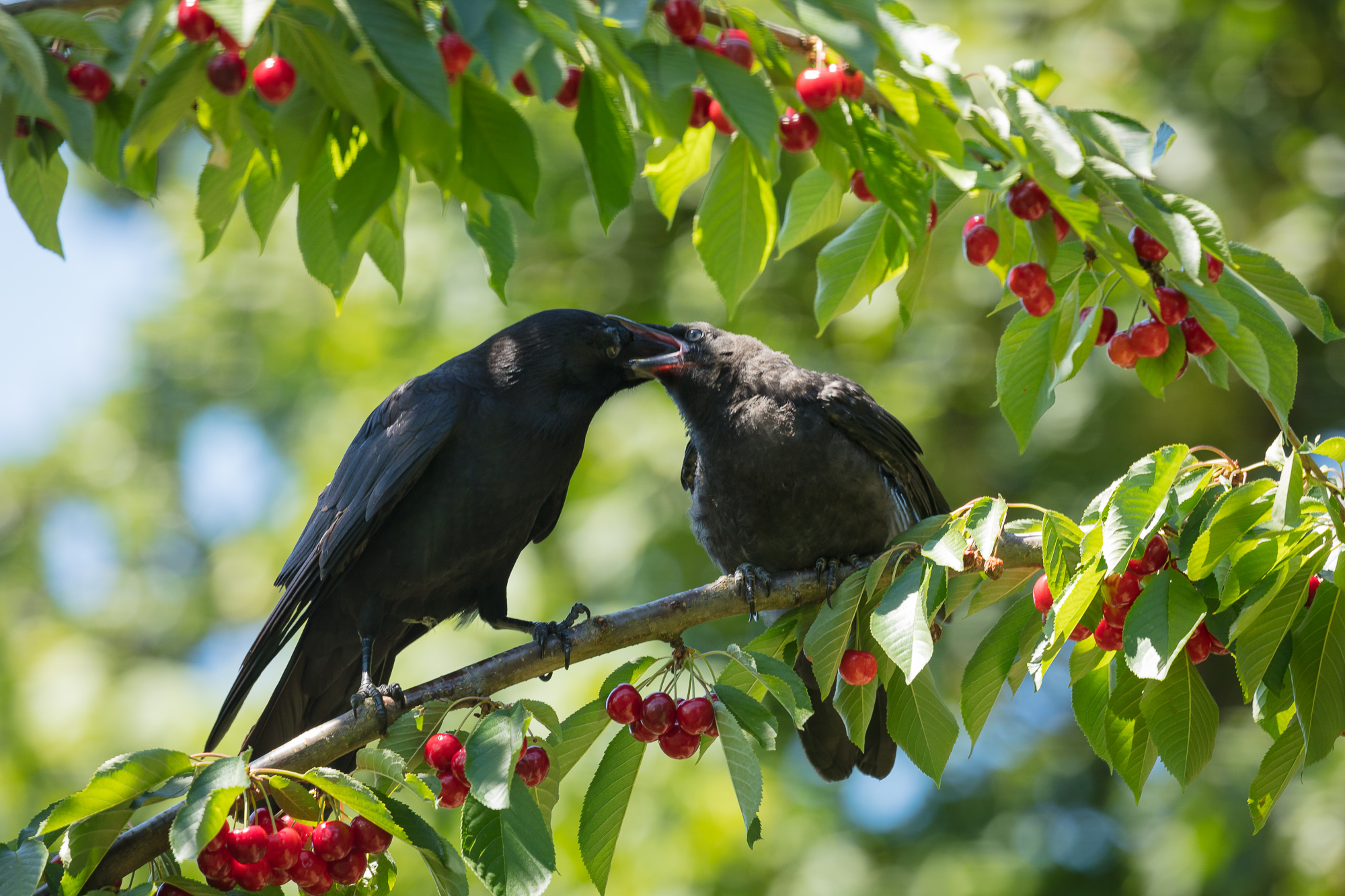
An american crow feeds another ripe cherries, Vancouver, WA.

Once the cherries were fully ripe, most of my visitors were various bird species. A local crow family also had little ones to feed, and luckily there was still plenty to go around.

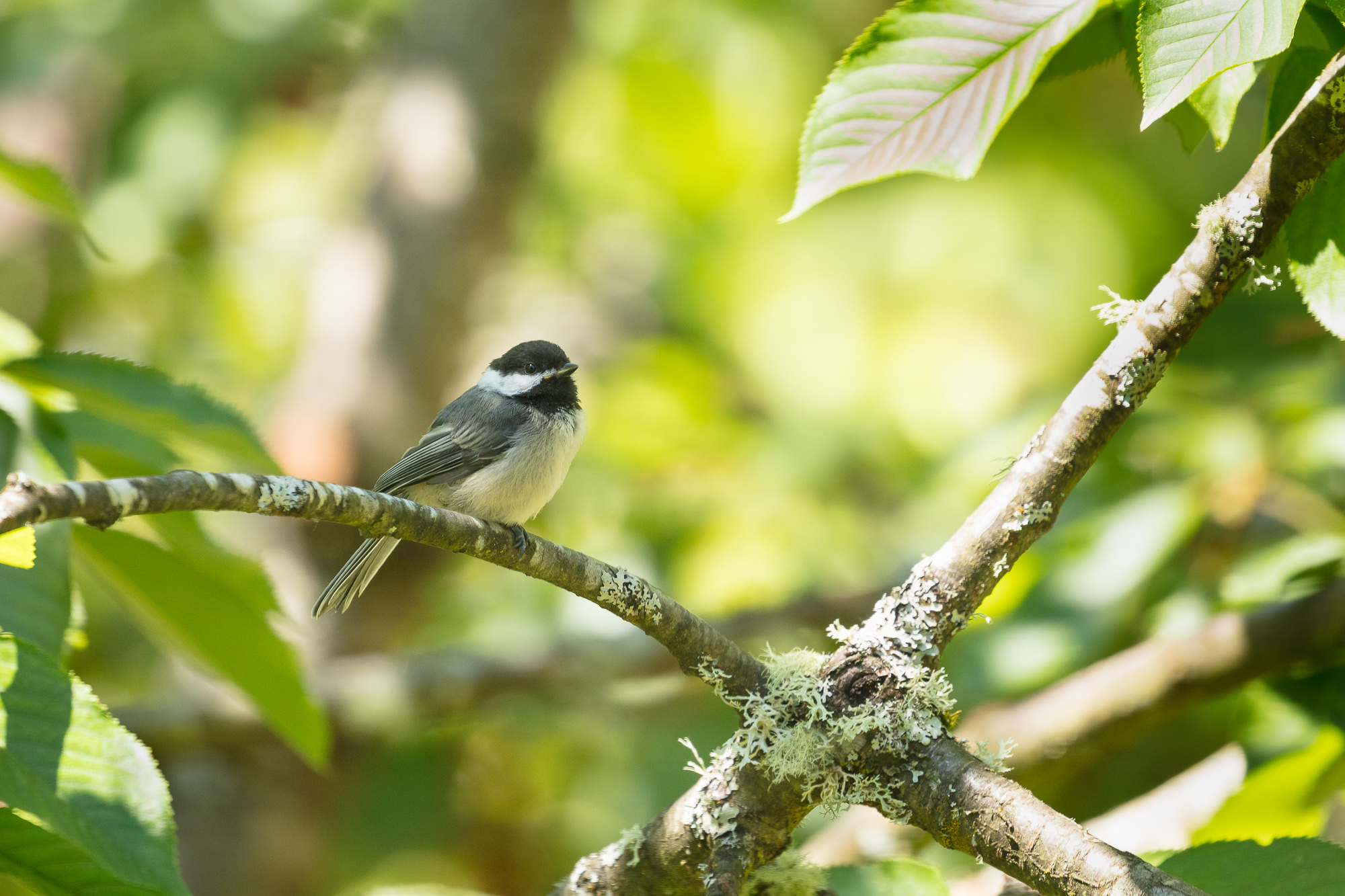
A black-capped chickadee perches on the branch of a cherry tree, Vancouver, WA.

Even the little black-capped chickadees got in on the fun, though they took their time eating a single cherry.

I was happily surprised by the ease and comfort of photographing from my office desk. Other than needing to keep the window glass very clean, there were few downsides to the result. If only I could shoot all wildlife from a padded office chair!

Hopin’ For Hoopoes

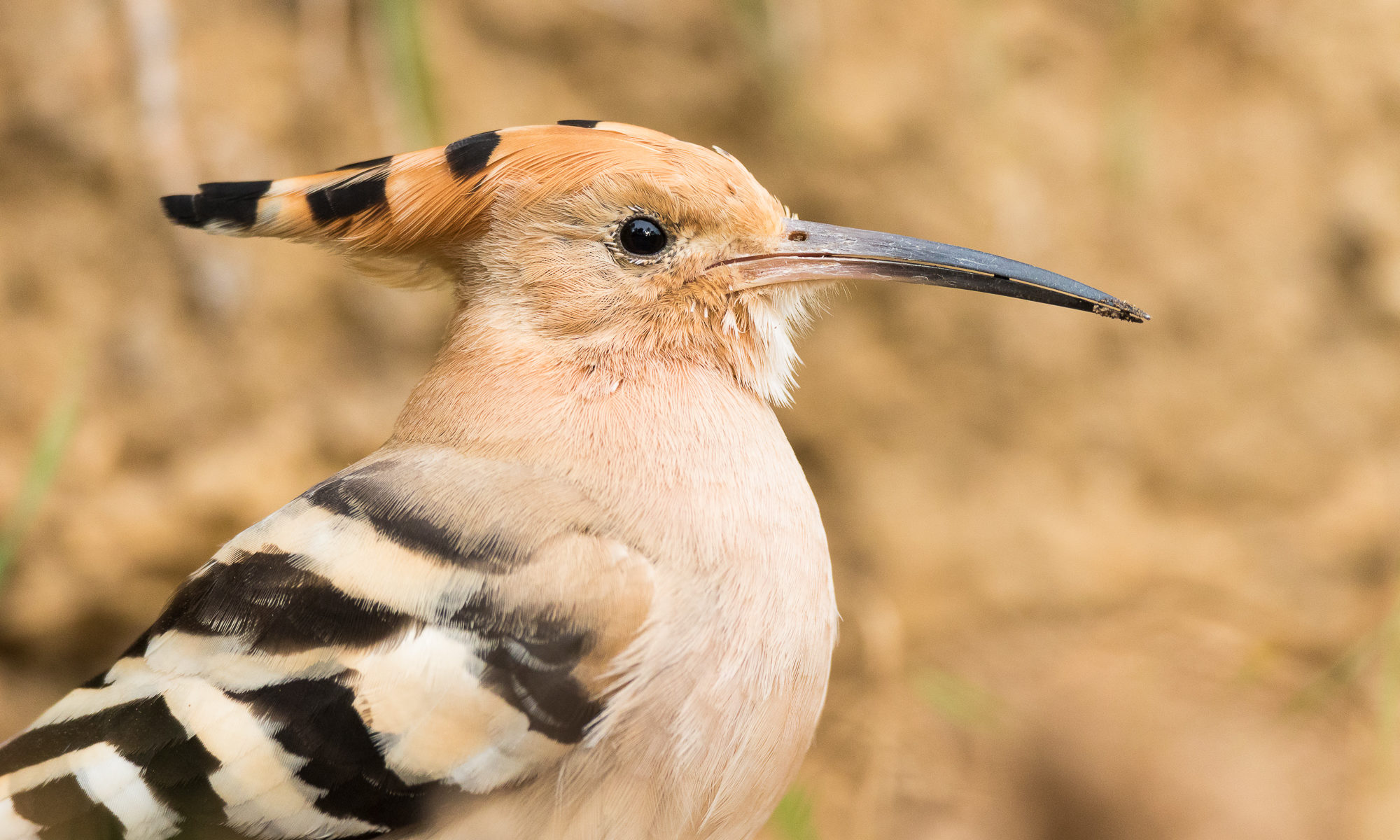
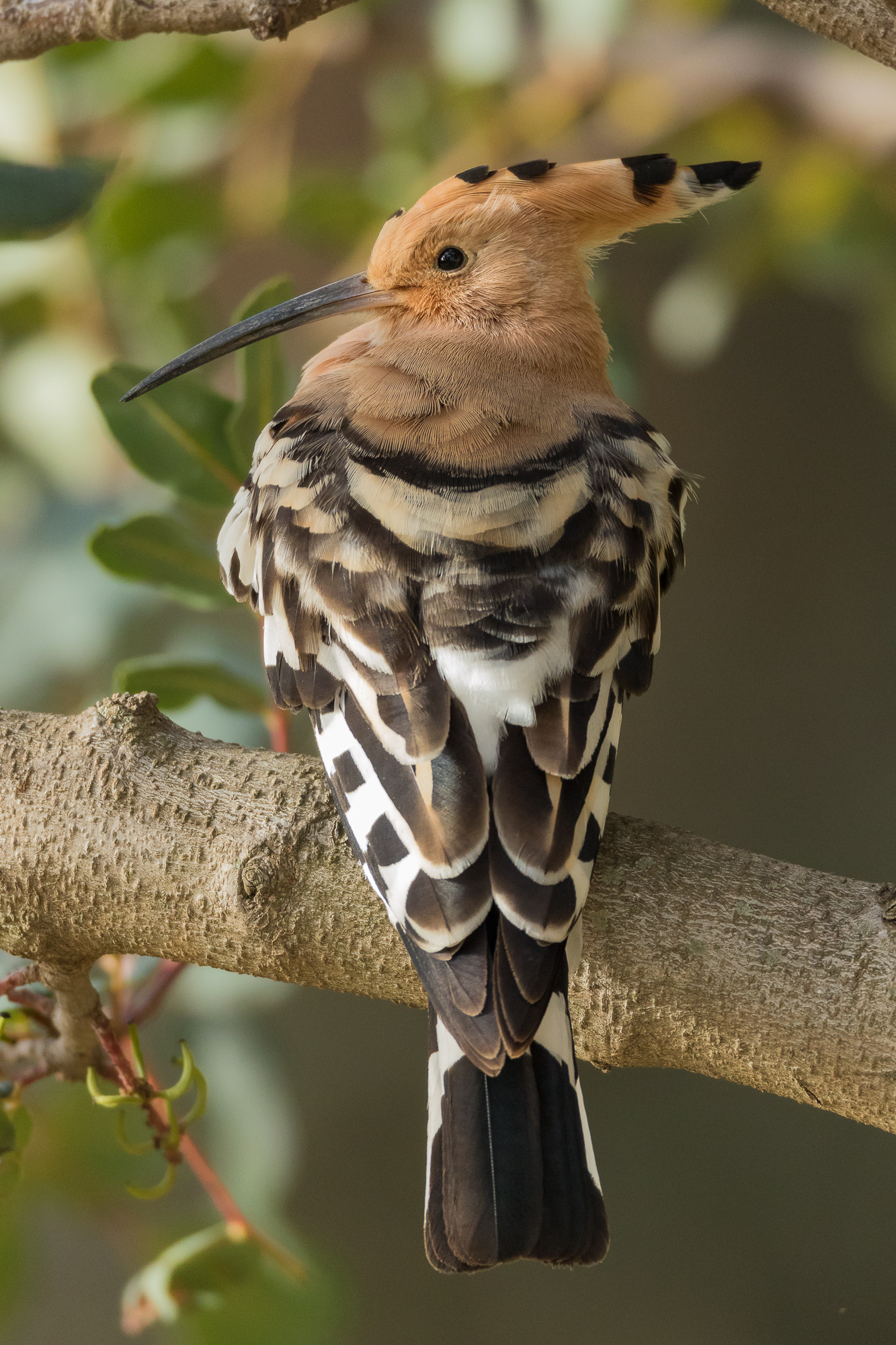
A Eurasian hoopoe shows off its beautiful plumage, Parc de l'Oreneta, Barcelona, Spain.

As I rounded the bend in a trail in Parc de l’Oreneta in Barcelona, I drew an audible gasp, my eyes widening in surprise. There on the ground about 30 yards in front of me was a hoopoe, digging through dead leaves and tree litter looking for his morning meal. I had been looking for this bird for the last five years, and finally, here it was quite unexpectedly in front of me! Having decorated the cover of a “birds of the world” guide on my bookshelf, the hoopoe’s beautiful feather characteristics caught my eye. Ever since, I have been hoping to photograph one in the wild. I searched for one in both Africa and India, but to no avail. For some reason, it didn’t even make my radar for target birds on this trip to Spain, yet here it was on a quiet Saturday morning in a city park.

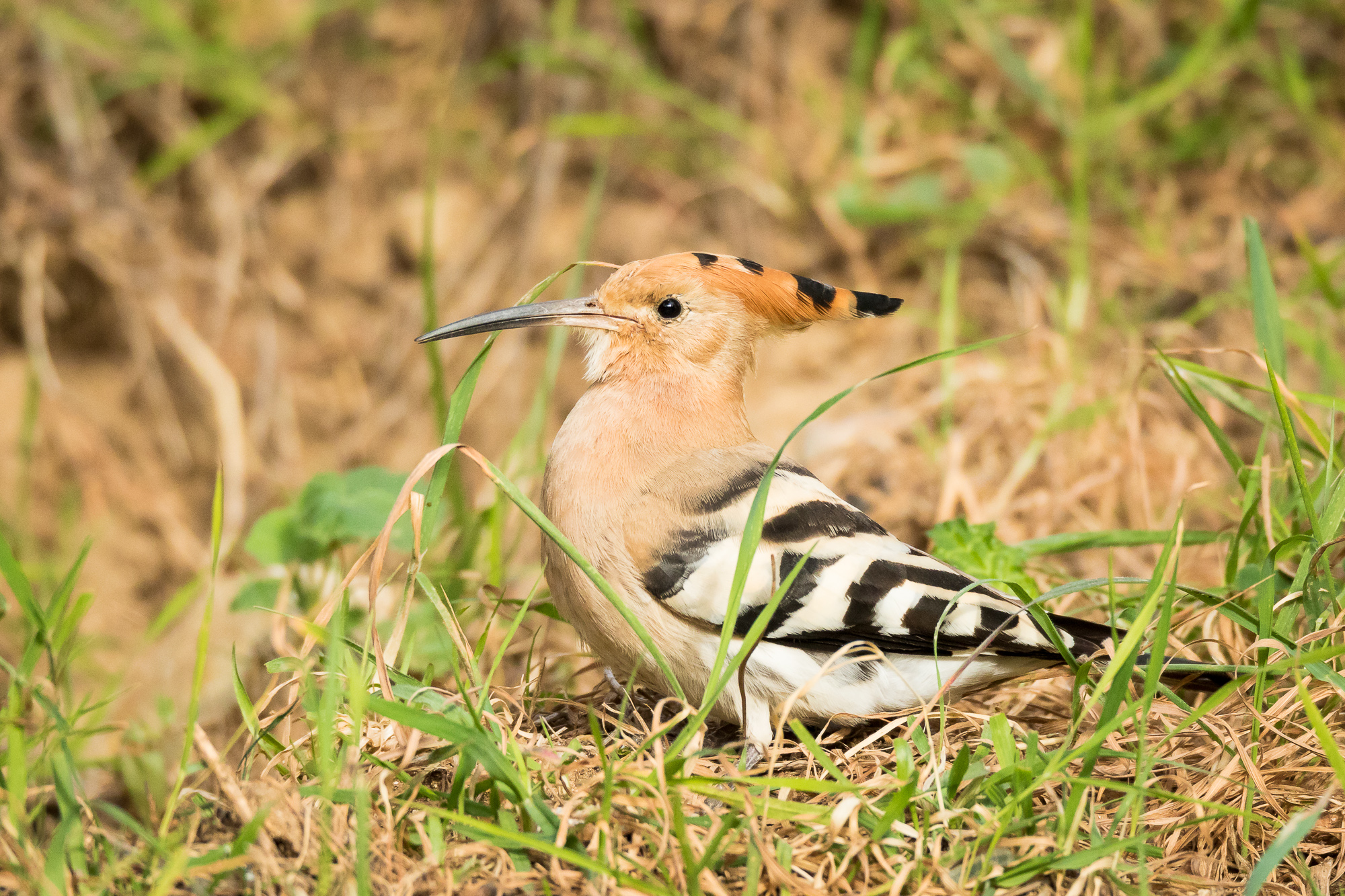
A Eurasian hoopoe hunts through the grass for a morning snack, Parc de l'Oreneta, Barcelona, Spain.
A Eurasian hoopoe hunts through the grass for a morning snack, Parc de l’Oreneta, Barcelona, Spain.

Unfortunately, my stalking skills could not overcome this bird’s awareness, and it flew off before I could get better than distant identifying shots. No matter – I was thrilled to know this species was here, and I planned to be back in the park bright and early the next morning.

The next morning, I spent some time in an open clearing, hoping to get a hoopoe perched in the rising sun. After about an hour of searching and waiting (meanwhile photographing the many monk parakeets that dotted the trees), I decided to move into the forested part of the park. Knowing the hoopoe is a ground feeder, I picked a primitive trail, hoping to stay away from morning joggers along the larger gravel and dirt roads. The ground sloped uphill to the left of the trail, and that is where I focused my search. Soon, the rustling of leaves alerted me to a hoopoe poking through forest detritus scattered along the hillside.

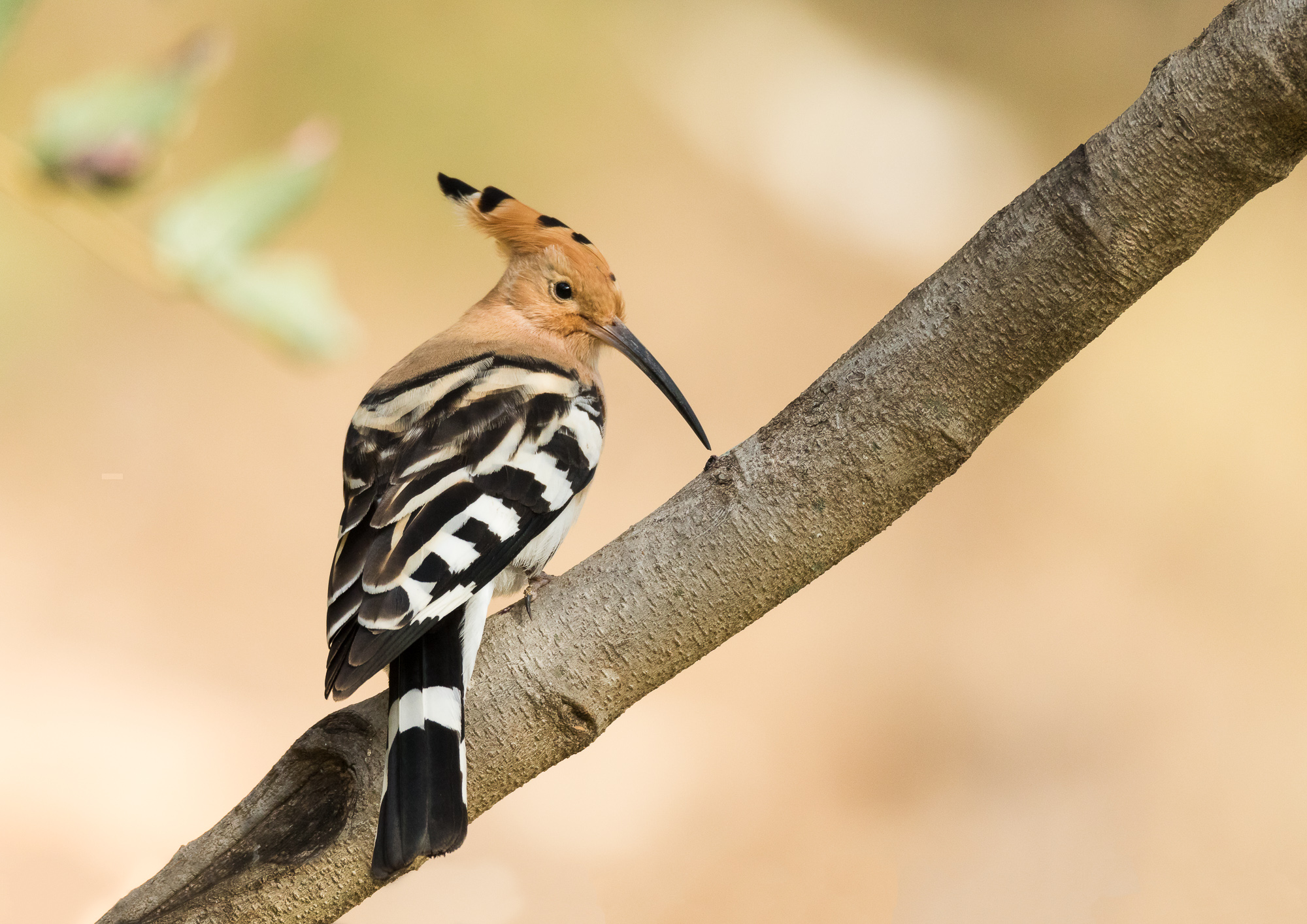
A Eurasian hoopoe perches on a stout branch, Parc de l'Oreneta, Barcelona, Spain.
A Eurasian hoopoe perches on a stout branch, Parc de l’Oreneta, Barcelona, Spain.

As I moved closer, it flushed to a nearby tree branch. I was able to get some safety shots of the hoopoe, but it was still skittish and constantly scanning its surroundings. I knew I should not get closer, and had to try a completely different approach. I moved further down the trail, then straight up the hill through the forest, lugging my 13 pound camera rig over my shoulder. Now I was able to move down the hill toward the hoopoe from a different direction. It had moved from the first branch, but looked much more relaxed in its second perch.

A Eurasian hoopoe perches on a stout branch, Parc de l'Oreneta, Barcelona, Spain.
A Eurasian hoopoe perches on a stout branch, Parc de l’Oreneta, Barcelona, Spain.

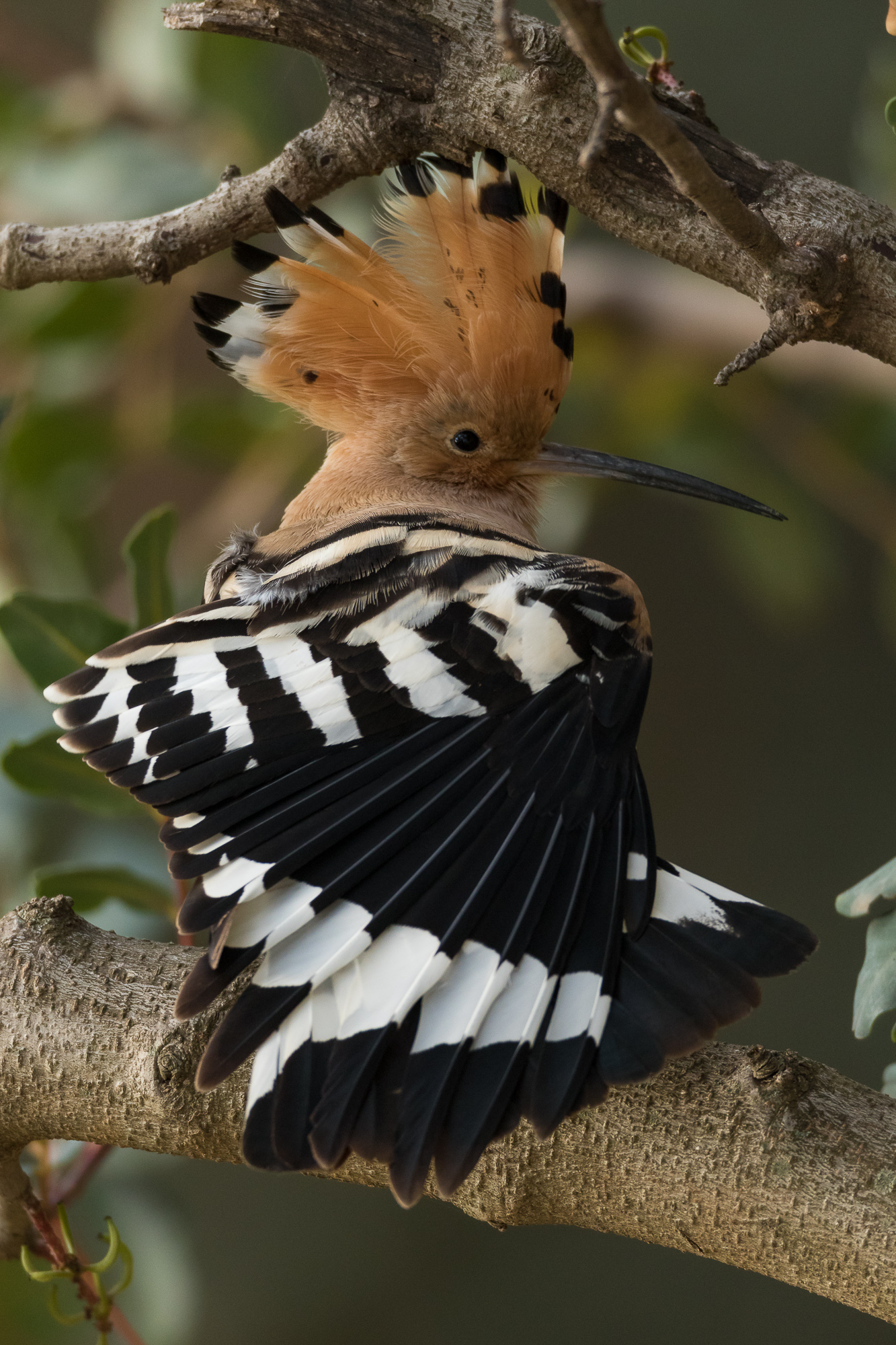
I was able to create some wonderful portraits with a relaxed hoopoe in full view. However, I didn’t yet have the iconic hoopoe shot that I was after. With my heart beating in my chest, I slowed my breath and waited. After several minutes, the bird finally stretched out its wing as it prepared for a nap on the branch.

Stretching a wing, a Eurasian hoopoe displays its beautiful crest plumage, Parc de l'Oreneta, Barcelona, Spain.
Stretching a wing, a Eurasian hoopoe displays its beautiful crest plumage, Parc de l’Oreneta, Barcelona, Spain.

With the stretch came that amazing crest of feathers along the top of its head. My shutter fired and I knew I had the shot I had spend 5 years hoping for.

Gear I used to create the photos in this post:

An Afternoon In Redwood Shores

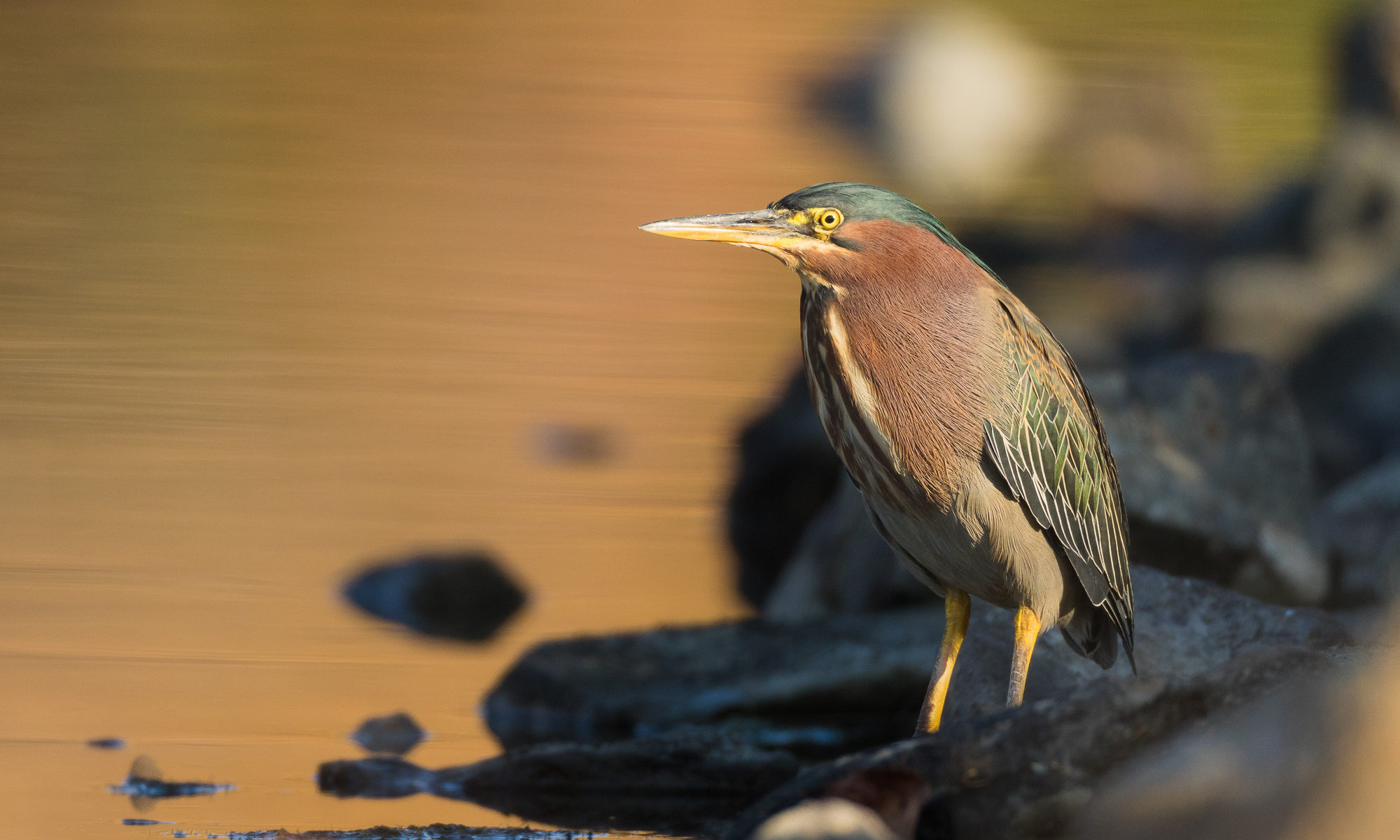
A green heron perches next to still water, reflecting fall colors, Redwood Shores, CA.

I came across the following birds on a recent afternoon in Redwood Shores, California. Located right along San Francisco Bay with lots of calm water channels and sloughs, there are usually good opportunities to get close to these wetland species.

A greater yellowlegs stalks in shallow water, Redwood Shores, CA.

First to show his face was a greater yellowlegs stalking along the edge of a slough. The still water provided a faint reflection.

A gadwall swims through shallow, calm water, Redwood Shores, CA.

I came across quite a few gadwall, a winter specialist in the bay area. During the summer, they disappear to the north, so it is always nice to see these understated drakes bobbing along the surface. Look closely and you will see the beautiful interplay of buff, gray and black.

A tiny bushtit perches briefly on an ornamental bush, Redwood Shores, CA.

Bushtits are year round residents, but notoriously difficult to find and photograph. They travel in flocks, often spending less than 30 seconds on a set of bushes before flying off to the next. The best way to find them is listen for their signature peeping and then scramble to find the source of the sound. Here I managed to capture a brief look from a striking female before she moved on to find more food.

A green heron perches next to still water, reflecting fall colors, Redwood Shores, CA.

I always feel lucky to find green herons considering how much they can blend in. This one I followed down a water channel until I could get a nice backdrop of reflected fall colors. Whenever I can, I seek out simple, clean backgrounds as it greatly accentuates the main subject.

A double-crested cormorant perches on a small rock, reflected in still water, Redwood Shores, CA.

Just before sunset, I found this double-crested cormorant perched on a tiny rock out in the calm water. Although the light was fading, I found the posture of this bird interesting. After a few moments, he spread his wings and flew off somewhere to roost.

Gear I used to create the photos in this post:

Copyright 2017 Hank Christensen