This is a shot from a couple of years ago when I was in Vancouver, Washington. It showcases the importance of always having a photo scouting mentality, as well as perseverance to get the desired shot, even if it takes multiple visits.
I first spied this scene while on a trail run along the creek. It was midday, with horrible lighting. The wind was blowing ripples all through the water. But in my mind’s eye, I thought, “Hmmm, that might look really nice in early morning with calm water and reflections.” The sun rises behind the mountain, so I figured about 15 minutes before dawn could light up the sky, if the conditions were correct.
So I mentally marked down the spot and continues on my run. Several weeks later the weather conditions looked promising. There were going to be mixed clouds (giving the sky a little texture), and clear skies to the east (allowing the rising sun to light the clouds and the sky without obstruction).
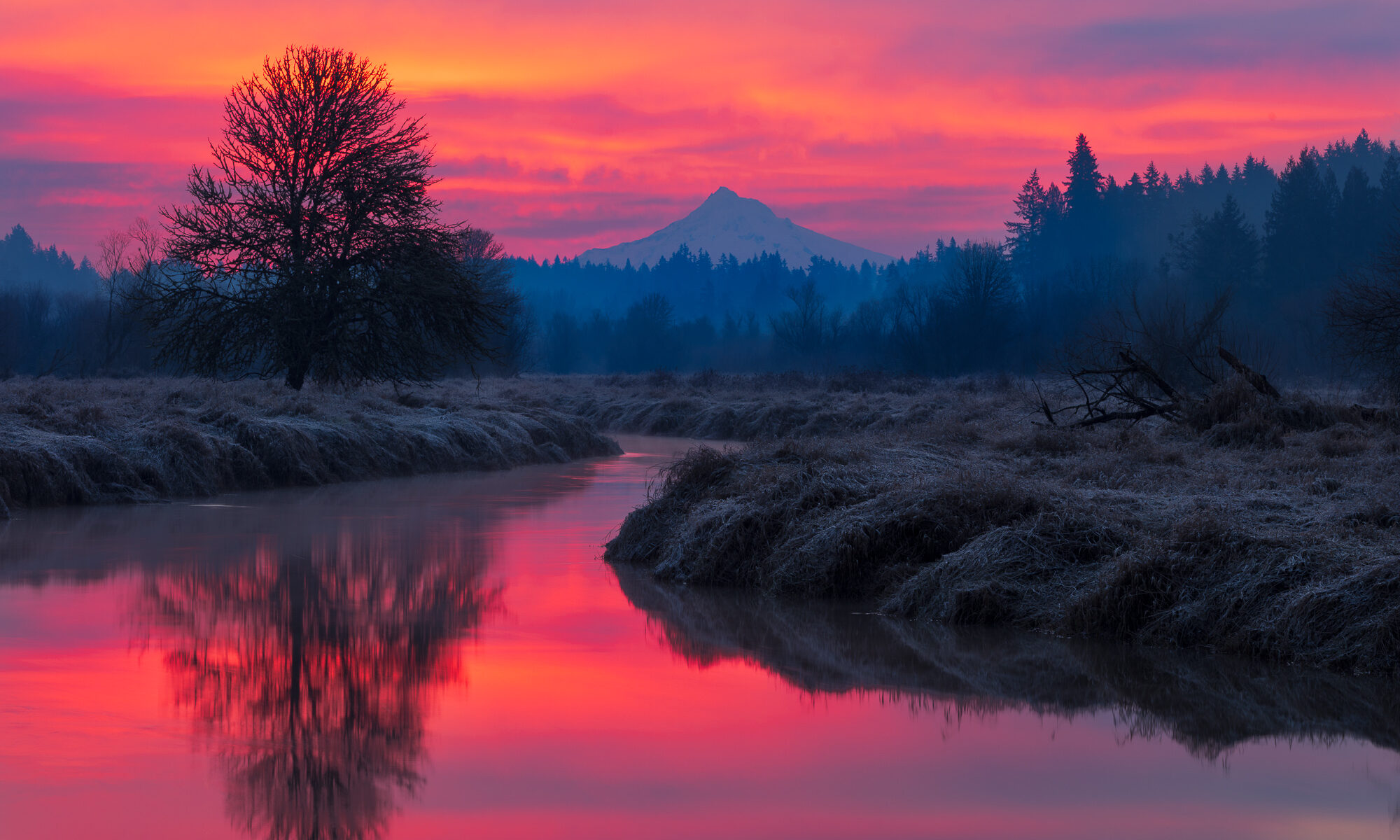
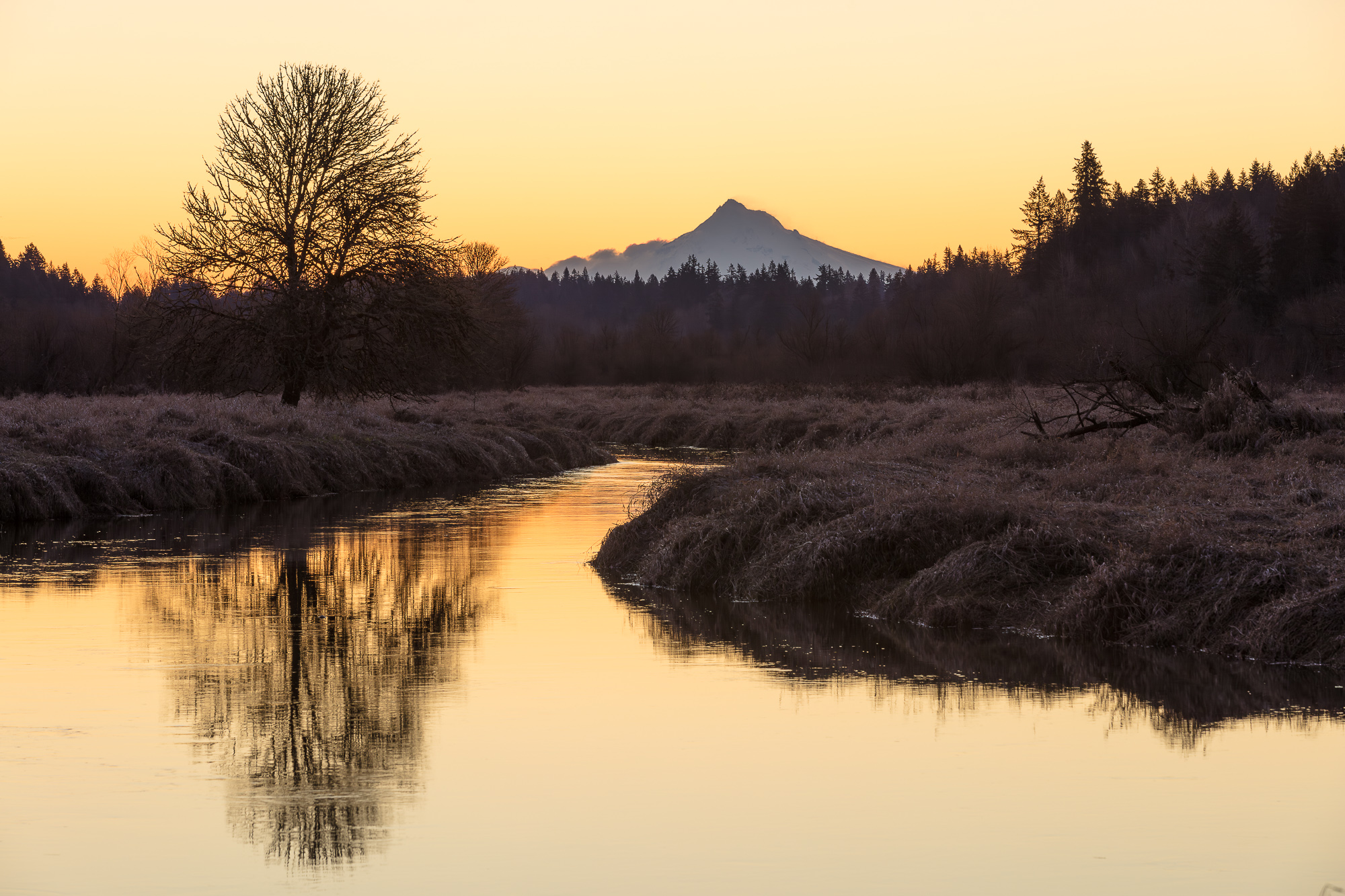
The run rises behind Mt. Hood on a cloudless morning, with Salmon Creek in the foreground, Vancouver, WA.
The image above is what I was able to achieve that morning. The windless morning allowed reflections in the calm waters of the creek. However, the clouds in the sky never materialized, and I believe the atmospheric conditions were diffusing the rising sun, giving a dull yellow cast over everything. Certainly not what I had previsualized on my run.
Time to try again.
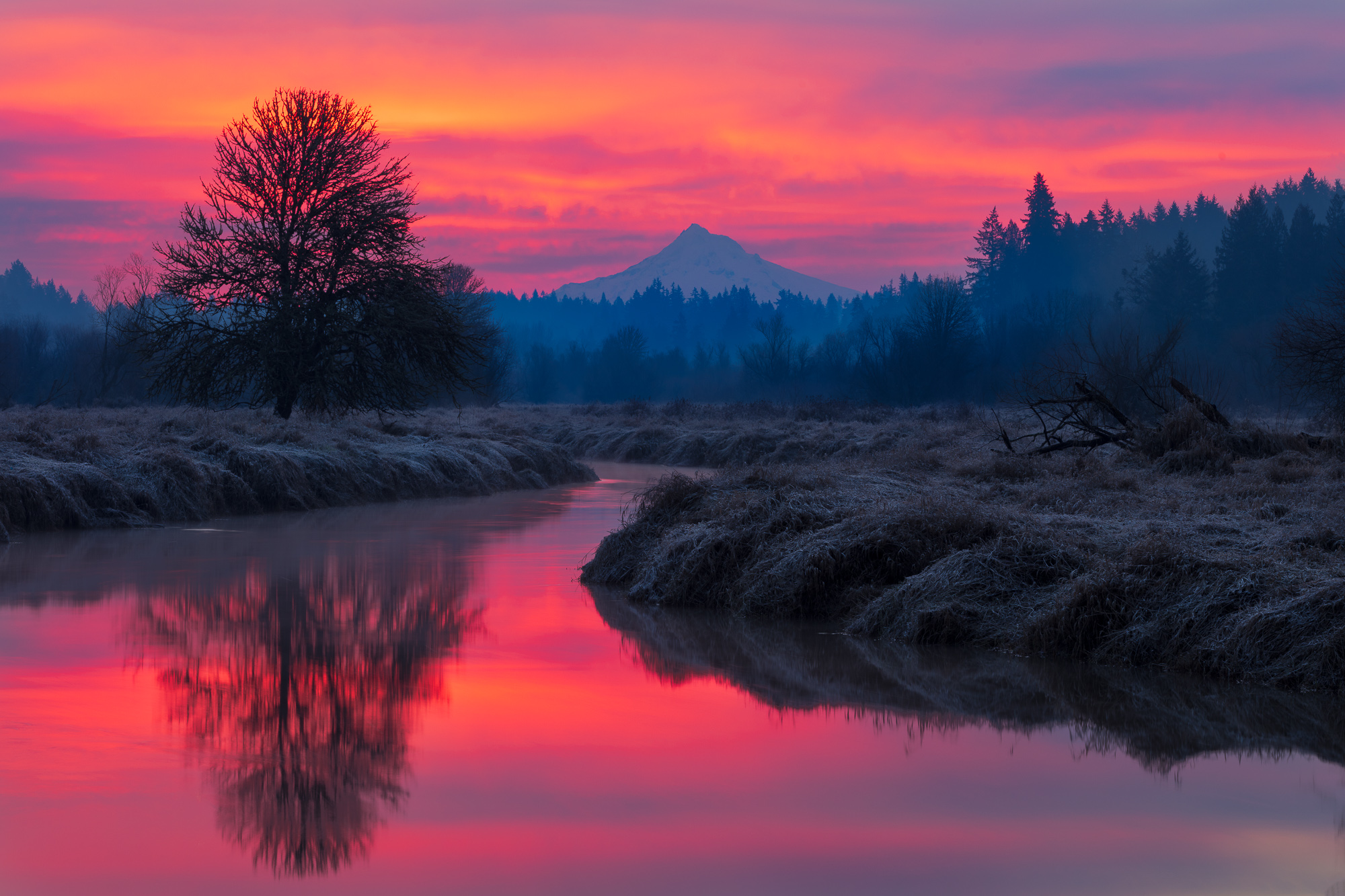
Sunrise lights up the clouds behind Mt. Hood, reflected in the still waters of Salmon Creek, Vancouver, WA.
My next try was several weeks later – the weather forecast looked promising once again. This time I was greeted by much more successful weather – lots of high clouds to reflect back the rising sun. Crisp reflections and light pastels painted the surface of the water. I spent about 15 minutes in total, just trying different things. The composition I started with however, (the one I had decided on weeks earlier on my run), was indeed my favorite, and the one I went with here.
After I took this shot and processed it to my liking, I didn’t stop thinking about what else this photo could be. I’d love to go back some day after a winter storm and get light pinks highlighting river banks of freshly fallen snow. Perhaps I will some day, but for now, I’m happy with my efforts.
A couple of weekends ago, I had the opportunity to witness one of nature’s most spectacular light phenomenons. For only a few days of only some years, a seasonal waterfall in Yosemite National Park glows like lava as it catches the last rays of waning sunlight. I had long wanted to witness this event in person, but timing or weather had thus far made it impossible. Luckily, my good friend Steve was on the ball, and invited me along. He had already taken care of all the logistics (thank you Steve!) and all I had to do was pack for snow and show up.
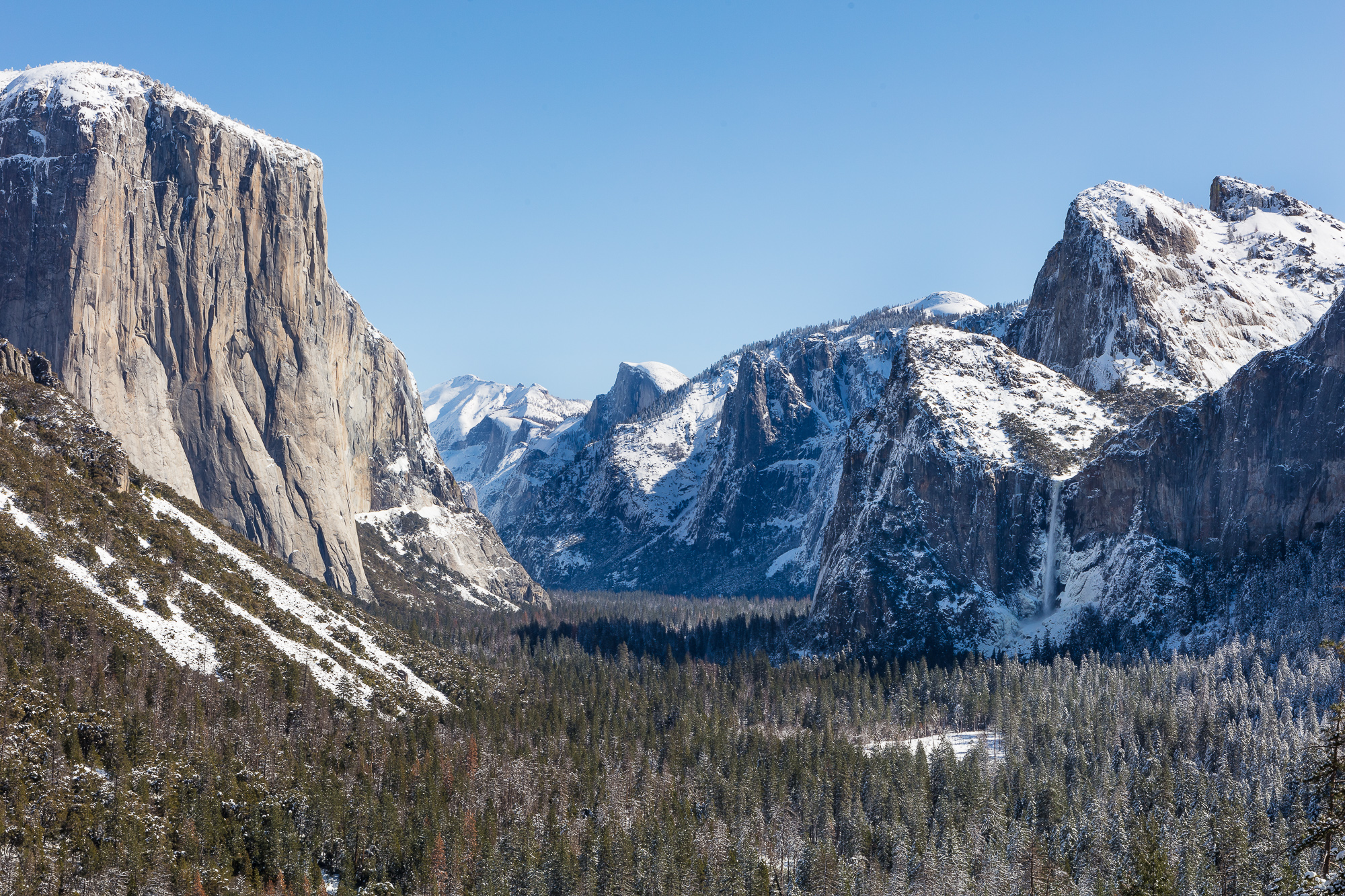
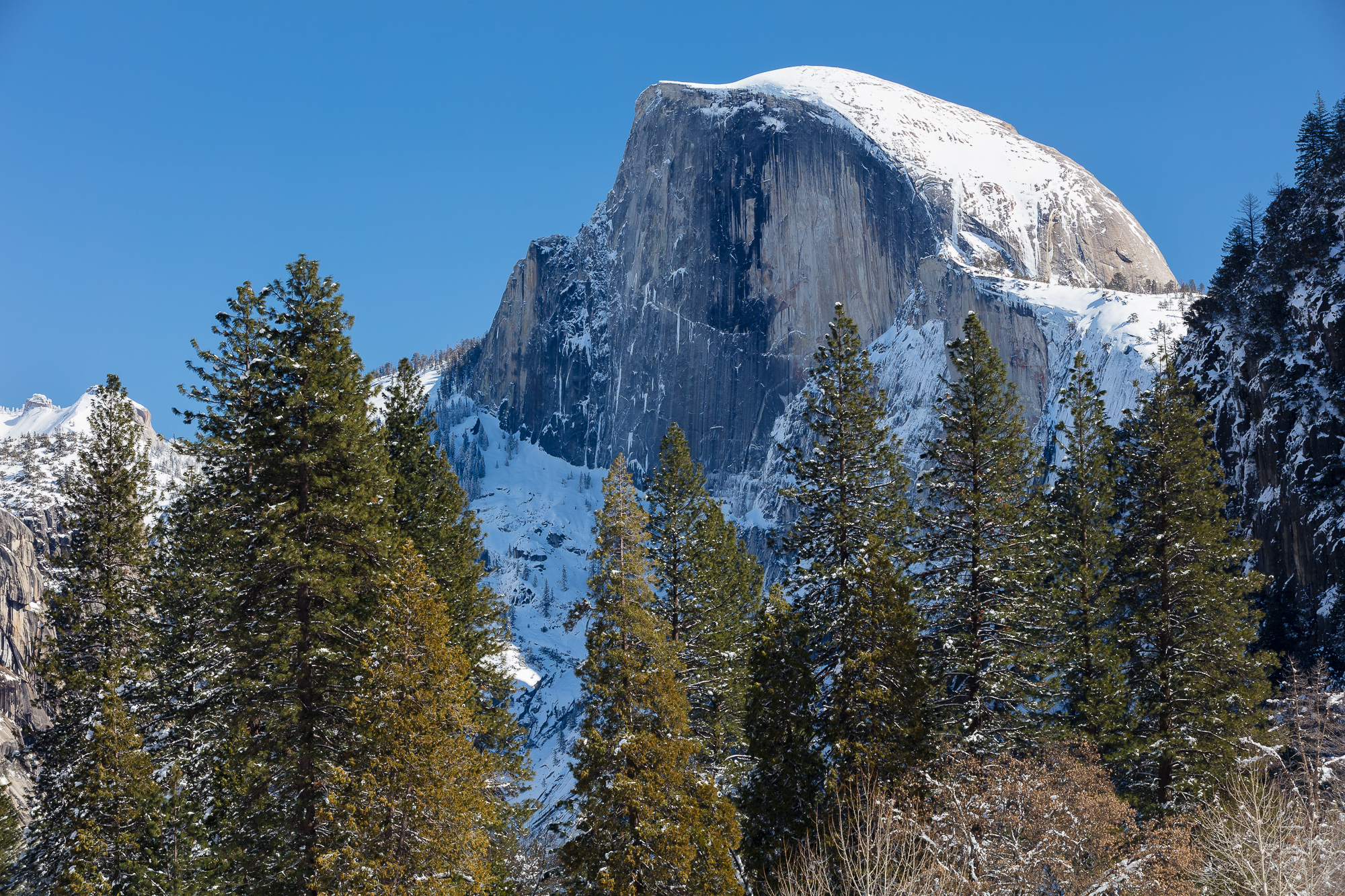
Snow covers the floor of Yosemite Valley after a winter storm.
After a morning drive to Yosemite from the San Francisco Bay Area, we soon found ourselves in one of the most beautiful valleys on Earth. A recent storm had dropped several feet of snow on the ground and frosted the landscape, accentuating Yosemite Valley in all it wintry glory.
Snow covers the floor of Yosemite Valley after a winter storm.
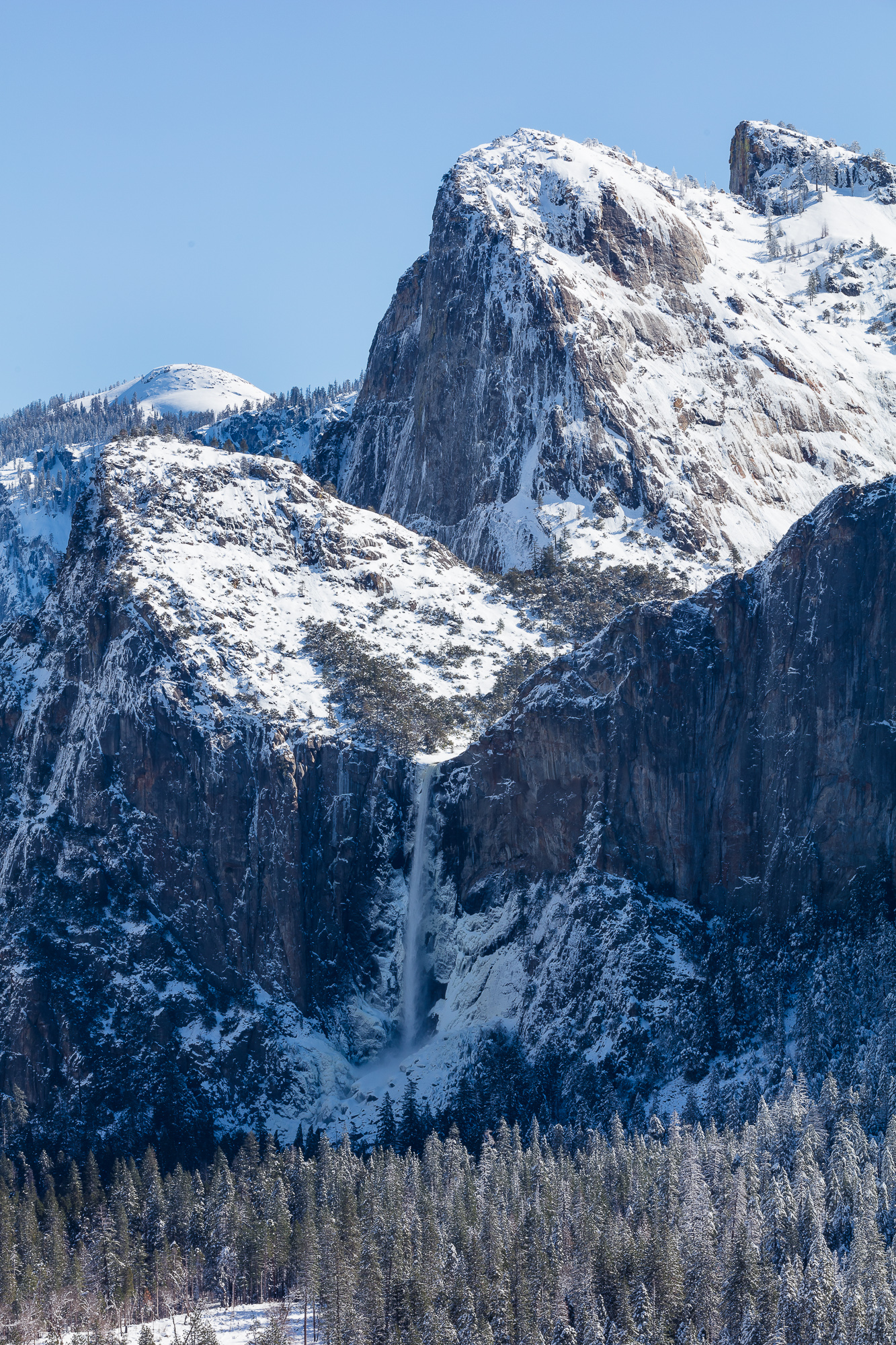
As I often do with grand vistas, I not only captured the standard landscape shots, but also used my telephoto lens to find scenes within the scene. Switching to my 70-200mm allowed me to isolate Bridalveil Falls cascading down icy cliffs.
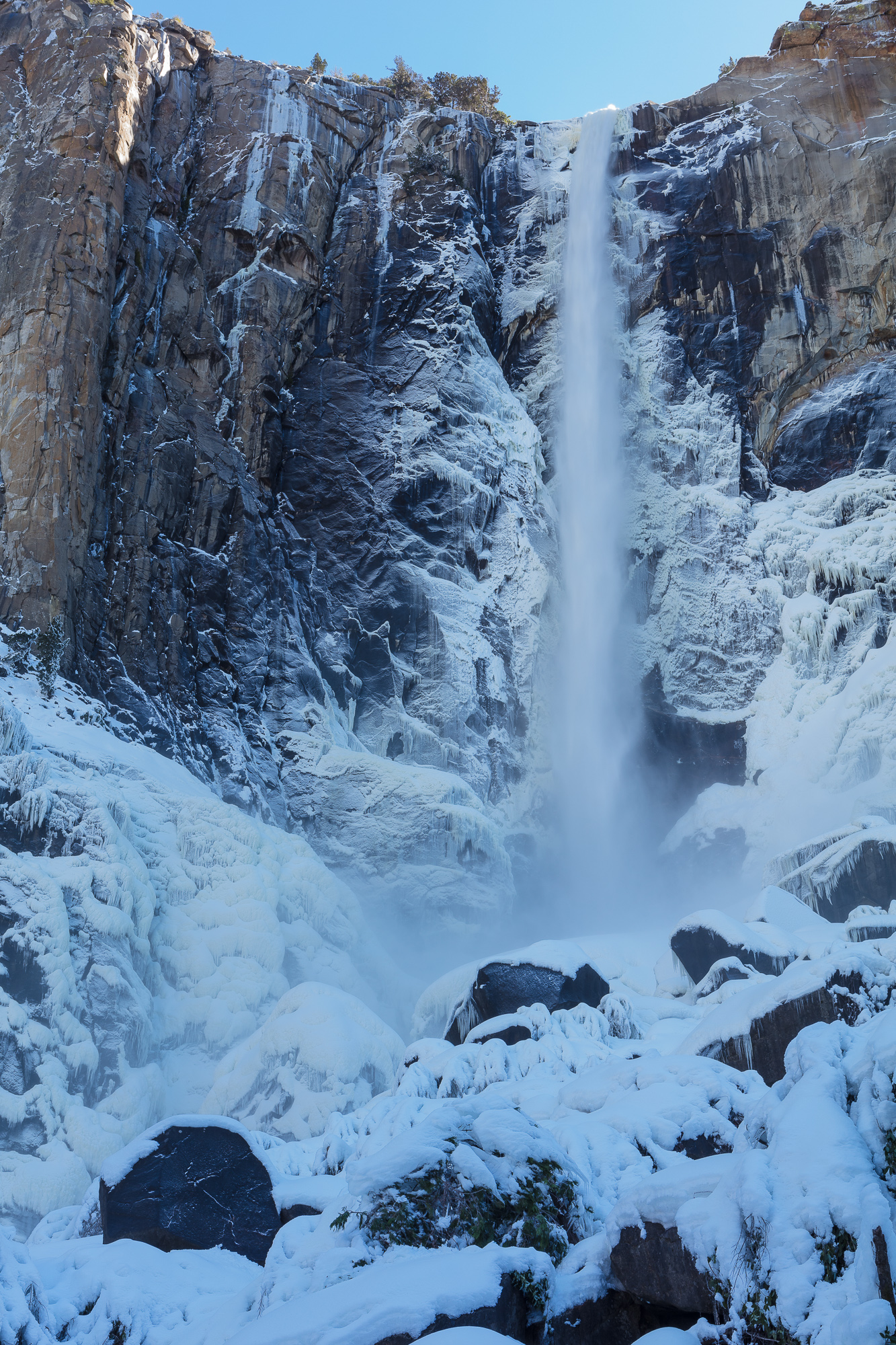
Bridalveil Falls forms an icy sheen on the rocks below, Yosemite National Park, CA.
We stopped off at the Bridalveil Falls trail and scrambled up the slippery path to the base of the falls. Here it became a frigid dance of setting up a shot on the tripod, wiping the icy spray that had accumulated on the lens, and quickly firing a shot. Many times the same shot had to be repeated due to poor wiping skills. Being able to immediately review each shot on the back of the camera was essential for success. With deep respect, I thought of the many photography legends who likely stood in this very spot using much more challenging gear.
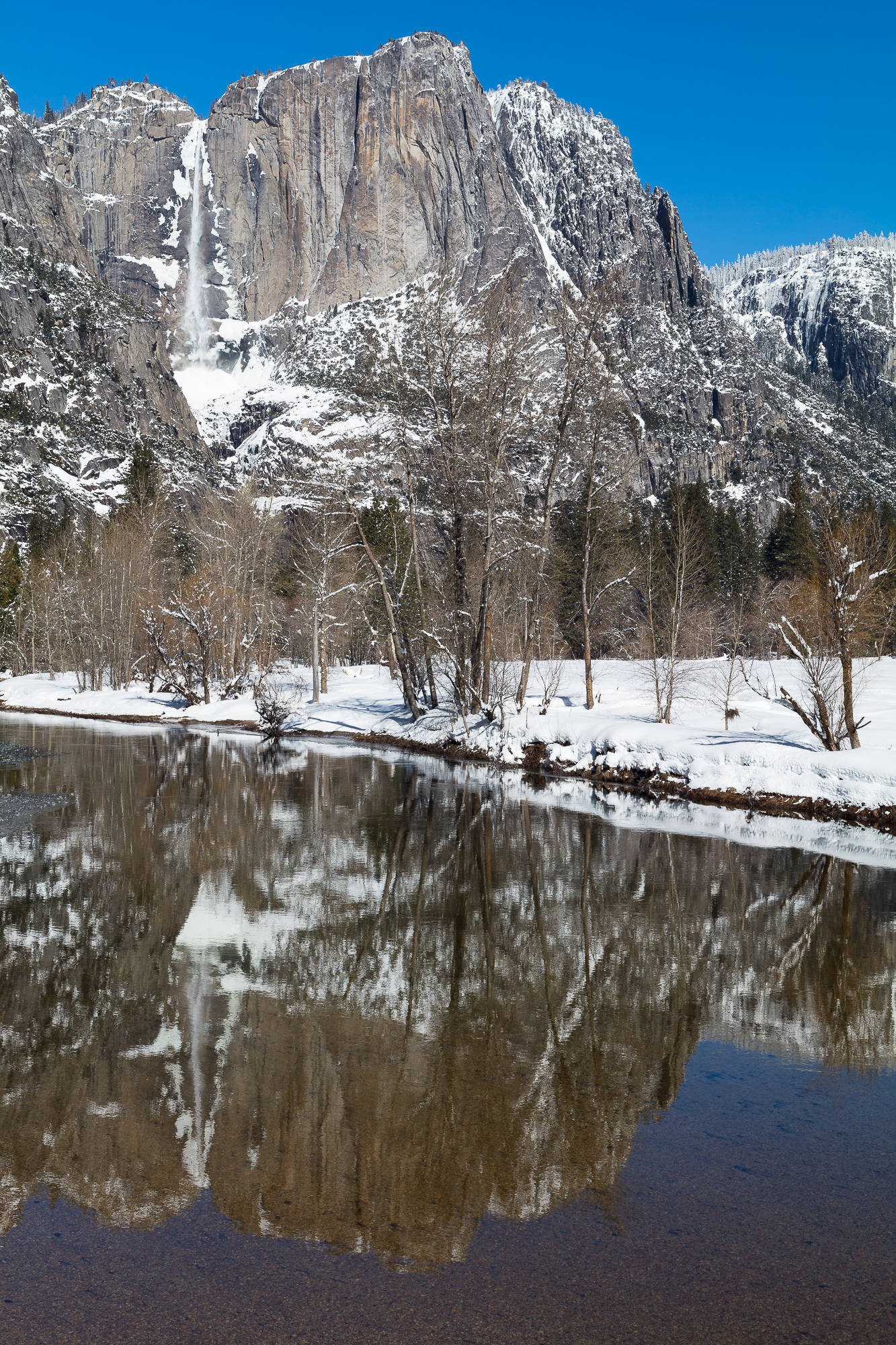
Yosemite Falls is reflected in the calm water below, Yosemite National Park, CA.
Throughout midday, we were able to capture some of the valley’s most famous icons, dusted in powdery snow.
Finally it was time to prepare for the main event. Many parking lots in Yosemite Valley were closed due to the several feet of snow on the ground. We parked at the closest lot and then snowshoed about a mile to the principal location at which the fire falls phenomenon could be viewed. We set up cameras and tripods at around 2pm, and waited until sunset, which we wouldn’t see for another three and a half hours (yes, landscape photography requires patience!).
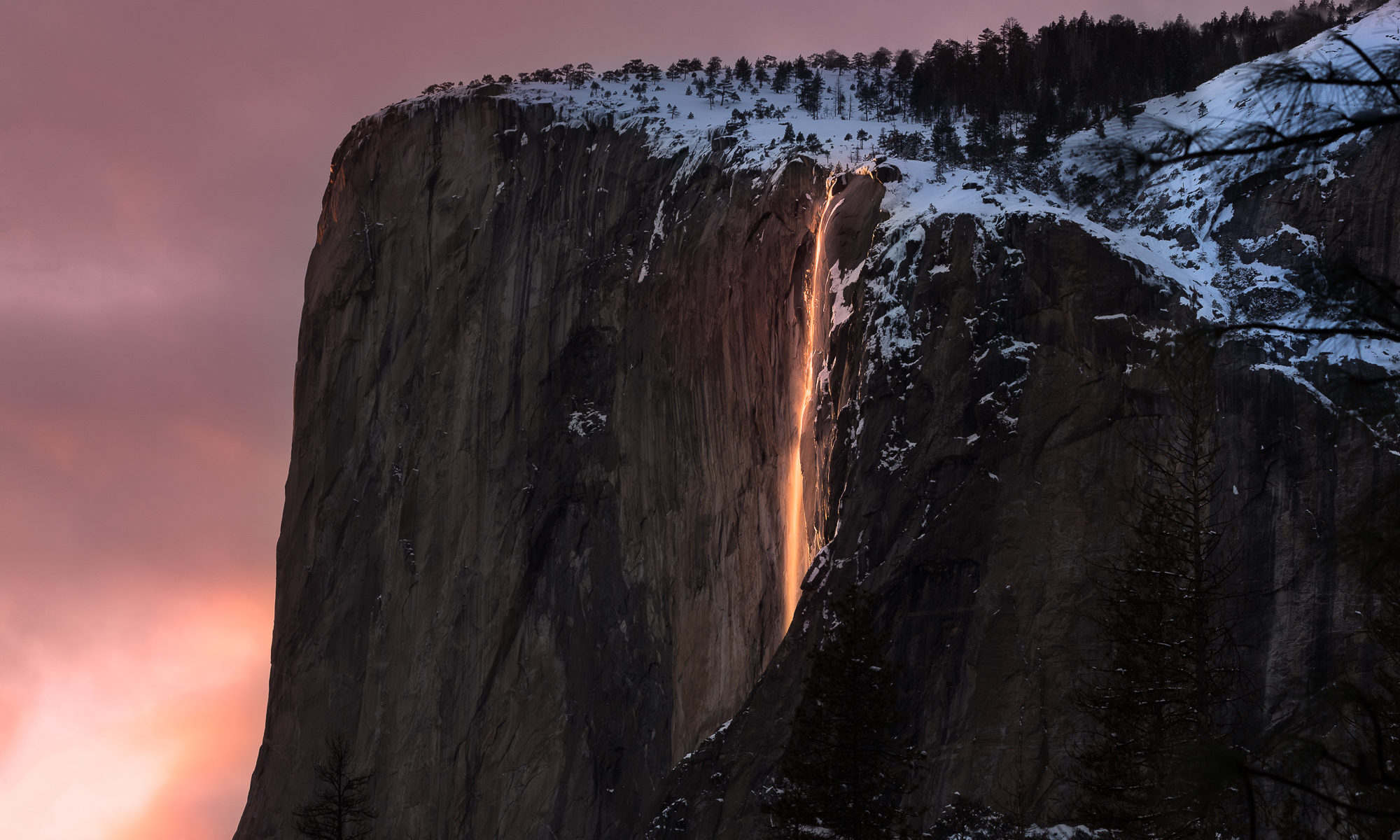
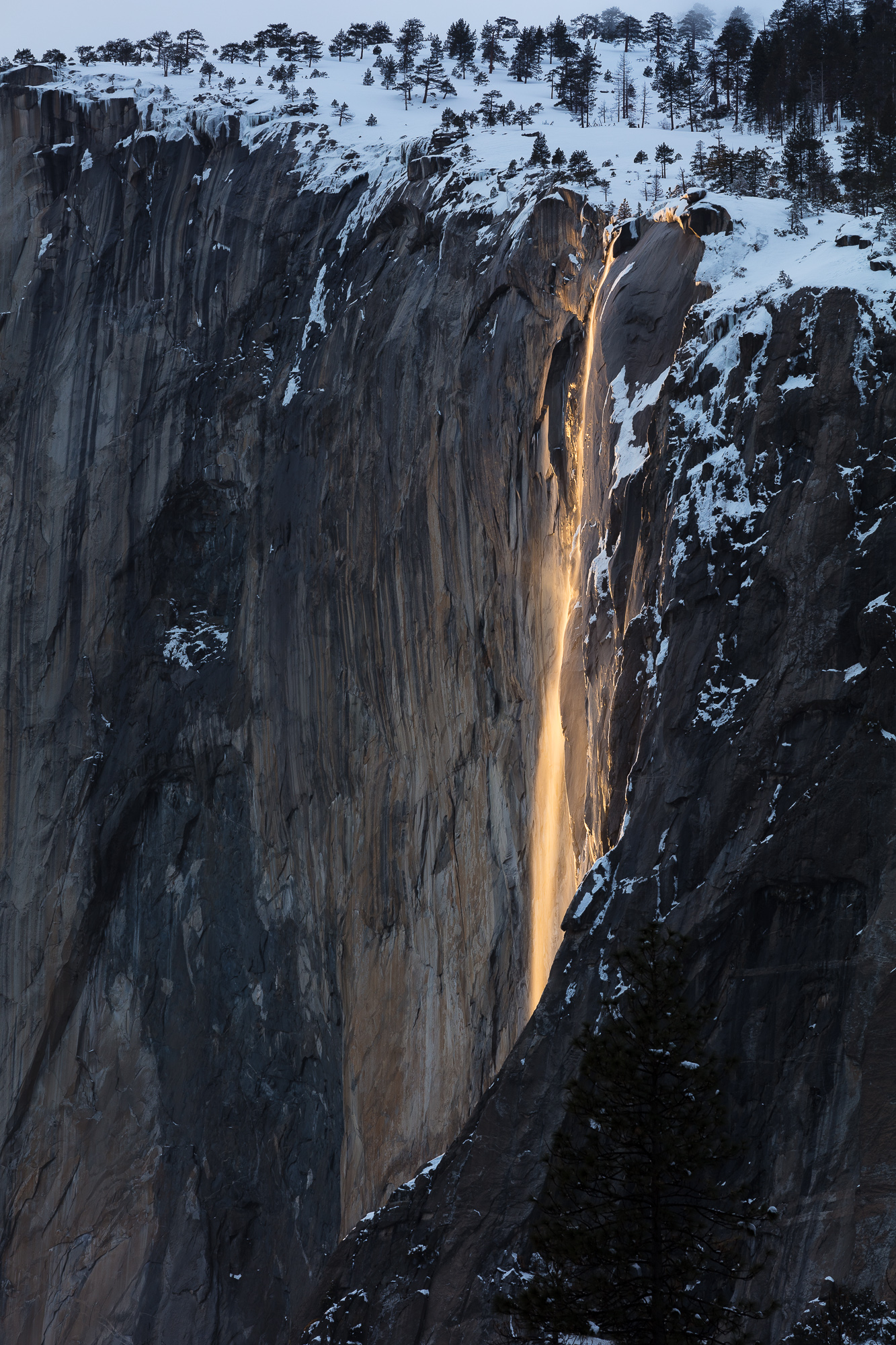
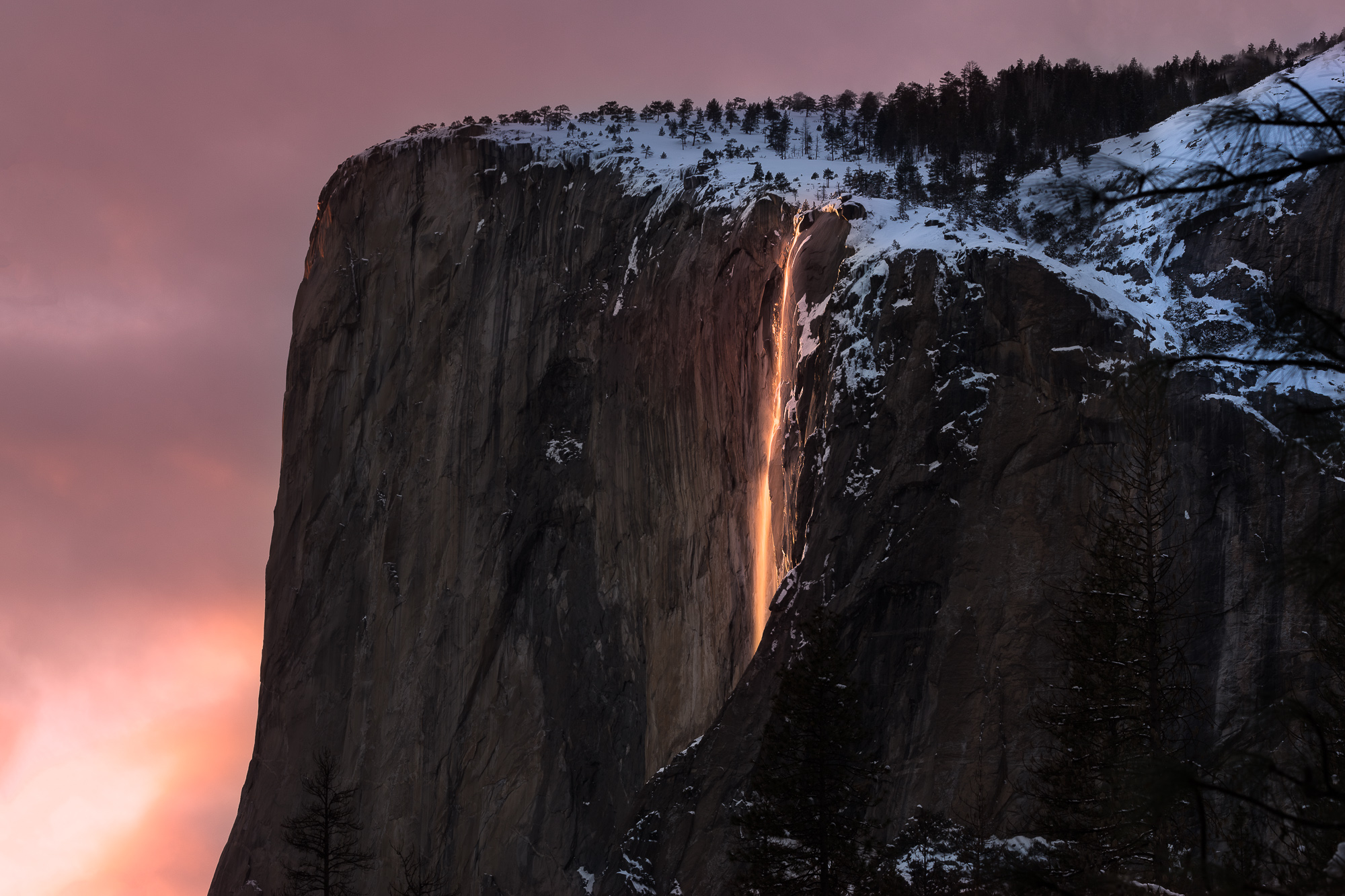
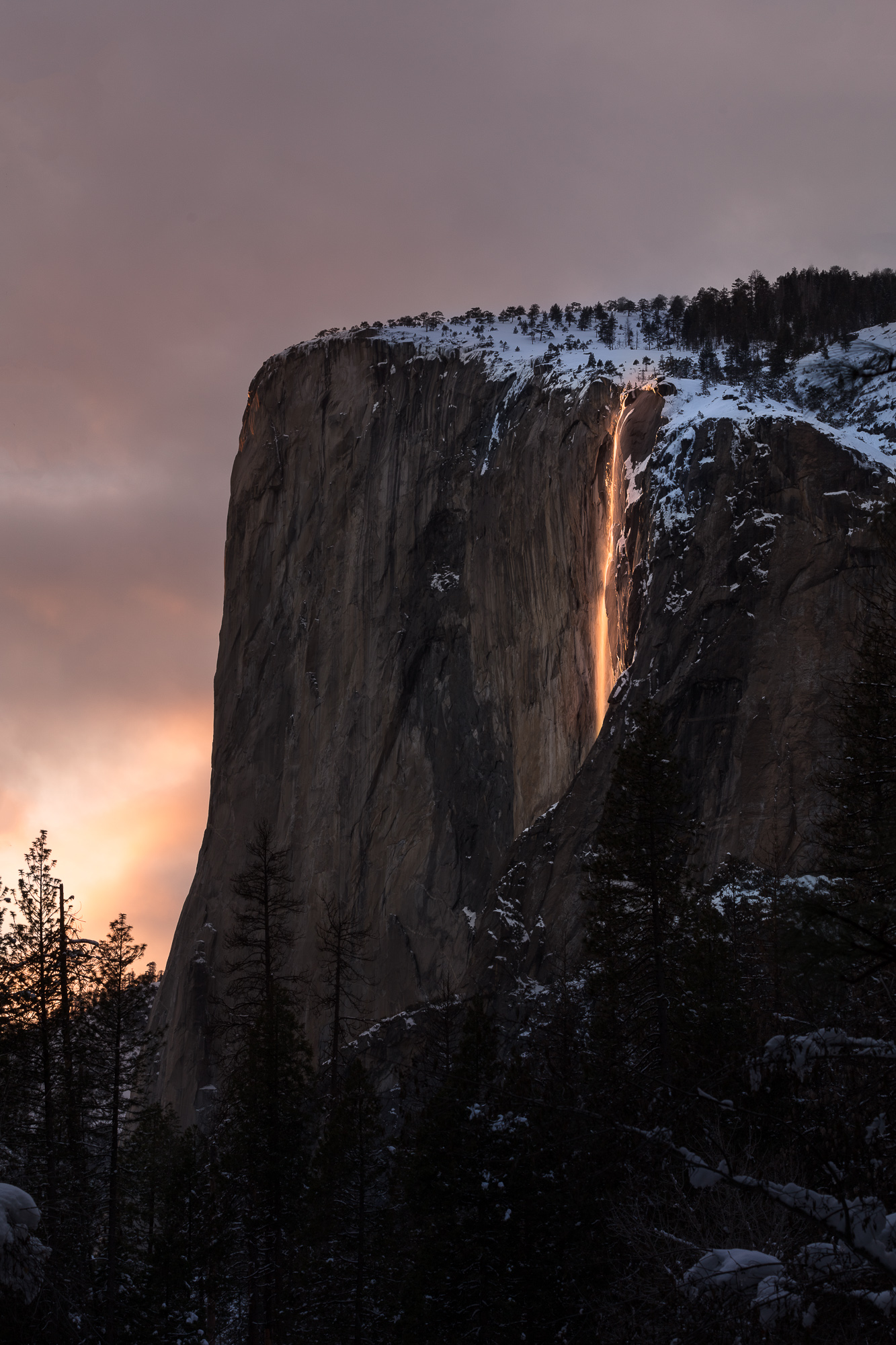
For only a few days a year, the setting sun lights up the seasonal horsetail falls, cascading down the sheer face of El Capitan in Yosemite National Park.
Finally, just after 5pm, Horsetail Falls came to life. Starting with an intense yellow, the falls turned to orange lava over the course of ten minutes.
The story of the original Yosemite “fire falls” goes back to the early years of the National Park Service, at a time when it was struggling to define the meaning of “attraction” for park visitors. One popular sentiment of the day was that the parks had to entertain visitors, much in the way a circus would entertain audiences through spectacle. As much of the nation was still rural, the idea of simply having access to wilderness was not as precious as today.
For example, when black bears began to raid the poorly maintained Yosemite Valley dump where all food scraps would end up, the first thought was not the safety of the wild bears. Instead of building proper barricades to prevent the bears from habituating to human food, the park service built bleachers around the dump so that visitors could watch the action. Another such misstep was the nightly building of a large bonfire at the top of Glacier Point. As the fire burned down, the embers were shoveled off the cliff, creating a “fire fall” to wow the crowd below in Curry Village. Thankfully this practice was eliminated in the early 1960s. Little did people realize that nature was already providing a much more spectacular display of its own.
For only a few days a year, the setting sun lights up the seasonal horsetail falls, cascading down the sheer face of El Capitan in Yosemite National Park.
In 1973, photographer Galen Rowel was coming back from a climb in the valley when he looked up and saw a stunning light display against the shadowed backdrop of El Capitan. Amazed at what he saw, he rushed to photograph it, only to see the light disappear before his eyes. Although he didn’t know if he’d ever see something like that again, the next night he was prepared. Sure enough, around the same time of day, Horsetail Falls (a seasonal waterfall that only flows with the proper amount of snow melt) lit up like a beacon. He quickly composed an image that would become famous, and introduced the world to this amazing natural “fire fall”, which is now photographed by hundreds of photographers annually.
For only a few days a year, the setting sun lights up the seasonal horsetail falls, cascading down the sheer face of El Capitan in Yosemite National Park.
What Galen Rowel was seeing was the setting sun striking only Horsetail Falls, isolating it against the dark cliffs of El Capitan. There is only about 10 minutes per day where this contrast can be seen, turning the water a reddish orange just before the sun dips over the horizon. In addition, this perfect sun angle that is required to light the falls but not the cliff only happens twice a year for a few days at a time. And only in late February is there a chance that Horsetail Falls is actually flowing. This explains why this natural “fire fall” was such a rare occurrence before anybody knew to look for it.
I was overjoyed to finally witness and photograph this phenomenon for myself.
I came across the following birds on a recent afternoon in Redwood Shores, California. Located right along San Francisco Bay with lots of calm water channels and sloughs, there are usually good opportunities to get close to these wetland species.
A greater yellowlegs stalks in shallow water, Redwood Shores, CA.
I came across quite a few gadwall, a winter specialist in the bay area. During the summer, they disappear to the north, so it is always nice to see these understated drakes bobbing along the surface. Look closely and you will see the beautiful interplay of buff, gray and black.
A tiny bushtit perches briefly on an ornamental bush, Redwood Shores, CA.
Bushtits are year round residents, but notoriously difficult to find and photograph. They travel in flocks, often spending less than 30 seconds on a set of bushes before flying off to the next. The best way to find them is listen for their signature peeping and then scramble to find the source of the sound. Here I managed to capture a brief look from a striking female before she moved on to find more food.
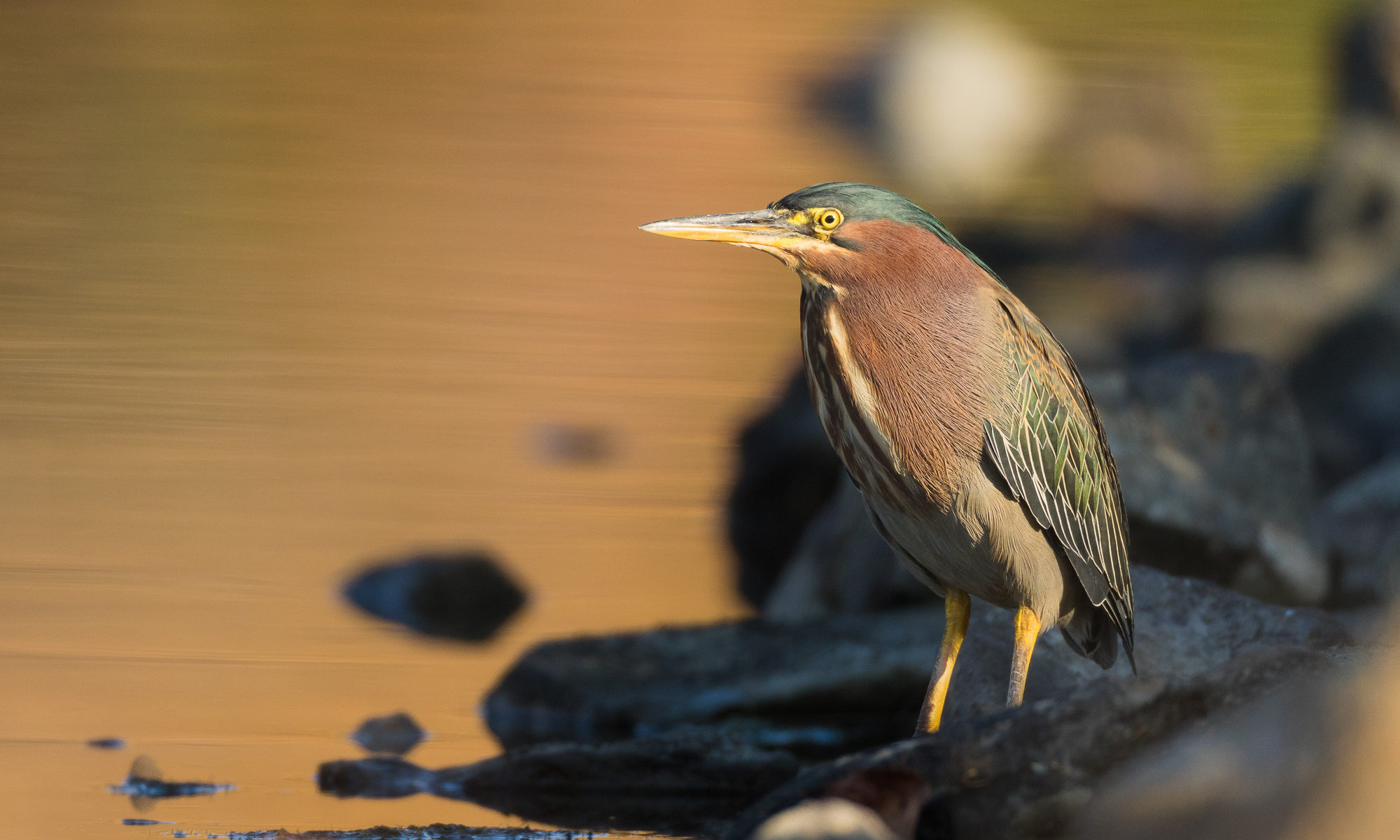
A green heron perches next to still water, reflecting fall colors, Redwood Shores, CA.
I always feel lucky to find green herons considering how much they can blend in. This one I followed down a water channel until I could get a nice backdrop of reflected fall colors. Whenever I can, I seek out simple, clean backgrounds as it greatly accentuates the main subject.
A double-crested cormorant perches on a small rock, reflected in still water, Redwood Shores, CA.
Just before sunset, I found this double-crested cormorant perched on a tiny rock out in the calm water. Although the light was fading, I found the posture of this bird interesting. After a few moments, he spread his wings and flew off somewhere to roost.
In years past, I’ve curated a list of my best 40 photos of the past year. However, with trips in 2016 to India and Africa, I couldn’t whittle down the set to just 40. So here is the best 100 photos of 2016, many of which are previously unpublished. As always, there is a mixture of bird, wildlife and landscape, but this year includes much more wildlife than usual.
Please enjoy the gallery below. For best viewing (especially if viewing on a mobile device), please click on the following photo:
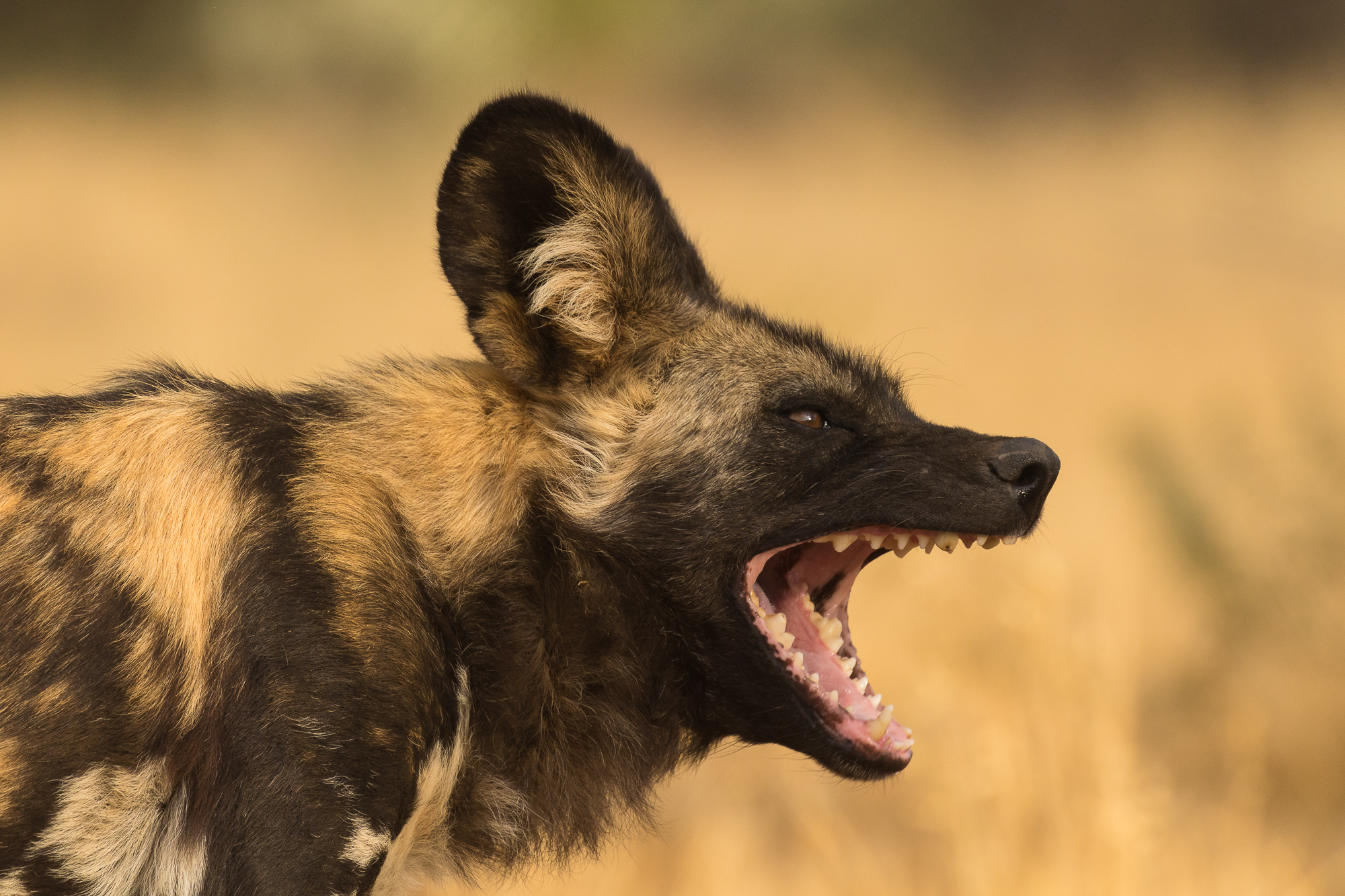
The endangered african wild dog has a hunting success rate of 80% due to its pack hunting and ability to chase large prey to exhaustion, reaching speeds of over 40 miles per hour for 5 – 10 minutes.
To view the gallery, click here to see individual photos.
If you are interested in compilations from previous years, please see the 2010, 2011, 2012, 2013, 2014, and 2015 lists.