
Kabini – Nagarhole National Park, India

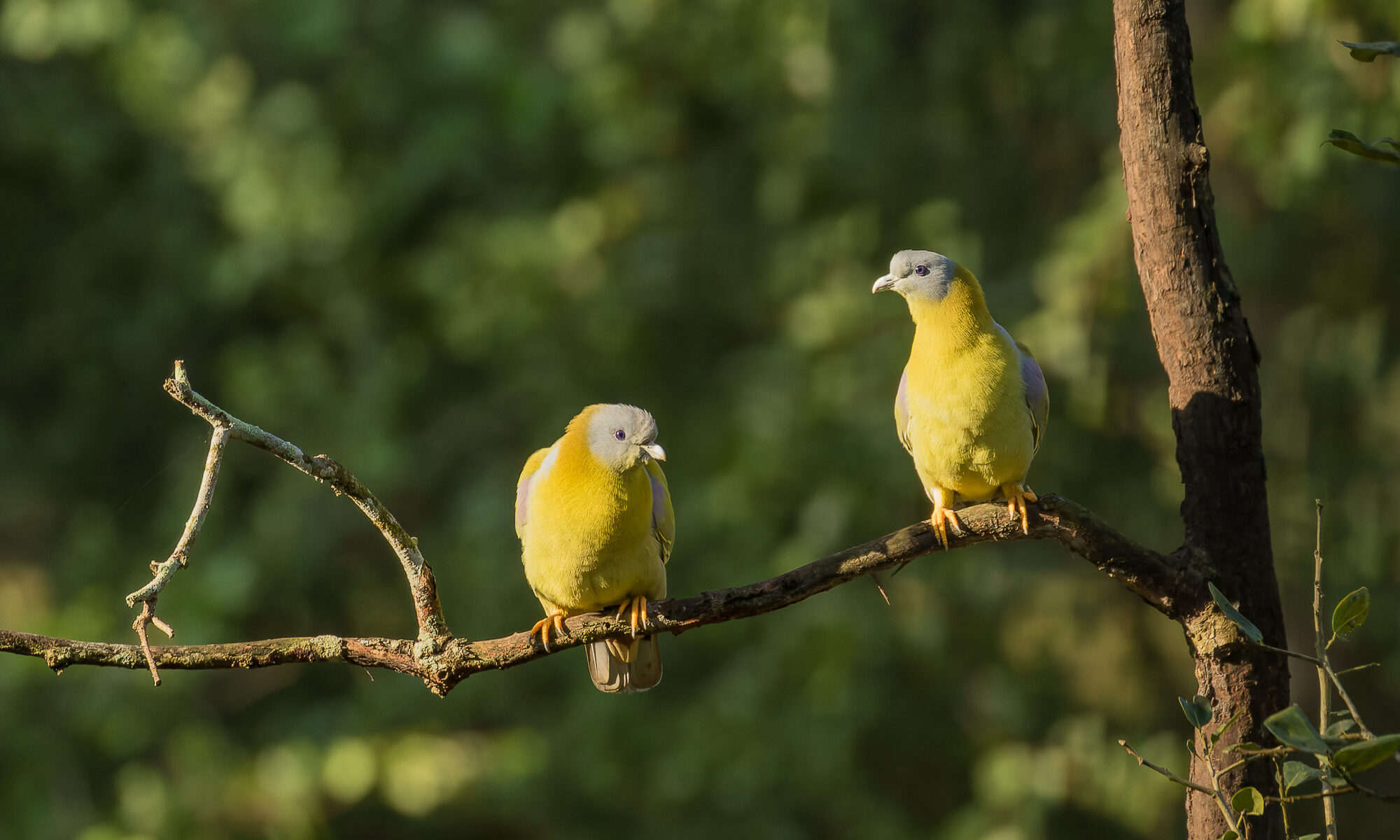
Two yellow-footed green pigeons perch in a jungle clearing, Nagarhole National Park, India.

I’ve been spending some time going through my archives of unpublished photos, and came across a trip to India a few years back where I was fortunate to be able to visit Kabini – a protected wildlife area that is part of the larger Nagarhole National Park in Karnataka.

I was able to do four safari outings over two days into the park, and see some of the local fauna. While I didn’t chance upon any of the area’s tigers, I did see quite a cast of characters.
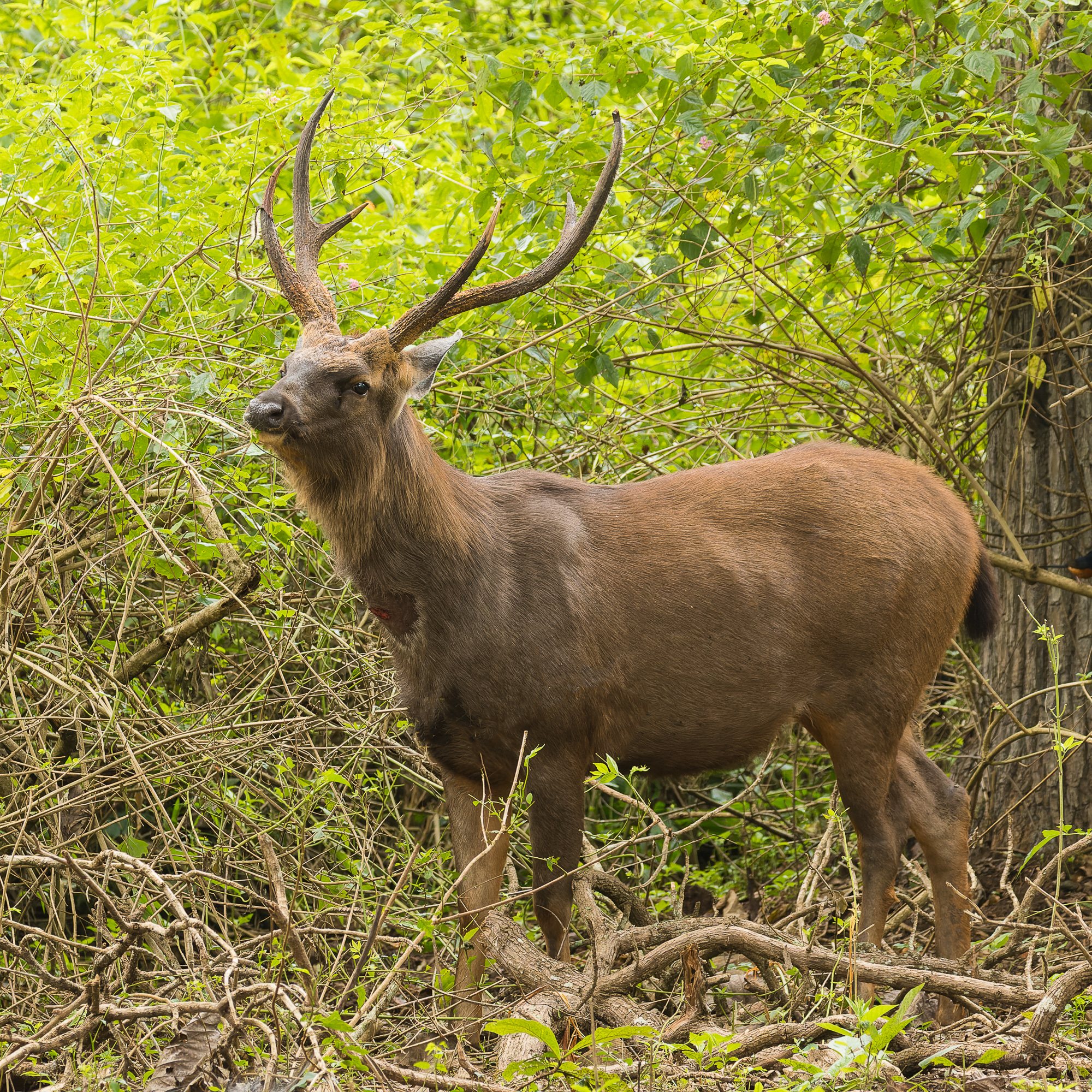
A sambar deer forages in the thick underbrush of the forest, Nagarhole National Park, India.

The sambar deer is large and shaggy, typically alone or in small groups. They remind me most of elk in North America, and as seen in this photo, I’ve usually seen them semi-hidden in dense brush.
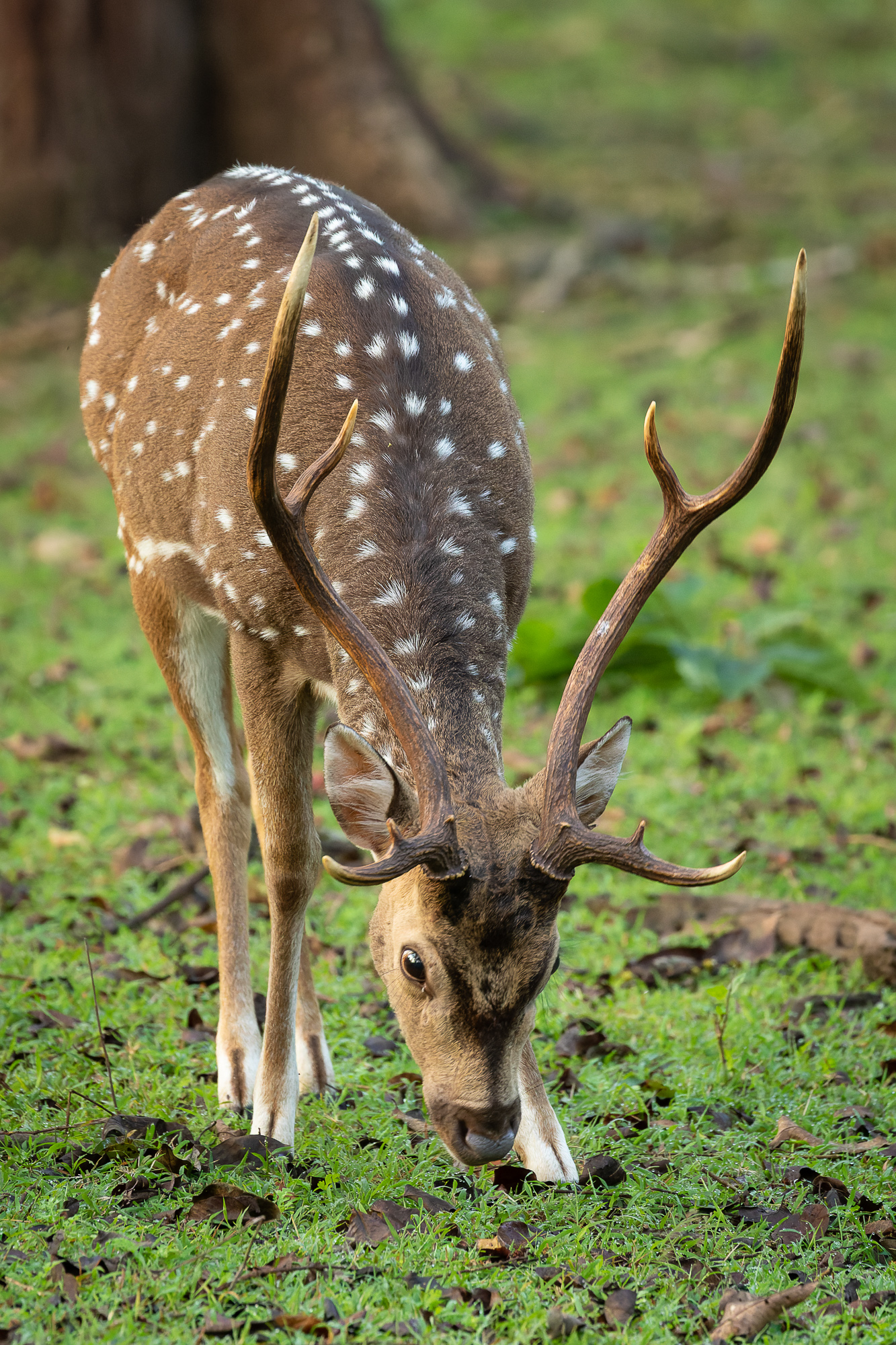
A small chital grazes on the forest grass, Nagarhole National Park, India.

Much more common in the area are chital – a slightly smaller spotted deer that travel in herds. They are not very skittish, usually seen in more open areas.
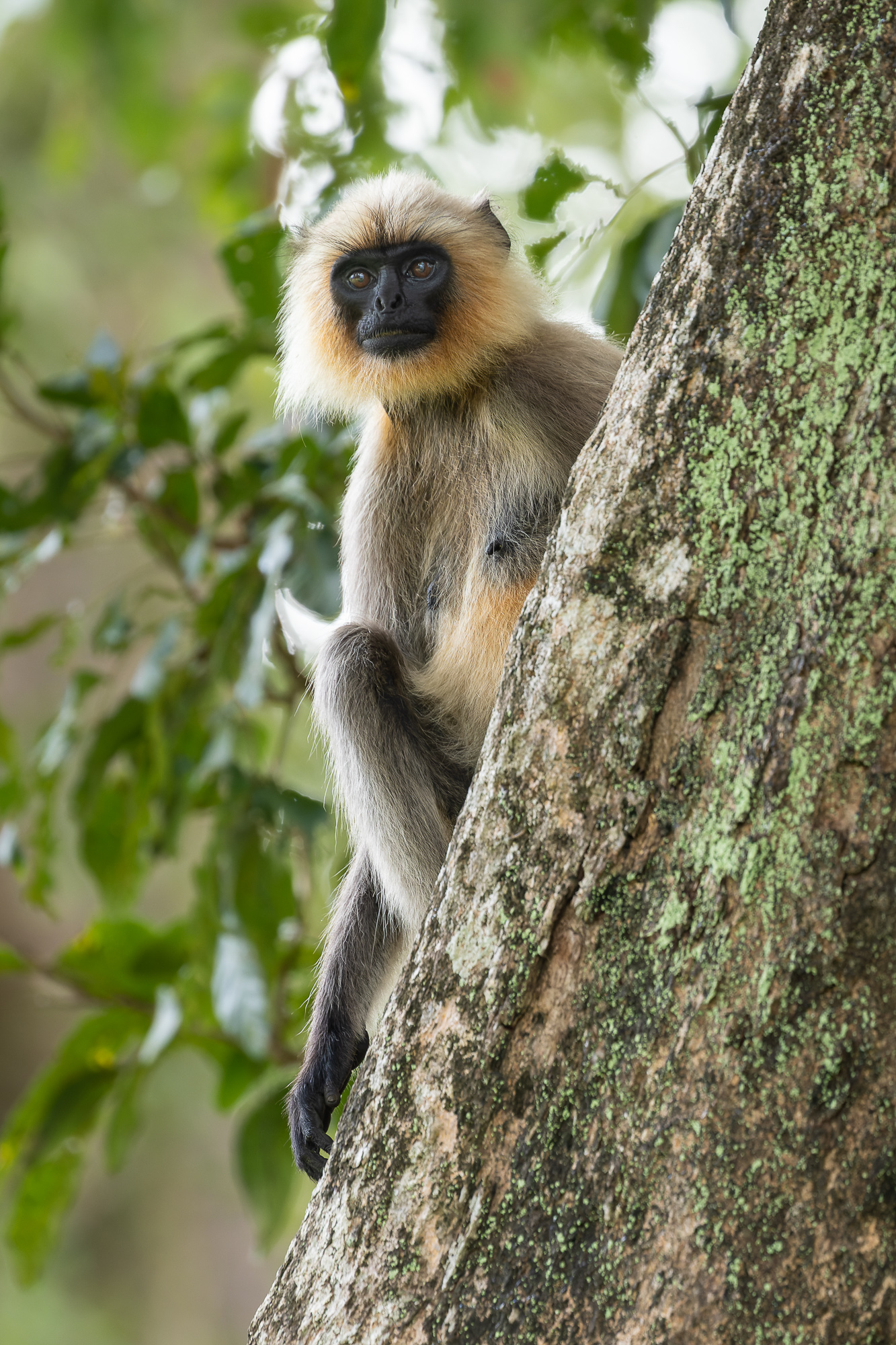
A tufted gray langur sits in a branch surveying the forest, Nagarhole National Park, India.

Occasionally we were treated to troop of tufted gray langurs. I could sit and watch their antics all day, as many of their expressions and movements are human-like. It is nice seeing them play in natural environments verses the multitude of macaques that have invaded some of the towns and cities.
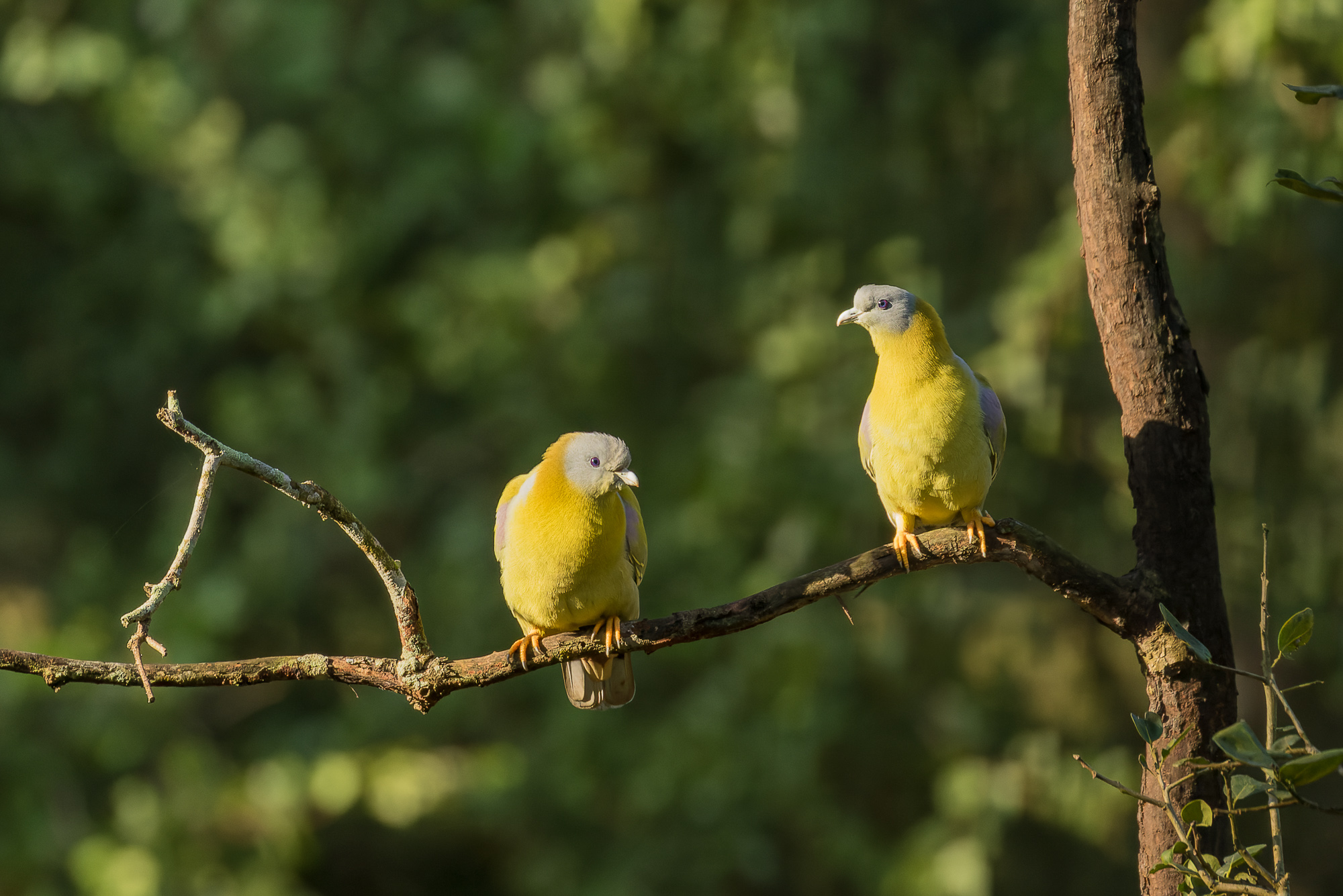
Two yellow-footed green pigeons perch in a jungle clearing, Nagarhole National Park, India.

This was a bird I had never seen before, and had to rely on one of my phone apps to identify. These are yellow-footed green pigeons, and I was lucky to catch them fly up on a bare branch in the sunshine for a brief moment.
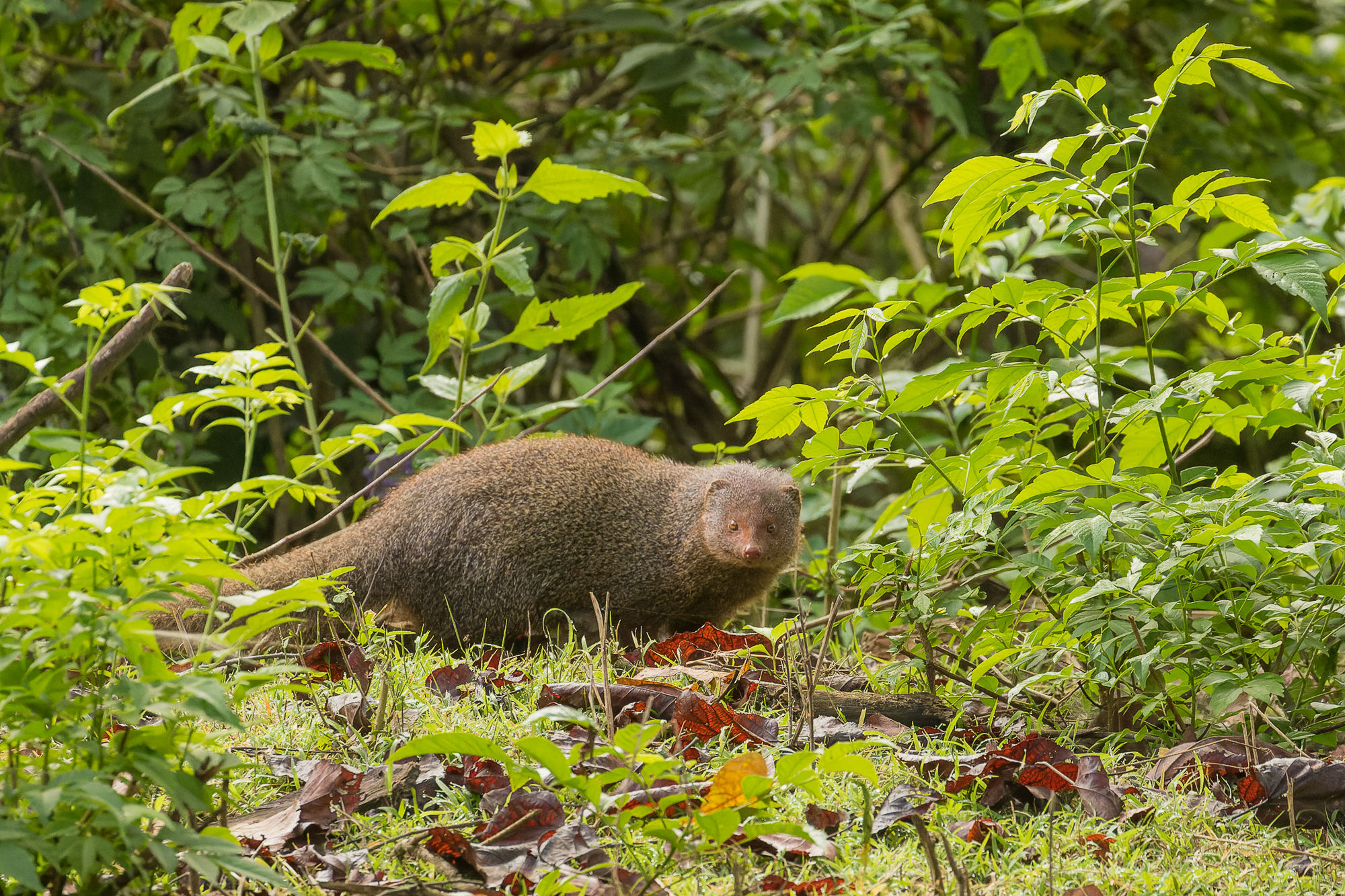
A ruddy mongoose moves silently through the forest, Nagarhole National Park, India.

One of my more memorable sightings of the trip were a couple of mongoose – a stripe-necked mongoose and (as pictured here) a ruddy mongoose. They were fast and elusive, so this was the best shot I got of the sightings.
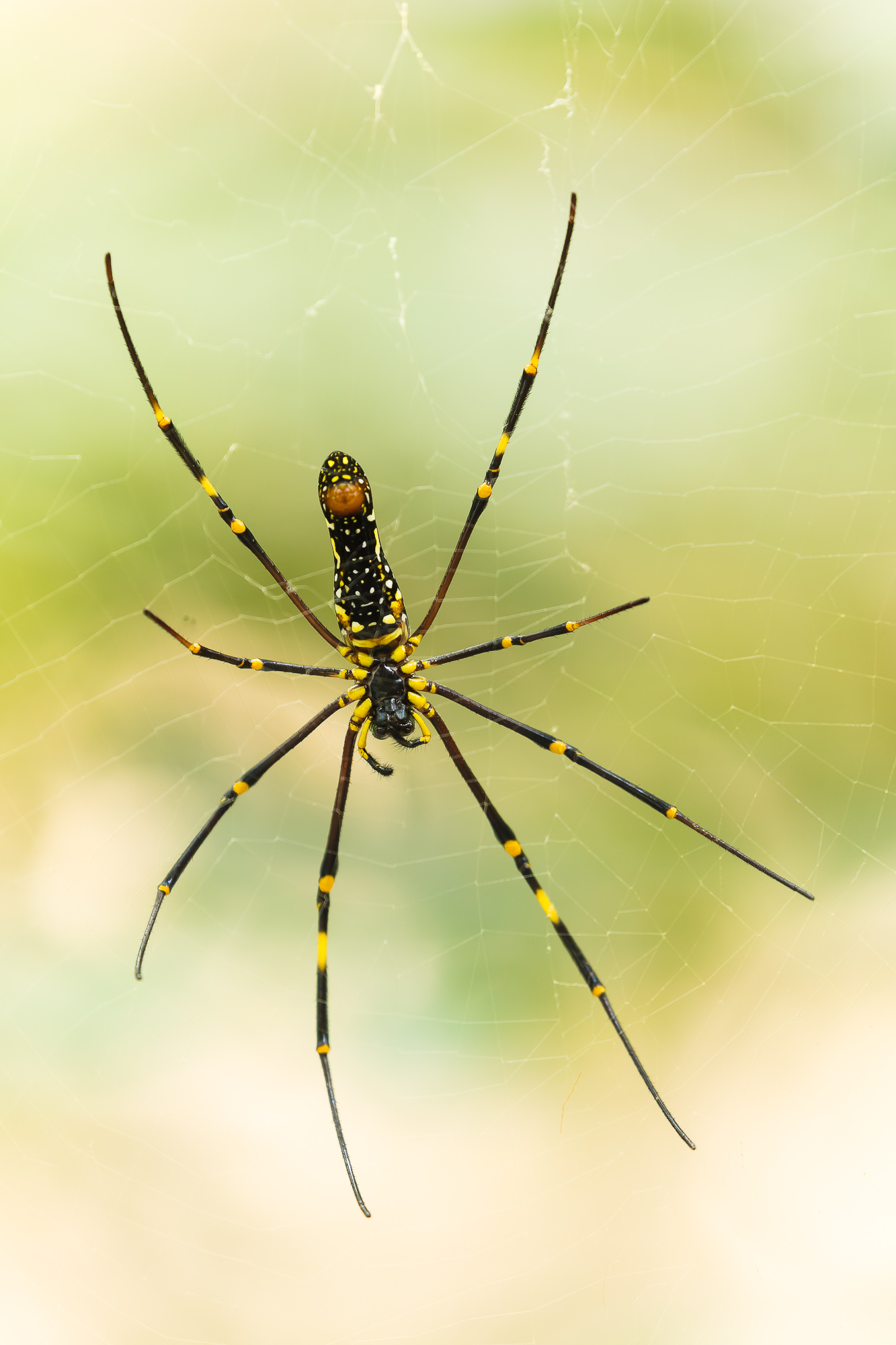
At around 8 inches across (including legs) this female giant wood spider sits on her web in a dense jungle, Nagarhole National Park, India.

Not to be outdone by the mammals, there were also plenty of spiders to see (yay!) In fact, the lodge that my friend booked for us was known for their variety of spider species and even had an onsite naturalist that gave guided spider tours around the property. Of course, had I known this reputation before the trip, I might have requested a different accommodation.

This is a photo of a giant wood spider who had spun a large web next to our room’s staircase. To say it was huge is a bit of an understatement – it definitely filled my dreams with unease while I was there. The wood spiders’ web can reach 20 feet across from one tree to another, creating a wall of death for unwary insects. These spiders are big enough to catch small birds or bats, though thankfully I didn’t see any of that.
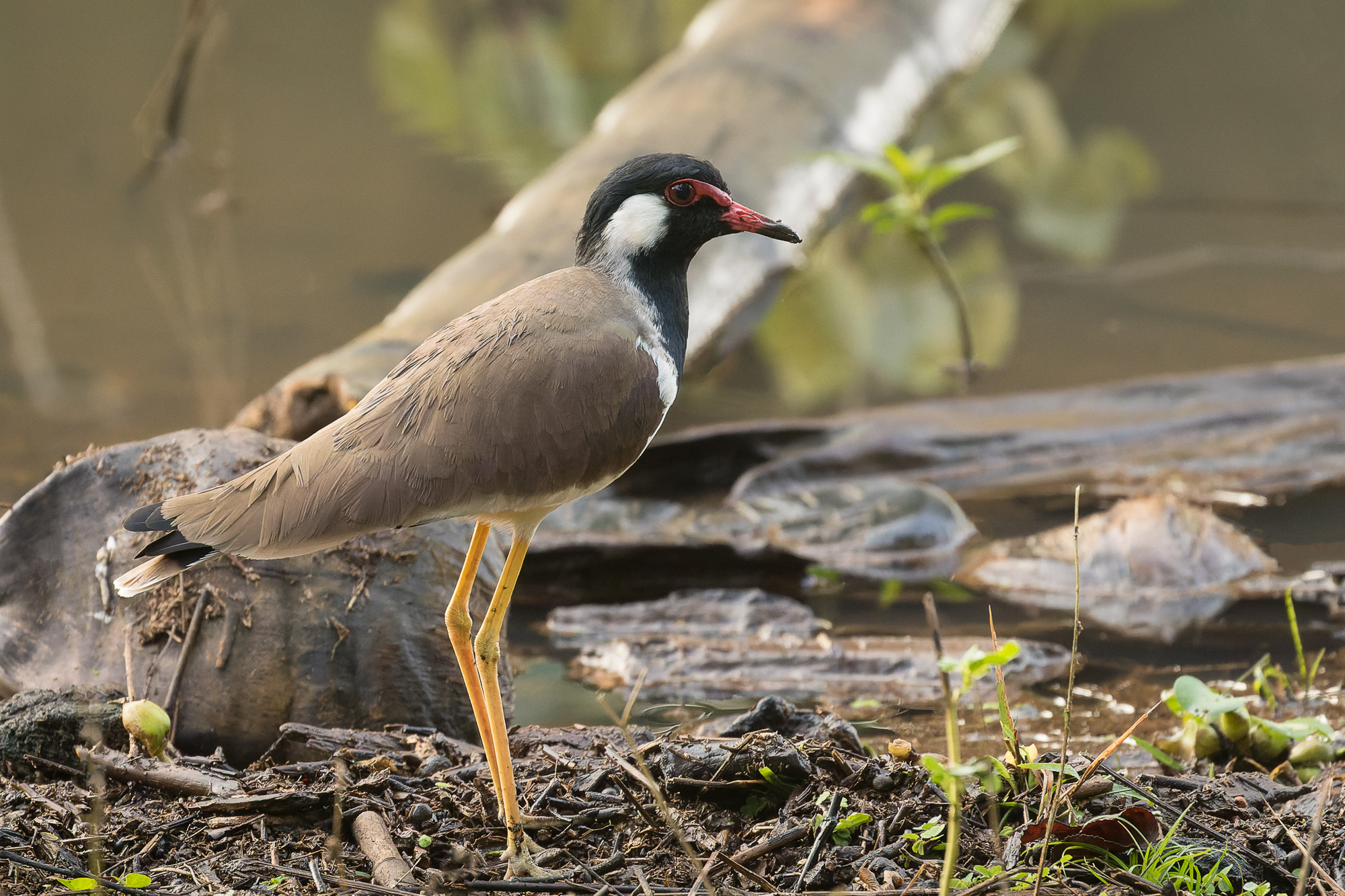
A red-wattled lapwing stands on the bank of a small pond, Nagarhole National Park, India.

On a lighter note, there were several ponds dotted throughout the forest, and I saw a red-wattled lapwing on the edge of one of them. Lapwings are members of the plover family which I have photographed fairly regularly over the years.
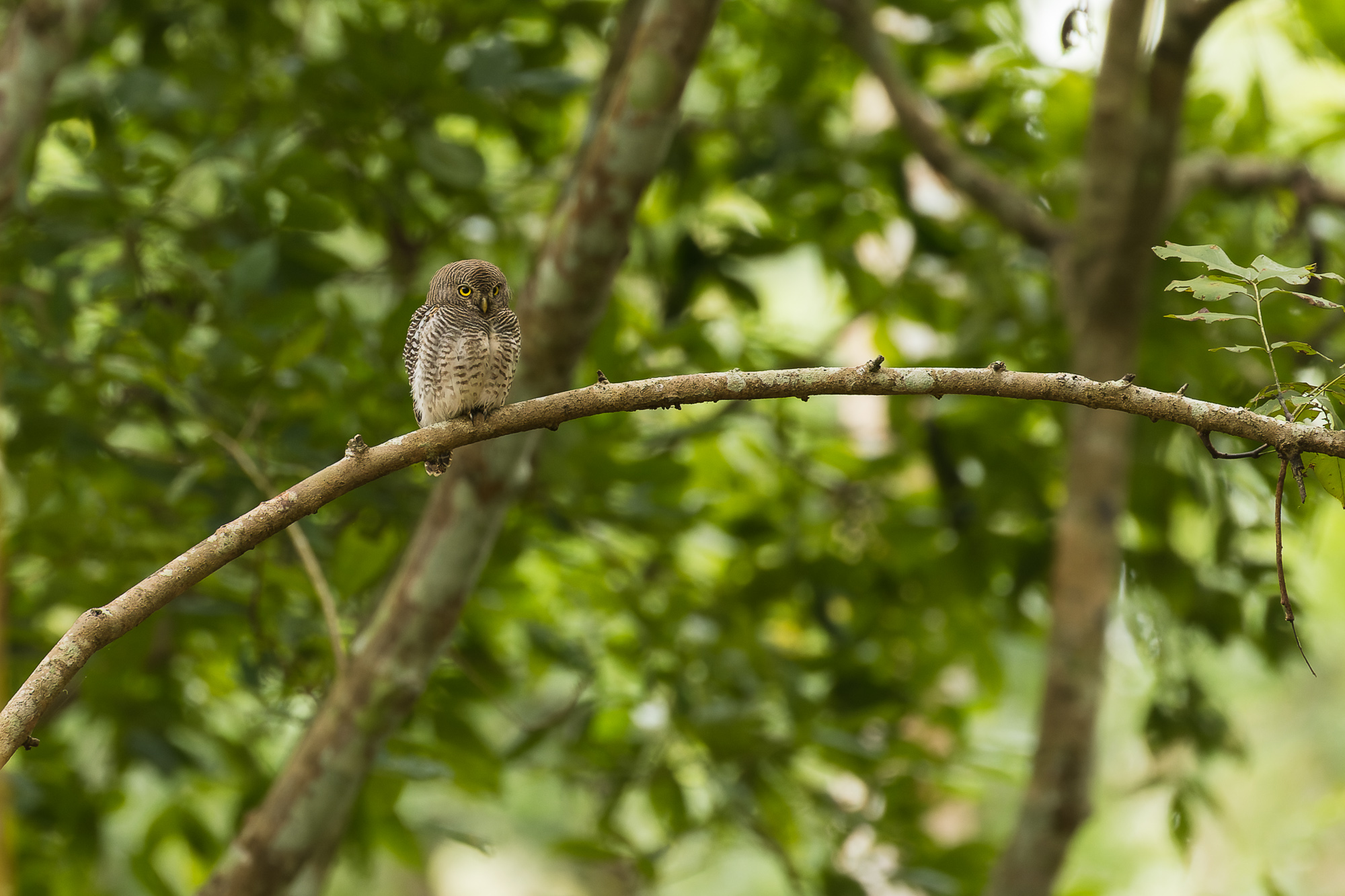
A tiny jungle owlet perches in the dark canopy of the forest, Nagarhole National Park, India.

I was blessed with two owl sightings. First a jungle owlet, the smallest owl I have ever photographed. They are about 8 inches long and weigh approximately 3 ounces. This one was perched quite far away in the dark recesses of the jungle.
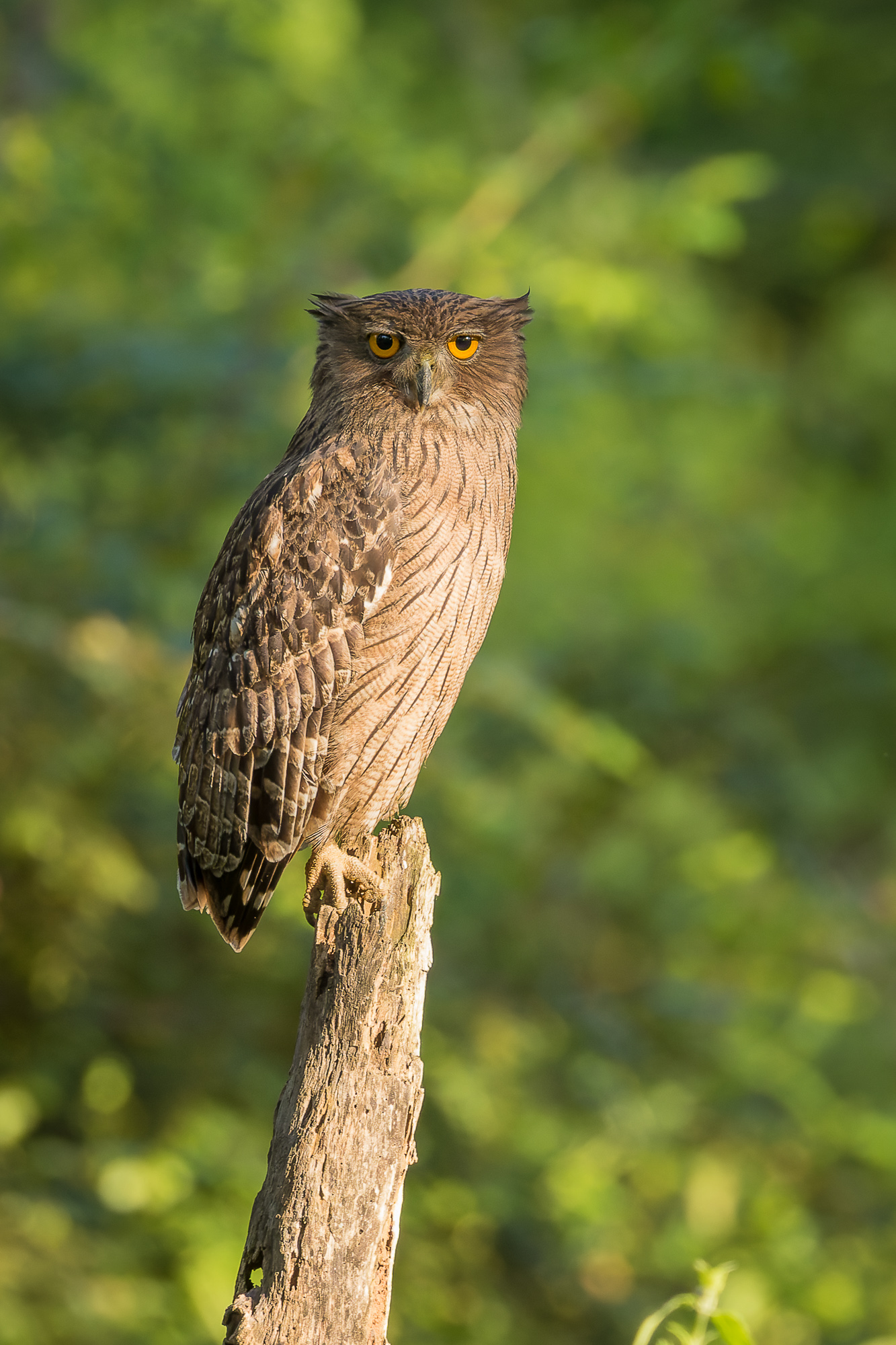
A brown fish-owl perches in a jungle clearing, Nagarhole National Park, India.

Later I encountered a much larger owl, the brown fish owl. This one was perched in a small clearing and we asked the driver to maneuver our vehicle so that the background was as far from the tree stump as possible. This allowed the background to blur away, creating a nice sharp portrait of the fish-owl. These owls can be up to 24 inches long and weigh as much as 5 pounds.
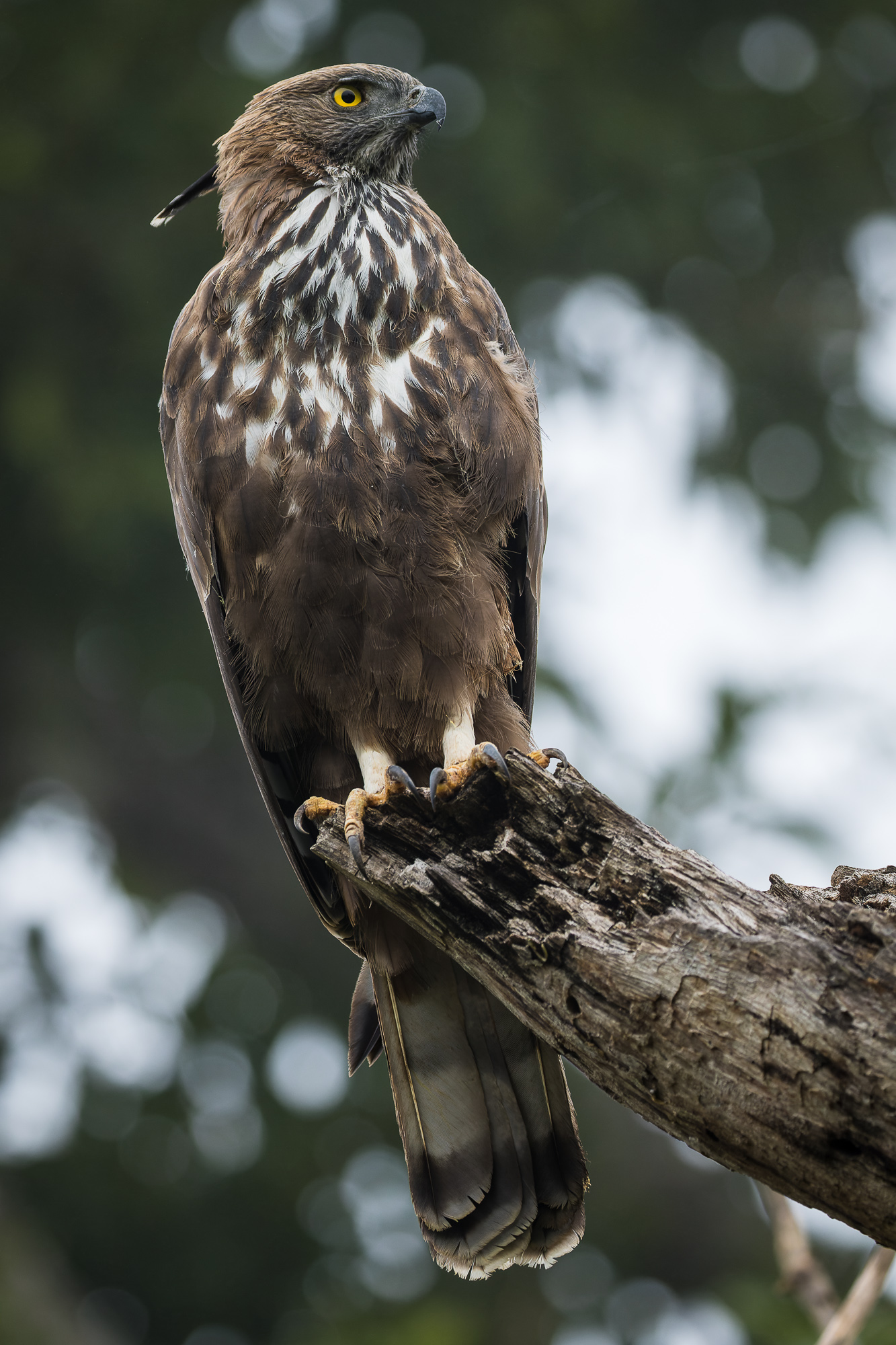
A changeable hawk-eagle perches in a dead tree, Nagarhole National Park, India.

Last notable sighting for the trip was a changeable hawk-eagle. I had seen several of these over the course of the two day excursion, but right at the end of our last day, we got to see this one much closer.

Overall it was a great trip, creepy spiders and all. I’d definitely welcome another opportunity to visit – you never know what you’re going to see in that dark jungle.

Use What Ya Got

A yellow garden spider waits patiently on its web for prey to get caught

Throughout the year, we see these yellow garden spiders spinning their webs around our front garden. I came across this nice specimen and wanted to capture him on my camera. However, lacking any real macro gear, I had to figure out how to make do with what I did have on hand. If I had my choice of any equipment I wanted for this shot, I would have used:

1. A small tripod with a swing arm (to get close to the web which was inconveniently placed between some hard-to-reach plants)
2. A Canon 180mm macro lens (so I could keep my distance from the creepy spider)
3. A focusing rail (to achieve that manual pin point focus on the beast)

However, I had none of that. What I did have was a 100-400mm zoom lens (non-macro). None of my tripods work work well in this area because of the spacing of the plants, so I was stuck hand-holding. In order to increase the magnification, I was able to reduce the lens’ minimum focusing distance using 3 stacked extension tubes. This allowed me to move the lens closer to the subject, filling the frame with only the spider.

Because I was not using a tripod, I had to keep the shutter speed relatively fast. That meant a larger aperture, and a smaller depth of field than I would have otherwise used (f/8 in this case). In order to compensate, I decided to try the digital technique of focus stacking to achieve the look of a larger depth of field. This image is actually a composite of two shots – one focusing on the spider’s abdomen, and the other focusing on the legs. The sharpest part of each image was blended together.

So, after all applying all these work-arounds, what is the moral of the story? Get some decent macro equipment! 🙂

Copyright 2017 Hank Christensen